

 1 day ago
6
1 day ago
6
PROTECT YOUR DNA WITH QUANTUM TECHNOLOGY
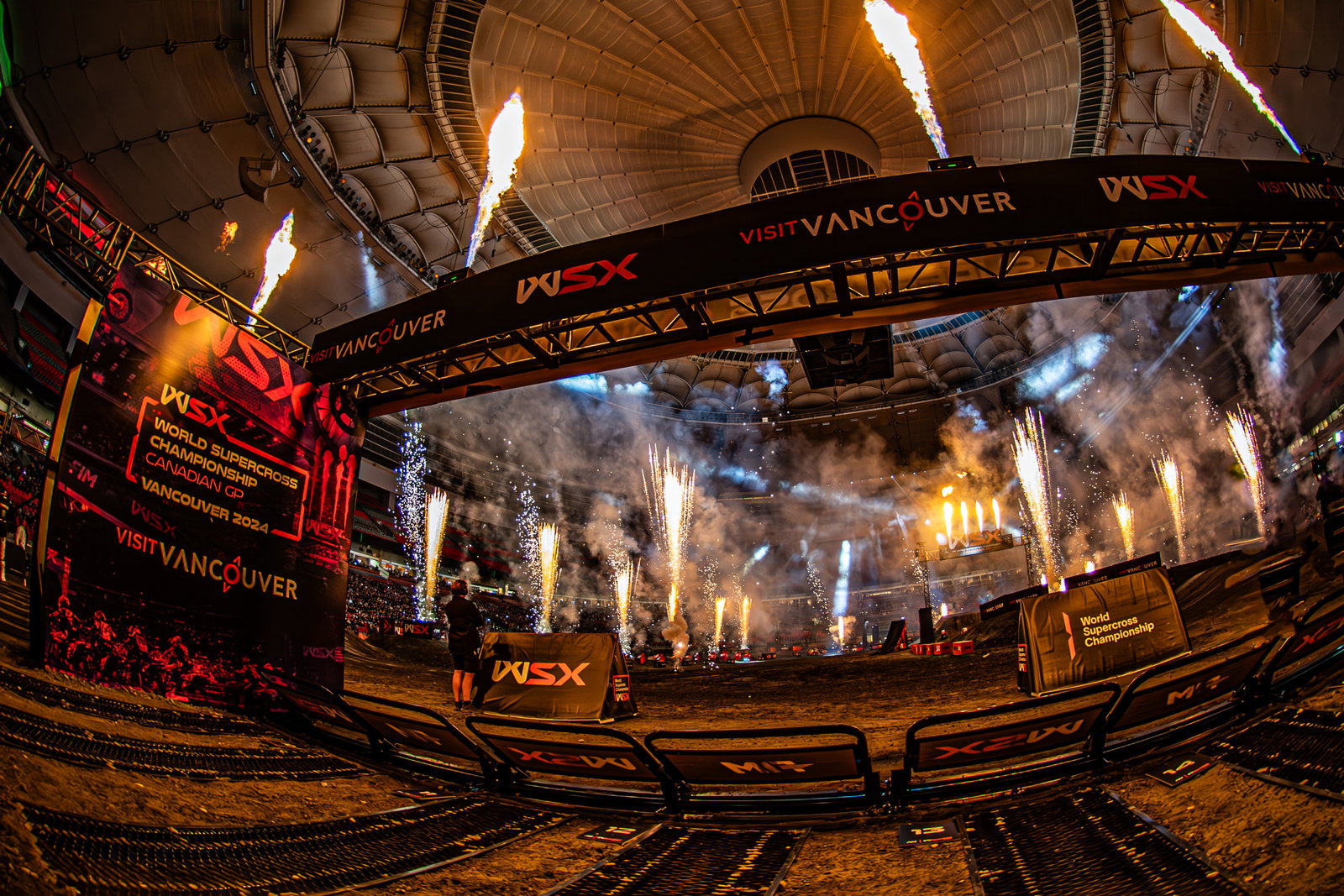
Orgo-Life the new way to the future Advertising by AdpathwayWhat a night it was on Saturday for SMX Playoff 2 in Los Angeles! The soil was dry, the racing was superb, and there was even a little off-track action afterward between Cooper Webb and Haiden Deegan. What else could anyone want? To get a better idea of why everything played out the way it did, we tapped former pro and NBC on-track analyst, Jason Thomas.
The track was extremely fast and had a lot of flow to it. In what ways did that affect the action on Saturday?
It was really easy, overall. That was apparent from the track map. This makes passing very difficult as riders learn where the vulnerable areas are and then vigorously guard them. An easy track with no passing is a tough setup for a bad start. There was so much time spent by riders like Cole Davies trying to move forward. From the first moment I saw the track map, I knew starts would be the most important aspect of the day.
A fast track means additional laps within a set amount of time, and that was definitely the case in Los Angeles. But the track seemed like it held together pretty well without getting too chopped up. Why is that?
Mostly because it’s southern California in late summer, which means the base is hard as concrete. The harder base just doesn’t change as much as a softer soil would. Even this dirt in the winter would shape up far differently. That lack of deterioration is a compromise, though, as the hard base reduces traction. Less chopped up, yes, but at a cost.

There was a split lane, followed directly by a sand section. The preferred line, inside or out, seemed to change back and forth as the day wore on. What factors dictated which line riders took?
It was a couple of things. First, deterioration was a factor. The outside line was the preferable line early in the day but as the berm began to lose effectiveness, riders shifted to the inside. A good line is only a good line until it gets rough and the berm is blown out. A theoretical slower line can become the optimal choice if it’s still smooth and the first choice has gotten abused.
Second, the cardinal rule of “don’t follow” comes into play. There is zero chance of passing if you follow the lead rider so even if the other line is not as good, at least you give yourself a chance to make a pass if you don’t follow.
Cole Davies didn’t have the night he, or many others, expected he would, with things ultimately going south in the second moto when he went down hard all by himself and ended up pulling out of the race. What caused him to crash?
This was just a racing thing. That berm was getting beat up and he caught a bump wrong and high sided over that fast single. There were many close calls and a few crashes here over the weekend. When you have a fast, easy track, the crashes are often more violent because riders are not as respectful of the track and are pushing the absolute limit.

Ryder DiFrancesco had to come through the pack after getting caught up in the Davies incident, and for a while, as they ran, he was tied with several other riders for second overall, a spot he would have lost in the tiebreaker. Afterward he said he knew he needed to get another spot, which he did when he passed Landen Gordon, by looking up at the big screen during the race and seeing the graphic explaining the situation. How was he able to have the awareness to look at the screen for that information during the race, and successfully execute?
This is cool insight. I can remember looking at the screen to understand what position I was in, or more importantly, how much time was left, but never figuring out an overall finish. This is just the next evolution of real time info being available and it affecting the outcome. If we ever venture into helmet radio communication, this will be easy but as for now, riders have to use every tool available and this is a new one.

Levi Kitchen did not have a great first moto, finishing seventh, but he was like a different rider in the second, which he dominated despite dealing with the stress of a flat front tire after the sight lap. What made the difference for the second moto?
Levi said he wasn’t sure who was riding his bike in the first moto and that Mitch gave him a talking to. It seemed like he just lacked the intensity the track required. I mentioned above that this easier type of track requires a lot of intensity because there is not much to respect, as far as difficulty. If you don’t have a sense of urgency on an easy track, you’re cooked.

Julien Beaumer was incredible over the weekend. He was on rails in qualifying, qualified P1, and took the overall. Is this just a continuation of his progress over the summer, or was there something about this track that seemed to suit him?
It’s both, really. He’s back to 100 percent but this type of dirt suits him. He’s done a great job of removing any vulnerability to rutty conditions, but I still believe this harder, slippery dirt is his forte. He is a Havasu native, which means he grew up searching for traction. Those formative years pay dividends when the conditions align.

Ken Roczen was incredible in the first moto, which he won, and he was good in the second too, but after a few laps into it his intensity seemed to diminish a little. Is this a product of not racing all summer, or was there something else in play?
Yes, and he admitted as much in the podium interview. It’s so difficult to replicate racing conditions when you’re at home. Sitting out for months on end was bound to show up somewhere and although he masked it in Columbus, moto two in Carson revealed a bit of rust. It wasn’t catastrophic but there was a definitive difference in moto two. Some of it is about recovery in between races. His body isn’t used to pushing the limit, cooling down, and then being asked to be 100 percent again. The Pro Motocross contingent has been doing that since May. To expect Kenny to be able to match those who went through 11 weekend cycles of that, off the couch, is expecting too much.

Haiden Deegan was good on Saturday, but what most people are talking about is the takeout move he put on Cooper Webb in the second moto that sparked some sort of altercation between the two back at the truck afterward. What’s your take on the takeout, and why do you think it upset Webb so much?
The move itself wasn’t the most egregious. There was contact and Webb went down but it wasn’t a full-on T-bone move. Deegs went from outside to inside and cut across Webb’s line which is not clean by any means but I have seen far, far worse. The problem is that they are teammates and have been practicing together. That often dictates a level of respect and patience that this move showed none of. You sprinkle on Deegs’ boisterous attitude toward his competitors and you have a powder keg.
The part we will likely not learn about and what would be the most interesting to me is what was said inside the hauler before the altercation. I truly feel that if Deegs had said, ‘That’s my bad, I have to be more careful with my teammate and understand the situation a bit more,’ Webb would have eased up. Something tells me that is not how it went down and then tempers boiled.









 English (US) ·
  French (CA) ·