

PROTECT YOUR DNA WITH QUANTUM TECHNOLOGY
Orgo-Life the new way to the future Advertising by AdpathwayReplacing one of the most beloved gravel tires on the market, the Continental Dubnital had big shoes to fill. Touted as fast-rolling and grippy, it’s another tire that promises a lot in an ever-changing category. With plenty of experience on the former iteration of the same model, the Race Kings, Nic put some serious miles on the new Dubnitals to see if they’re a worthy heir to the throne…
Riding photos by Holden Mathis and Luis Espel
With gravel bikes capable of fitting larger and larger tires, the line between gravel and mountain disciplines is always in flux. Given that even the biggest bike manufacturers have started to add 2”+ clearance to their flagship models, the use of mountain bike tires in the gravel space isn’t exactly new. Years ago, gravel pro and YouTuber Dylan Johnson realized that despite the preconceived notion that mountain bike tires would be slower, the thinner casings and faster compounds present on XC tires like the Continental Race Kings were ultimately faster than whatever meager, more road-focused gravel tires existed when the Race Kings were still in production. His praise on social media led to all available stock being hoovered up, and some were left in the lurch as Continental never replenished them to pre-hype levels.
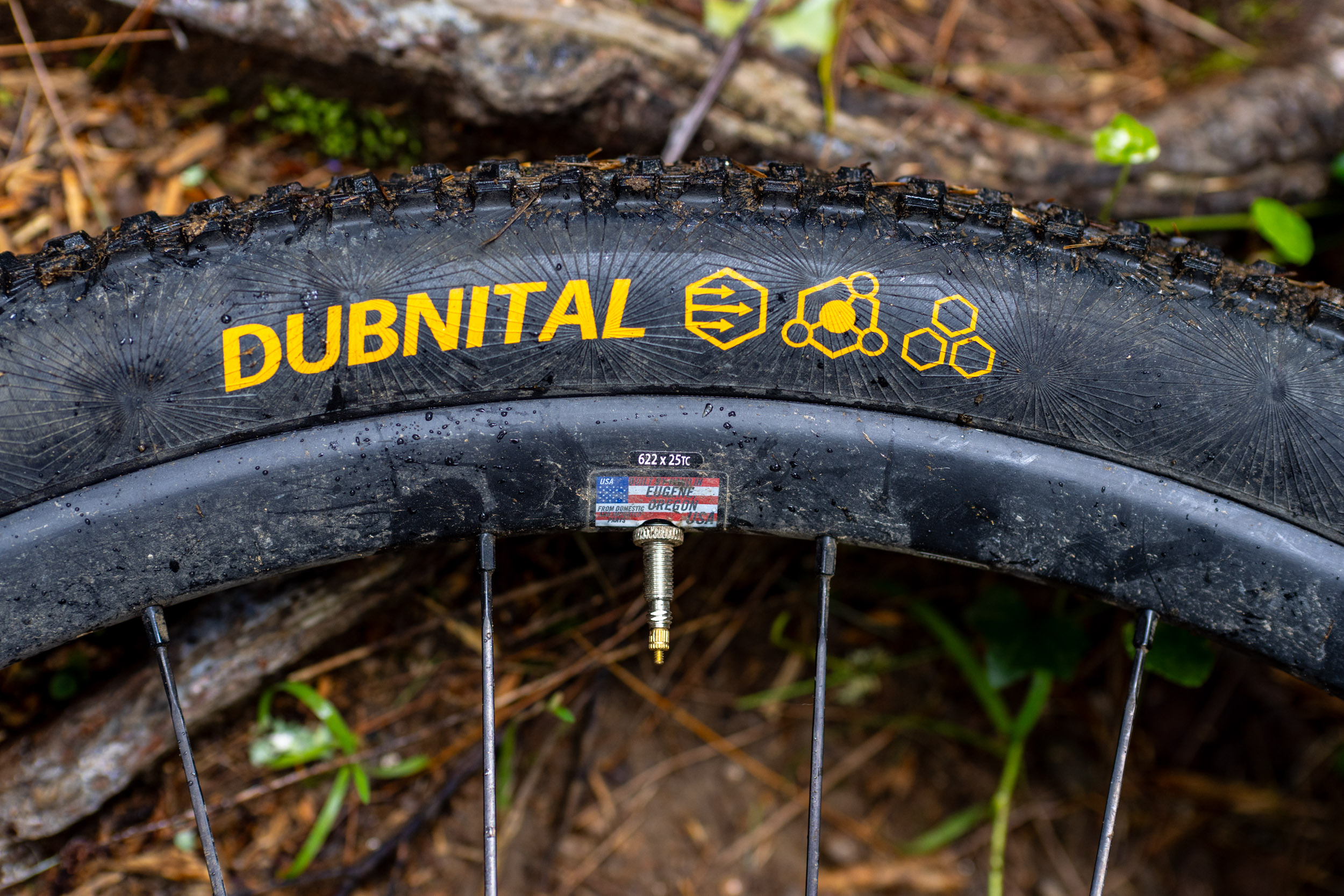
In April of last year, the brand revealed why. Three new models replaced their dirt-focused tires: the Kryptotal, Magnotal, and Dubnital. The new naming convention is meant to streamline the brand and bring the tires into a new era that reflects how users blur the lines between XC and gravel racing. I was never drawn to the Race Kings for strictly performance-oriented benefits. I spent a lot of time on dirt, but also rode to all of the singletrack I ventured onto. Finding a tire with solid grip on Florida’s sandy singletrack while rolling well on long, straight, flat paved bike paths seemed tough until I stumbled onto the Race King. Supple, grippy, and fast-rolling, the tires were both hard-wearing and great across varied terrain. So, when the Dubnitals were released, I was excited to see whether they delivered a similar level of performance.
I Used to Rule the World
Aside from Dylan Johnson highlighting the tire, a big reason the Race King became so popular was that it ranked highly on BicycleRollingResistance.com. It still sits third in the mountain bike tire category, while the new Dubnital tire ranks 25th when you include archived options like the Race and Speed Kings. Given our demographic, judging a tire solely on its supposed speed isn’t enough. When choosing tires for my own bikes, I often consider their performance on BRR, but it’s far from the only metric. Puncture resistance, lug depth and variance, and overall durability are some of the biggest factors influencing my decision.
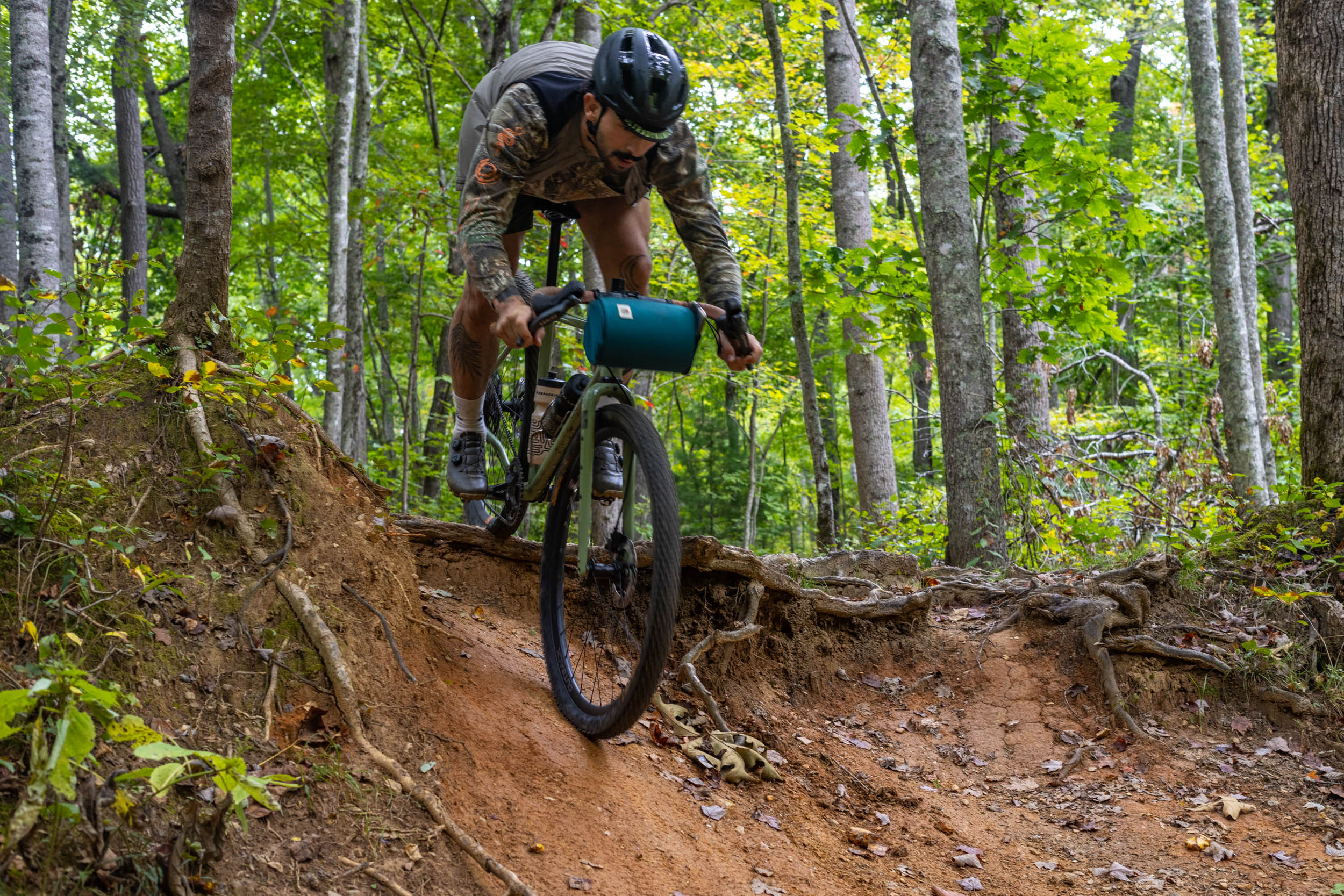
Another important element to consider in this demographic is what kind of bike the tires will be used on. After I published my Vittoria Mezcal review—another tire that straddles the line between gravel and XC use—there was an internal discussion about my takeaways. Logan and Miles are more into mountain biking than I am, and they felt the Mezcal never provided the grip that I experienced. Coming from a more gravel-y background, I found the tire to be entirely sufficient. Individual expectations aside, tires will perform differently because of changes in weight distribution, geometry, and inherent handling characteristics.
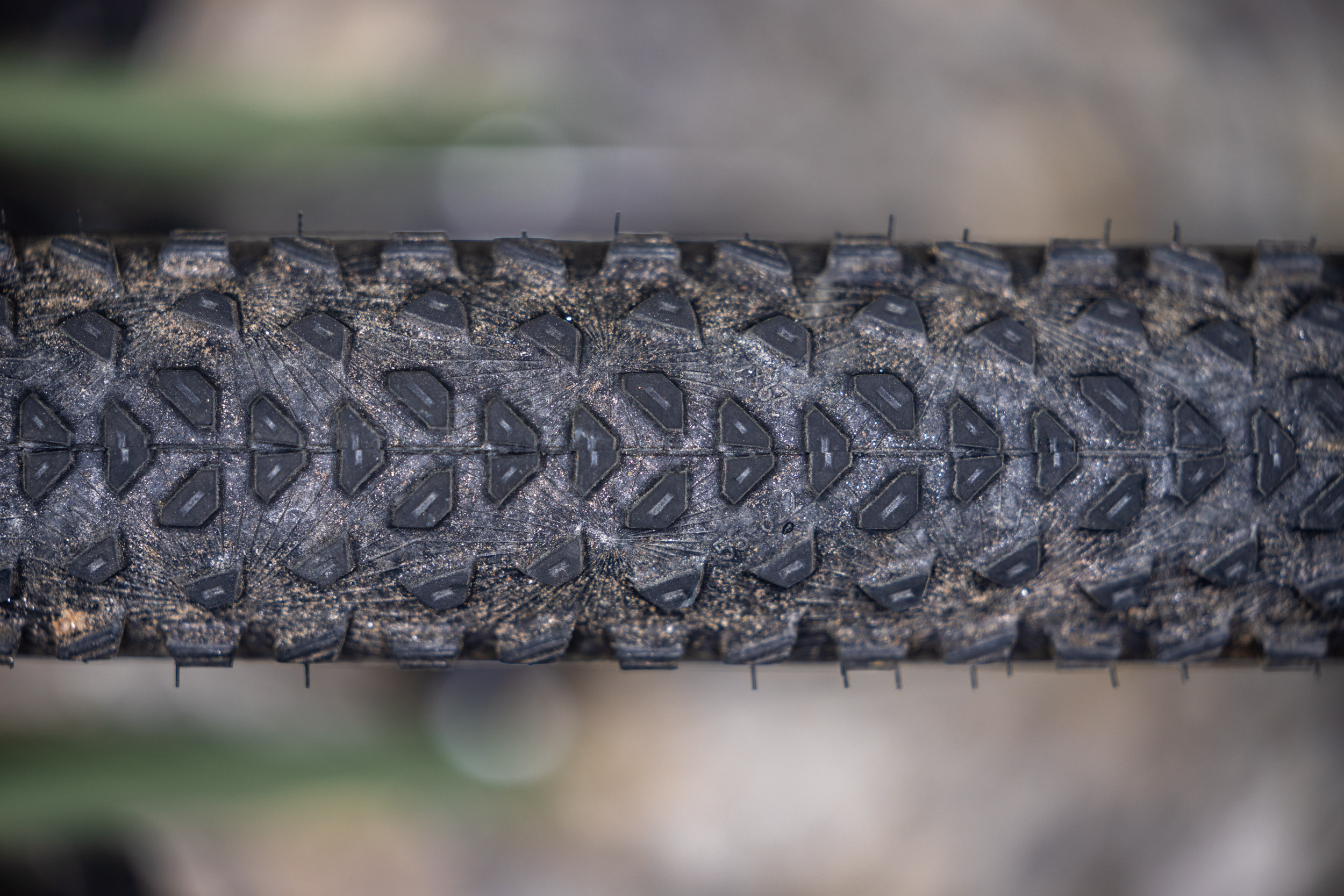
The old Continental Race King tread pictured on the right.
In my time with the Dubnitals, I used the 29 x 2.2” race casing tires on a gravel bike—the Slug Earthling CrMo I reviewed earlier this summer. Unlike the more varied use the Race Kings saw on both hardtails and gravel bikes, the Dubnitals are best suited to gravel. The changes from the prior model aren’t massive, as they largely involve minor alterations to tread pattern and compound. I think Continental signals this intention through its sizing. New to the range is a 2” width, with the tire maxing out at 2.4”. Most modern gravel bikes are within this range, and if you’re looking for something more mountain-oriented, the Kryptotal and Magnotal would be better suited.
Like the Race Kings, the Dubnitals feature a triangular tread design with lugs of varying depth that measure anywhere from 8 to 12.4mm in width. The tread has three distinct zones: a center zone with more triangular, direction-specific lugs; a transition area filled with siped lugs meant to manage tire drift on uneven terrain; and a shoulder zone with lugs that have added slats and an elevated profile so that the outer area of the tire has a better chance of contact with the ground.
In Use
Though it’s been years since I spent time on the Race Kings, I immediately noticed the Dubnitals felt slower than I remembered. I hadn’t yet peeked at the rankings on BRR, so I’d like to imagine it was more than just an expectation. The Dubnitals are by no means slow, but they don’t have the same lightning-quick spin-up I always appreciated about the Race Kings—something that might be down to the reported 20-gram weight difference. Similarly soft and supple at 20-22 PSI, the Dubnitals felt comfortable across pavement, crushed gravel, and singletrack. Lacking the loose squish that sometimes comes with high-TPI tires, the biggest difference in sensation between the Dubnitals and Race Kings comes from the compound. I’ll get into the complexities of how the tire deforms on roots and rocks, but its comfort is a clear plus. Continental nailed the balance of a supple sensation at low PSIs, while still tracking well across the ground.

As I noted in my Mezcal review, the main difference from other tires in the same space is the distinction between the casing and the tread cap. The Mezcal boasts a much lower TPI than the Dubnital—60 vs. 180 —but performance is about more than thread count. Vittoria says its material distribution across the compound creates a more uniform experience on uneven terrain. Instead of the soft sidewall collapsing under a hard tread cap, the medium-hardness casing supposedly deforms more consistently across the tire. I found that to be true when I tested the Mezcal, and I felt the difference when I started using the Dubnital more consistently. The latter is more plush and features a softer sidewall than what is available on the Mezcals.
Though my experience with Continental’s tires is closer to Vittoria than, say, Ultradynamico, the Dubnitals are comfortable and perform well on varied terrain. Despite being more than satisfied with my time on Vittoria’s offerings, I’d choose the Continentals on big days with a mix of pavement, gravel, and singletrack. Unlike the Mezcals, the Dubnitals’ tread cap and sidewall differ in thickness and material distribution, based on look and in-hand feel alone. However, their performance is a solid mix that captures the benefits of both sides of the spectrum. Where extremely soft sidewalls can deform at the wrong time, the Dubnitals have a strong, grippy enough compound to deform when needed and hold up elsewhere. On roots and steep, angled rocks, the tires did well to avoid the tracking feeling that can sometimes occur when on a slope. No matter what I threw at them, the tires kept their line and held grip.

Another area that I felt the compound excelled was in braking. Many other XC tires I’ve used lose traction easily when coming to a fast, sudden stop. In my experience, the Dubnitals really dig in under heavy braking. You still skid a bit under sudden, heavy stops, but I noticed a distinct difference in braking performance with these tires, which had tons of grip on a variety of surfaces. Of course, I did all my testing on a gravel bike, so the riding I experienced, despite being on rated mountain bike trails, won’t be the same on a hardtail or ATB.
The only area where the Dubnitals fell short was in their claimed width. On the 25mm IW Outback Astral alloy rims, the Dubnitals measured short of their claimed width at just 53.6mm wide. Mileage may vary, but it was a little disappointing to see, given most gravel riders—the demographic I believe Continental is targeting with this tire—will likely run a similar internal width. Other than that, this set of tires has seen well over 700 miles of mixed-terrain use and isn’t showing any major signs of wear. I haven’t had any punctures, and sliding around on the sharp rocks in Pisgah has done little to damage this set. From wet, muddy days on singletrack to dry mixed terrain-surface with a load, the Dubnitals lived up to expectations.
- Model Tested: Continental Dubnital, Race Rapid 29 x 2.2”
- Actual Weight: 608 grams (21.4 ounces)
- Place of Manufacture: China
- Price: $84.95 at Backcountry
- Manufacturer’s Details: Continental
Pros
- Fast-rolling
- Delivers on grip in varied terrain
- Puncture resistant
- Great ride quality
Cons
- Isn’t as fast as the prior iteration
- More of a gravel offering than a mountain bike tire
- Under claimed width with 25mm rims
Wrap Up
With an ever-growing crop of gravel and XC tires around the 2” width, it can be hard to know which option will suit your needs best. Many tires used on early gravel bikes were simply repurposed cyclocross or XC mountain bike tires, and people often chose whatever fit their frame. Now, as the category matures, more purpose-built options are available for those firmly in the niche. Years ago, the Continental Race Kings became the standout option almost by accident. An XC tire that happened to be produced in sizes that made sense for the most ambitious gravel bikes, Continental has now made a concerted effort to be one of the best in a more well-defined category. With enough speed to rival others, plus tons of grip and versatility across all kinds of surfaces, the Dubnitals are a solid follow-up to one of the most well-loved gravel tires of all time.
Further Reading
Make sure to dig into these related articles for more info...
Please keep the conversation civil, constructive, and inclusive, or your comment will be removed.











 English (US) ·
  French (CA) ·