

PROTECT YOUR DNA WITH QUANTUM TECHNOLOGY
Orgo-Life the new way to the future Advertising by Adpathway 
An insulated hoodie or lightweight synthetic jacket can be used for three-season hiking or backpacking as an outer layer or mid-layer during spring and autumn when mornings and nighttime temperatures stay cool. Our preference is to use jackets that have hoods because we think that’s a must-have layering feature for hikers and backpackers. This lets you use them in camp or for extra warmth at night under a quilt or sleeping bag. Here are the synthetic jackets we recommend across a variety of price points. Be sure to check out our buyer's guide and recommendations below, so you can choose the right synthetic insulated jacket for your needs.
1. Patagonia Nano Puff Insulated Hoodie
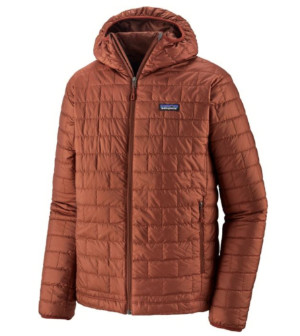
The Patagonia Nano Puff Insulated Hoodie is a warm, windproof, and water-resistant synthetic hoodie that looks good on the hill or in town. It's also made with 100% recycled materials including Primaloft Gold Eco insulation with a 100% recycled polyester shell and lining. The hood is designed to be worn under a helmet, so it's less awkward and oversized than on other jackets. It comes with two zippered handwarmer pockets and an internal zippered chest pocket which serves as a stuff sack. A drawcord hem and drop-tail hem seal in the heat. A woman's model is also available.
2. Arc'teryx Atom Insulated Hoodie
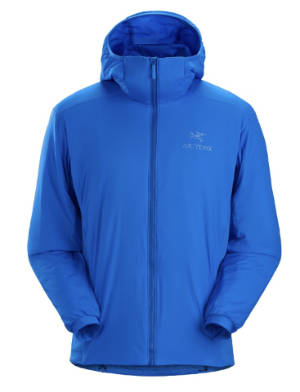
The Arc'teryx Atom Insulated Hoodie is a lightweight insulated jacket that can be used by itself or as a mid-layer. It's insulated with Arc'teryx's Coreloft non-woven polyester insulation, which dries quickly and retains warmth when it gets damp or wet, with stretch polyester fleece side panels for increased mobility. The Atom has a volume-adjustable, helmet-compatible hood, two handwarmer pockets, and an internal zippered chest pocket. It has stretch knit cuffs and a drawcord hem to seal out drafts. The cut is slim. A women's model is also available.
3. REI Microtrek Hooded Jacket

The REI Microtrek Hooded Jacket is a hooded synthetic jacket insulated with recycled 60g Primaolft. Surprisingly warm for its weight, it has an insulated hood with Lycra spandex binding to fit snugly around your head. The jacket has a center-front zipper with a full-length windflap and chin guard, a zippered chest pocket, zippered hand pockets, and two internal drop pockets. A hem drawcord and comfortable Lycra binding at cuffs help hold in warmth. The jacket also packs into its chest pocket. This jacket is available in an enormous range of sizes, from Small to XXXL, making it a good option for larger individuals and those who are hard to fit. A woman's model is also available.
4. Enlightened Equipment Torrid Jacket
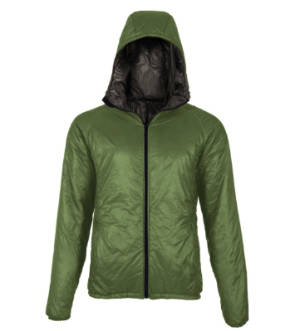
The Enlightened Equipment Torrid Jacket is a purpose-built synthetic jacket made for hiking and backpacking. It is insulated with Climashield Apex, which is also used by Enlightened Equipment to insulate its synthetic quilts. The Torrid has two zippered handwarmer pockets, elastic wrist cuffs, and an adjustable hood opening to block side drafts. The construction is not sewn-thru to eliminate drafts through needle holes, which is a significant enhancement and departure from the norm for jackets in this class. Its raglan sleeves are designed to be used with a backpack and its ultralight nylon exterior fabric has a durable water repellent finish to repel mist and light precipitation. A woman's model is also available.
5. KUIU Kenai Hooded Jacket
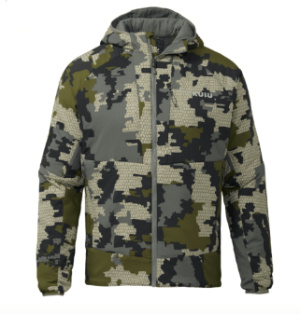
The KUIU Kenai Hooded Jacket is a lightweight insulated jacket designed for ultralight backpack hunting where adventurers travel off-trail in wilderness areas for days at a time. This jacket is insulated with KUIU's siliconized polyester, which is highly water repellent and so quiet that archery hunters recommend it. The hood has a swept-back design, so it doesn’t block your peripheral vision, an elastic front with a visor, and a back adjust cinch. There are 2 pit zips for ventilation (nice!), 2 zippered handwarmer pockets and a zippered chest pocket, 2 interior drop pockets, a hem cinch, and elastic cuffs. Raglan sleeves make it comfortable to wear with a backpack, and the exterior is treated with DWR for water resistance. A woman's model is also available! Non-camo colors are also available.
6. Outdoor Research Superstrand LT Hoodie

The Outdoor Research Superstrand LT Hoodie is a lightweight jacket insulated with OR's VerticalX insulation sewn in a discontinuous quilting pattern that reduces stitching and lets the insulation loft as much as 700 fill power goose down. The jacket has an adjustable volume hood, elastic cuffs, and a drawcord hem. There are two zippered handwarmer pockets and the jacket stuffs into one of them for easy storage. A woman's version is also available.
7. Patagonia Micro Puff Insulated Hoody

The Patagonia Micro Puff Hoody is an ultralight, highly compressible insulated jacket designed for cold and wet outdoor conditions. It combines a windproof Pertex Quantum shell made from recycled fishing nets with innovative PlumaFill synthetic insulation that mimics the warmth and packability of down. Featuring a simple under-the-helmet hood and a pocket that doubles as a built-in stuff sack, this minimalist layer delivers an outstanding warmth-to-weight ratio. A women's model is also available.
8. Montbell U.L. Thermawrap Parka
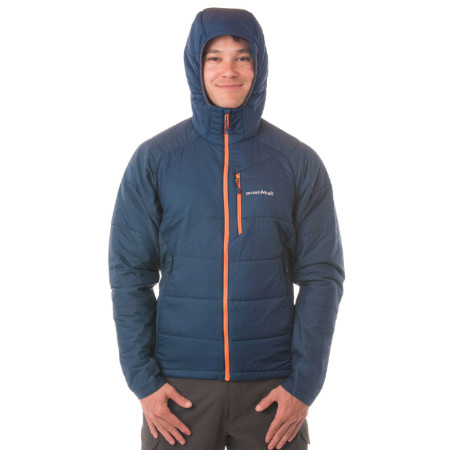
The Montbell UL Thermawrap Parka is a parka that's misnamed (in our opinion) because it's best used as a mid-layer or outer layer down to freezing and not for full-on winter use. It's insulated with Montbell's lightweight synthetic insulation and has two zippered handwarmer pockets and an external chest pocket. The hood has an elastic opening with a slight front brim and a rear volume adjuster. Elastic wrist cuffs and hem adjusters hidden in the pockets are included. A woman's model is also available.
9. Black Diamond Soluton 2.0 Insulated Jacket

The Black Diamond Equipment Solution 2.0 Hoody is a versatile, weather-resistant insulated jacket built for cold conditions and active mountain use. It features lightweight 60g PrimaLoft Gold Eco insulation paired with a recycled 20-denier micro-ripstop nylon shell and a PFAS-free DWR finish to shed wind and light moisture. Additional practical features include a protective hood, stretch knit cuffs, an adjustable hem, three secure zippered pockets, and the ability to pack down directly into its own left-hand pocket. A woman's model is also available.
10. Rab Alpine Flex Insulated Jacket

The Rab Xenair Alpine Flex Insulated Jacket has two zipped hand pockets, with one pocket doubling as an integrated stuff sack for convenient packing. It features lightweight PrimaLoft Gold Active+ insulation, breathable stretch-fleece side panels, a wind-resistant Pertex Quantum Air outer fabric, and a helmet-compatible hood. Additional details include elasticated cuffs, an adjustable hem, a regular fit, and a harness-friendly design suitable for climbing, hiking, and other active mountain pursuits. A woman's version is also available.
Synthetic Insulated Hoodie and Jacket Buying Guide
Best Use: Mid-layer vs Outer-layer
As a hiker or backpacker, you're likely to use a lightweight synthetic jacket while eating dinner in camp, at night as secondary insulation in a sleeping bag or under a quilt, or as a warm layer when you stop to take a hiking rest break during the day and feel a chill.
Many manufacturers will try to sell you on the idea that these jackets can be used as a mid-layer under a shell. That may be true if you're standing around waiting for the ski gondola or belaying a climbing partner, but you'll sweat too much, and soak your baselayers if you try to wear them under a rain jacket/shell while you're hiking vigorously.
Compared to Fleece Jackets
Synthetic insulated jackets and hoodies tend to be warmer than fleece jackets and provide much better wind protection. They also tend to weigh slightly less. But fleece by itself is much more breathable. There are pros and cons to both garments for active use.
Polyester Insulation
Most synthetic insulation in the jackets above is polyester, though it can come in different forms. Some manufacturers try to mimic the compressibility of down with it by combining different lengths of polyester in a single garment while others simply sew bats of it between the outer fabric and jacket liner. In general, synthetic insulation is less compressible than down, but it maintains its warmth better when it gets damp or wet. Still, synthetic insulation has the equivalent of 550-650 down fill power by weight, which is something to consider if warmth-to-weight is an issue. Synthetic insulation also does breaks down faster than down with repeated stuffing (compression), losing it ability to trap warmth.
Thermal Insulation Value
Unlike down insulation, it is difficult to compare two lightweight synthetic jackets in terms of warmth because most manufacturers use proprietary insulation and don't disclose how much they use to insulate the jacket. Manufacturers do tend to assign temperature ratings for their jackets, which can be somewhat helpful in determining their relative warmth although there is no standard method for assigning these either. When reading jacket specs, many manufacturers will list the weight of the insulation they use, as in 40 grams/sq meter and so forth. This reflects the weight of the insulation when sold in bulk, not the actual amount of insulation in the jacket, and is pretty meaningless from a consumer standpoint.
Sewn Thru vs Baffled Construction
With very few exceptions, lightweight synthetic jackets and hoodies use what is called sewn-through construction, where the front and back of the jacket are sewn together mainly for appearance's sake, though it can prevent certain types of polyester insulation from shifting. However, warm air can leak through the needle holes resulting in a slightly cooler jacket.
Shell Fabrics and DWR
Most of these jackets have nylon shells with a DWR (durable water repellent) coating to repel mist and light rain. They differ in the thickness of the outer fabric, measured in denier. Generally, a 20D nylon fabric is more durable than a jacket with a 10D shell fabric. While a 10D will be lighter weight and more compressible, it's likely to hole more quickly or show wear and tear, particularly at the wrist cuffs than a jacket made with heavier fabric.
Hood Controls
The hoods on many lightweight or ultralight synthetic hoodies and jackets are quite rudimentary, with elasticized hood openings that may be too large to prevent cold drafts from entering around your ears. It really depends on the size of your head and the specific jacket. 1-way adjustable hoods have volume controls in the back that let you shrink the hood for a better fit. Hoods with 2-way adjustability go a step further and add neck cords that let you size the opening to fit your face and block out drafts. This level of function is pretty rare on lighter-weight synthetic jackets and hoodies, though.
Pockets
When shopping for lightweight insulated jackets, you'll want at least a pair of zippered handwarmer pockets for storing gloves and other items you want close at hand. A chest pocket is also desirable if you use a Smartphone for navigation. While it's nice to have a pocket you can stuff your jacket into, it's more useful for climbers to attach to a sit harness than for backpackers or hikers with backpacks.
Hoodies, Jackets, Sweaters, Anoraks, and Parkas
Manufacturers apply product names inconsistently when it comes to lighter-weight down hoodies and jackets. In general, hoodies, sweaters, and anoraks weigh close to one pound. Look for ones with hoods, as they provide the most head and neck insulation. When it comes to jackets, some are lightweight and some are heavier and meant for winter use in harsh conditions. You really have to look at the overall jacket weight to determine which is which. Anything up to or slightly over 16 oz works well for transitional weather in spring or autumn, down to freezing, either on its own or layered under a shell, while heavier jackets are better for winter. Parkas are almost always intended for very cold winter conditions.
SectionHiker never accepts payment for gear reviews or editorial coverage. When you buy through affiliate links on our site, we may earn a small commission at no extra cost to you. Help us continue to test and write unsponsored and independent gear reviews, hiking and backpacking FAQs, and free hiking guides.











 English (US) ·
  French (CA) ·