

 2 hours ago
2
2 hours ago
2
PROTECT YOUR DNA WITH QUANTUM TECHNOLOGY
Orgo-Life the new way to the future Advertising by Adpathway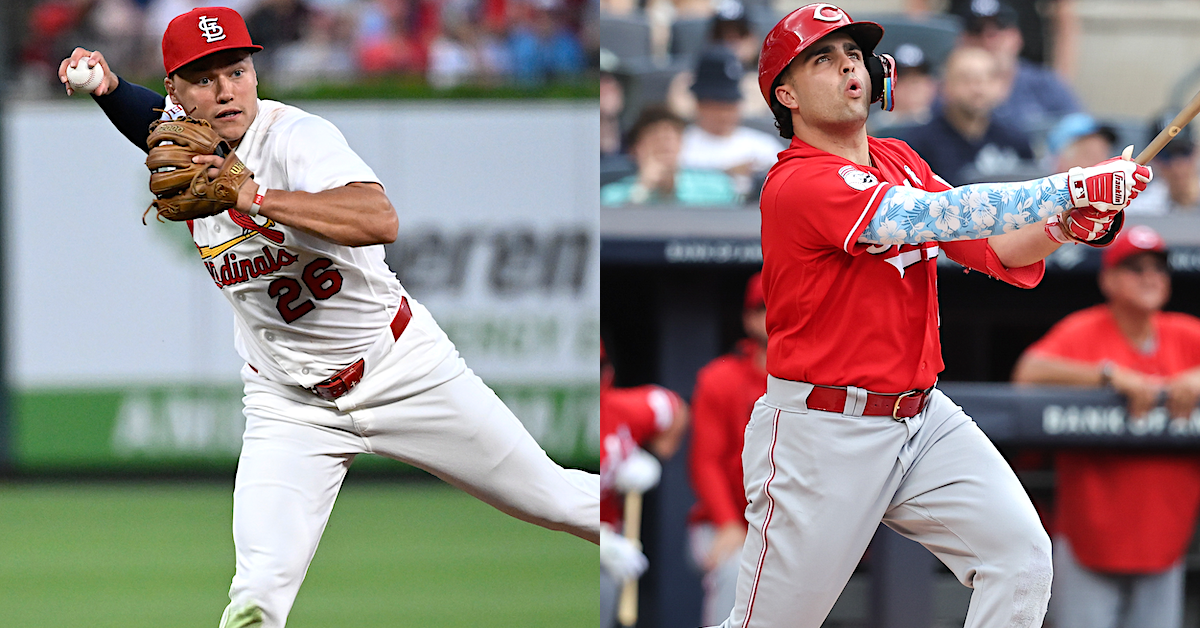 Joe Puetz and Wendell Cruz-Imagn Images
Most of baseball’s awards races are formalities this year. The favorites are clear, and deservedly so. Pete Crow-Armstrong is having one of the greatest seasons of the 21st century. Jacob Misiorowski is a closer throwing starter innings. Bobby Witt Jr. has been terrific, but Yordan Alvarez is unsolvable. Cam Schlittler has more fastballs than batters have answers. Kevin McGonigle is a phenom. But I’m most interested in the sixth major race: National League Rookie of the Year. The gambling odds would tell you that it too is settled, with Sal Stewart the prohibitive favorite. But if I had a vote this year, I’d cast it for JJ Wetherholt, and I want to explain myself because I think this race provides a fascinating look into old school versus new school baseball statistics, and how both have blind spots.
Before we get into my argument, let’s get a few disclaimers out of the way. I am not voting for NL Rookie of the Year. I’m not a member of the BBWAA, even. I haven’t placed any wagers on NL ROY, or on any awards, or on anything even peripherally related to this. I was a Cardinals fan before I started working in baseball, but that has faded away. I have a lot of fond memories of Ozzie Smith, but I’m a fan of the sport now, not a team, and I’ve watched more Reds games than Cardinals games this year because I love watching Elly De La Cruz play. No one in the world is truly unbiased, but I don’t have a horse in this race in any meaningful way.
With that out of the way, let’s get down to brass tacks. The two leading candidates for the award are Stewart and Wetherholt, with Carson Benge a distant-enough third according to the odds that I’m largely leaving him out of the discussion, though he’ll make some cameos. Stewart’s résumé revolves around his thunderous bat. He’s batting .266/.333/.465, with 32 homers and a gaudy 110 RBI. Even in an offense-friendly home park, that’s good for a 115 wRC+, 15th-best among qualifying first basemen, and of course the RBI total is better than that. He’s played so-so defense at first – not that I care much about that in award voting – and has accrued 2.2 WAR per our calculation of the statistic.
If Stewart’s calling card is his power, Wetherholt’s is his lack of weaknesses. He’s hitting .244/.343/.365, good for a 103 wRC+, with 17 homers despite playing his home games in cavernous Busch Stadium. He walks a ton and rarely strikes out. He’s a plus baserunner and an elite defender at second base, where he’s the favorite for a Gold Glove and is sure to draw strong consideration in my Fielding Bible voting. Between his ability to get on base, his baserunning, his defense, and the fact that WAR values second basemen more highly than first basemen for the same batting line, we have him at 4.5 WAR, the best mark among NL rookies. Benge is second on that list at 3.7 WAR; he’s been a better hitter than Wetherholt and a better defender than Stewart.
Great – now let’s throw WAR out the window. When I tell you that one of these players has nearly double the WAR of the other and that the one with the lower WAR total is a favorite to win the award, that should tell you that “but look at the WAR” isn’t a good argument. I’ll mention the building blocks of WAR again in this article, because the building blocks of WAR are “playing baseball” more or less, but the headline number? Banished to the shadow realm.
While “rookie” is exceedingly well defined for the purposes of this award, “of the year” has no obvious qualifications. It’s simply the best rookie-eligible player in each voter’s estimation. That leaves the field wide open, and it means that many different interpretations have merit. My own interpretation is that the award should go to the best-performing rookie, with their expected future production used sparingly as a tiebreaker. If a voter wanted to instead vote for the rookie they thought had the brightest future, though, I wouldn’t argue with them – that’s as much a rookie of the year as my version.
This year, my interpretation means that I need to compare Stewart’s power to Wetherholt’s all-around game. And like I mentioned, we won’t be using WAR to make the decision for us. It’s clearly true that being better at defense is important, and it’s also clearly true that if two players had the same batting line, you’d prefer an average-fielding shortstop over a DH. But I don’t think it’s reasonable to say that Wetherholt was nearly three wins more valuable than Stewart by virtue of position and defense. That’s just too many wins for me to take as gospel. Defensive statistics are noisy. Positional adjustments aren’t set in stone. We’re going to go component-by-component instead.
You Aren't a FanGraphs Member
It looks like you aren't yet a FanGraphs Member (or aren't logged in). We aren't mad, just disappointed. We get it. You want to read this article. But before we let you get back to it, we'd like to point out a few of the good reasons why you should become a Member. 1. Ad Free viewing! We won't bug you with this ad, or any other. 2. Unlimited articles! Non-Members only get to read 10 free articles a month. Members never get cut off. 3. Dark mode and Classic mode! 4. Custom player page dashboards! Choose the player cards you want, in the order you want them. 5. One-click data exports! Export our projections and leaderboards for your personal projects. 6. Remove the photos on the home page! (Honestly, this doesn't sound so great to us, but some people wanted it, and we like to give our Members what they want.) 7. Even more Steamer projections! We have handedness, percentile, and context neutral projections available for Members only. 8. Get FanGraphs Walk-Off, a customized year end review! Find out exactly how you used FanGraphs this year, and how that compares to other Members. Don't be a victim of FOMO. 9. A weekly mailbag column, exclusively for Members. 10. Help support FanGraphs and our entire staff! Our Members provide us with critical resources to improve the site and deliver new features! We hope you'll consider a Membership today, for yourself or as a gift! And we realize this has been an awfully long sales pitch, so we've also removed all the other ads in this article. We didn't want to overdo it. In case you didn't read all that, here's the short version. Membership includes:
✓Ad-free browsing
✓Unlimited FanGraphs & RotoGraphs articles
✓Historical & platoon projections
✓Leaderboard & player-page stat heatmaps
✓One-click data exports
✓Customizable player-page dashboards
✓Dark & Classic site modes
✓Weekly Members-only mailbag
✓FanGraphs Walk-Off, your year in review
✓Optional homepage photo removal
✓Gift articles to non-members
It’s important to give Stewart appropriate credit for his run production ability, and I don’t think that wRC+ fully captures it. That statistic measures every single plate appearance in a neutral context. That’s very useful for figuring out the future, because hitters don’t control the context they bat in, but it’s less useful for saying how much a hitter helped his team win in the games they actually played.
I don’t think RBI numbers are a very good way of capturing that either, though. It’s immediately obvious that team context has a ton to do with RBI totals. A hitter who batted with the bases loaded every time would have a ludicrous RBI total even if he was terrible; a hitter who always came up with the bases empty could be peak Ted Williams and still put up paltry RBI numbers. Now, those two scenarios aren’t realistic. But leadoff hitters bat with runners on base far less often than cleanup hitters. Teams with poor offenses give their hitters fewer opportunities to drive a run home. Like many statistics, RBI totals reflect a blend of skill, opportunity, and chance – round ball and round bat, as they always say.
Fortunately, there’s a statistic that accounts for opportunity: the clumsily-named RE24. That name sounds like an experimental drug from a sci-fi movie, but it’s actually a straightforward idea. Take the situation before a hitter comes to the plate. Then take the situation after they finish batting, accounting for runs scored, runners advanced, and whether or not they made an out. Turn it all into run expectancy, and give them credit (or assign them blame) for the difference in run-scoring expectation before and after their at-bat.
To put this in more concrete terms, consider a plate appearance that starts with a runner on third and one out. A sacrifice fly moves the expected runs scored in that inning from 0.86 to 1.1, crediting the hitter with 0.24 runs of value. A strikeout drops the expected runs scored that inning from 0.86 to 0.32, docking the hitter 0.54 runs. Or consider a runner on third with two outs. A single moves run scoring expectations from 0.32 to 1.21, a gain of 0.89 runs. A walk, on the other hand, only bumps the run expectancy from 0.32 to 0.48, a gain of 0.16 runs. Want a statistic that says a single is better than a walk when you can drive in a run, or that strikeouts with runners in scoring position are bad? RE24 does the trick. It also handles the other side of the equation well. With the bases empty, a walk really is as good as a single, and RE24 agrees.
By considering the state when a hitter comes to the plate, RE24 accounts for opportunity. All you can do as a hitter is play the hand you’re dealt. RE24 measures “the hand you’re dealt” in a slightly smarter way than just ignoring it completely. I don’t think it’s controversial to say that situational hitting – changing your approach based on the game situation – is a real thing that batters do. RE24 sets the incentives right; it gives you credit for doing the thing that makes your team score the most runs, and by construction “the thing that makes your team score the most runs” is different in different situations.
RE24 thinks Stewart is pretty dang good. It has him 20.3 runs above average this year. In other words, a perfectly league average batter hitting in his spot would have cost the Reds 20-ish runs in one way or another – fewer homers, more strikeouts in big spots, fewer baserunners to open innings, the whole gamut of ways that Stewart has added value this season. Those RBIs are a big part of it. He’s second on his team in RE24 behind De La Cruz (sure, checks out), and second only to TJ Rumfield, who gets to play in Colorado, among qualifying NL rookies. Given that RE24 doesn’t adjust for park, I’m comfortable saying that no NL rookie did more with their bat than Stewart.
Of course, Wetherholt was no slouch offensively either. While Stewart batted second, third, and fourth and cashed in runners in front of him, Wetherholt led off in every game he played this year. His OBP-heavy game is a great fit for how often he came up with the bases empty; when there are no runners to advance, a walk is as good as a hit, and his double-digit walk rate is perfect in that spot. RE24 gives Wetherholt credit for 10.2 runs above average. (Benge is marginally ahead of Wetherholt here at 11.3 runs.)
That’s one estimate of the gap in value between Stewart’s bat and Wetherholt’s bat – 10 to 11 runs. If you’re interested in another, there’s Win Probability Added. Think RE24, but instead of measuring how many runs are likely to score, WPA measures how likely the batting team is to win before and after the plate appearance. No one cares if you hit a grand slam in a 23-3 blowout. A two-run single, down a run in the ninth, is far more valuable to a team’s chances of winning. Why not account for that in our statistics?
WPA thinks that Stewart has added about 1.4 wins to the Reds’ total, as compared to a league average hitter, based on what he’s done in the situations he’s faced. That’s pretty good! Only five rookie hitters in all of baseball have a better mark, and four of them play in the American League. But the fifth member of that group is Wetherholt, who checks in at 1.99 WPA. Though he’s been a worse hitter than Stewart overall, his worst performances have come when there are no stakes. In low-leverage situations, he’s batting a putrid .228/.340/.296, 12% below average. The rest of the time, he’s been 14% above average offensively. In other words, he concentrated his best performances when it mattered most. Stewart, on the other hand, has been steady: very good in high leverage, good in medium leverage, good in low leverage. Benge looks worse by WPA; thanks to some rough performances in big spots, he only gets credit for 0.5 wins.
I don’t think that WPA is a fair measure for evaluating the best rookie, so I would not consider it if I were voting. I mentioned it just in case a voter reading this wanted to take clutchness into account. There’s no evidence that it’s a skill. There’s no evidence that this means Wetherholt will continue to play his best when it matters most. But if you want to give the award to the hitter whose offense was worth the most expected wins at the moment it happened, that would surprisingly be Wetherholt.
I’m much more aligned with RE24’s accounting of the world for this award. I love WPA for awards like MVP that care about “valuable” rather than “best,” and I’m sure I’ll get an article out of that in the long winter we have ahead. I concur that Stewart is a better hitter than Wetherholt, and I think 12 runs is a perfectly reasonable estimate for how much better. He’s been very good in the role the Reds deployed him in, cashing in baserunners. Wetherholt has been good at getting on base to set the table, but Stewart’s bat is clearly more valuable.
One last point on the RBI front: Stewart’s RBI total is impressive, of course, and I don’t think “RBIs don’t matter” is a reasonable dismissal of that. It’s certainly not a way to win an argument. Runs win games, after all. But even if you care a lot about RBIs, you have to adjust them for context. Stewart was 10th in the majors this year when it came to having runners on base when he batted. The top 10 averaged 95 RBI. He did better than that average, but it’s not like his opportunity set didn’t matter. When you bat with so many dudes aboard, you’re going to drive some of them home. We care about how much better he did in the situations he was put into, and 15 extra RBI is no joke, nor are the 21 runs above average that RE24 credits him with. But you can’t just say 110 RBI with no context, because the Reds did a really good job of setting Stewart up with runners on base.
Next, let’s consider baserunning. Wetherholt has stolen 14 bases. Stewart has stolen 15. But Wetherholt is quite efficient, with only one time caught stealing, while Stewart has been gunned down six times. That isn’t good considering that you need to run a 75%-ish success rate on steals to break even. Stewart’s aggression has cost the Reds about half a run compared to just not attempting to steal, while Wetherholt’s attempts have added about 1.5 runs to St. Louis’ ledger.
Excluding steals, Stewart has also cost the Reds on the basepaths. He takes an extra base on just 25% of opportunities, and he’s also made seven outs on the bases this year. Conversely, Wetherholt runs the bases like the leadoff hitter he is. He takes an extra base on 52% of his chances to do so, and he’s only made a single out on the bases this year. That’s an enormous gap. One way of thinking about it? Stewart has been on second base when his team hit a single 11 times this year. He stopped at third five times, scored five times, and got thrown out at home once. Wetherholt has been on second when his team hit a single 20 times this year; he’s stopped at third four times and scored 16 times.
That’s a lot of value that doesn’t show up in the box score. Specifically, if you assign run values to all of that based on how much advancing or making an out changes your team’s scoring expectation, Stewart has been 3.5 runs below average, while Wetherholt has been 1.8 runs above average. Between that and the gap in steals, there’s a seven-run gap in baserunning value between the two. Benge is even a hair better than Wetherholt on the bases, for the record. That passes the sniff test for me; on our leaderboards, Wetherholt and Benge are each one of the best 20 baserunners in baseball this year, while Stewart is one of the 20 worst. But baserunning just isn’t all that important – seven runs of difference is very little. Heck, Yordan Alvarez is a worse baserunner than Stewart and it just doesn’t matter.
The tale of the tape on offense looks like this:
Tale of the Offensive Tape, NL ROY Contenders
| FG Off* | 8.1 | 5.3 | 13.1 |
| RE24 | 20.3 | 10.2 | 11.3 |
| BsR | -3.9 | 3.2 | 3.6 |
| WPA** | 1.35 | 1.99 | 0.53 |
*: FG off combines wRC and baserunning into one number
**: denominated in wins, while all other stats are denominated in runs
I think it’s pretty clear that Stewart has been the better player on offense this year, and I think it’s reasonable to think that Benge has been roughly as good as him. I think it’s equally clear that the gap is fairly narrow. Stewart has gotten run-scoring opportunities and cashed them in adroitly. Wetherholt has been a smaller-scale success, but he’s also been good at his role. He leads off and gets on base. We like that, just like we like sluggers who send runners on the basepaths home to celebrate. Wetherholt is also getting it done on the basepaths, while Stewart isn’t. But even though Wetherholt has been one of the best baserunners in baseball and Stewart one of the worst, that gap is smaller than the difference in their production with the bat.
If we were only allowed to consider offensive value, I’d vote for Stewart over Wetherholt. I might vote for Benge over both of them. Considering how many different statistics I looked at that all landed in a similar place, I think the only fair read is that the three are fairly close. All three of these guys were assets to their team on offense, as I’m quite sure that fans of their teams would tell you. But defense matters too, and realistically, this one isn’t as close.
Now, it’s good to remember that defensive metrics are noisy and that you shouldn’t take them as gospel. It’s very hard to measure defensive talent. If someone quotes you an FRV number and tells you that it proves, beyond a doubt, how good a player was with the glove, you have my permission to make a fart noise with your mouth to show them how you feel about it. But let me make some gentle assertions and see what you think about them.
I assert that for the same offensive value, you’d prefer to have a second baseman compared to a first baseman. I don’t think this is particularly controversial. Jose Altuve and Vladimir Guerrero Jr. have very similar career batting lines. Regardless of how you feel about the banging scheme, does anyone think Vlad’s 132 wRC+ at first is more valuable than Altuve’s 127 wRC+ at second? Second basemen aren’t as good of hitters as first basemen! Big league first basemen have a 115 wRC+ this year; big league second basemen have a 95 wRC+ (right fielders are at a 102 wRC+).
The reason for that split is that there’s some minimum defensive level necessary to play second base, and a lot of first basemen don’t clear it. If they did, they’d go play second and improve their team’s offense by a huge amount. I don’t require you to convert that gap into some exact number of wins, but surely, you’ll concede the weak form of my argument – given the same results on offense, a second baseman is more valuable than a first baseman.
Okay, another assertion: JJ Wetherholt is a plus defensive second baseman. Again, I don’t think this is controversial. Every advanced metric says that he’s phenomenal out there. He made only two errors in more than 1,000 innings, the third-lowest mark out of 29 second basemen who played 500 or more innings. He notched 0.48 assists plus putouts per inning – outs per inning, roughly speaking. That’s fifth highest out of that group of 29. He was one of the best at making outs, and also one of the best at avoiding errors. He was first in double plays started per inning, though I’ll give some of that credit to Masyn Winn. He’s the best defensive second baseman by a mile according to Statcast’s FRV, and in the top five according to both DRS and Baseball Prospectus’ RDA. He passes the eye test. He’s the betting favorite to win the NL Gold Glove at second base. You don’t have to put a run value on it to say that Wetherholt has been an excellent fielder at an important defensive position.
One last assertion about defense: Sal Stewart is a middling defender. I’m not trying to say he’s bad. He played across the infield as a prospect, and the Reds have occasionally run him out at second and third this year, but they prefer to play him at first base. His versatility is occasionally valuable even now – he’s made four mid-game position switches in the last two months – but for the most part, he’s their everyday first baseman. That makes sense to me; that’s where our prospect team thought he’d end up, where scouts across the industry thought he’d end up, and where his team clearly thinks he’s the best fit.
I don’t believe the advanced metrics that say Stewart is a bad first base defender. It’s very hard to figure out defensive value at first base, and while Statcast thinks he’s below average at receiving throws, I’m not confident enough in their numbers, given the newness of the statistic and the few innings Stewart has played, to think he’s anything other than average. I bet he’ll improve over time, too; the Reds didn’t give him much playing time at first in the minors, so he’ll continue to learn on the job. But nevertheless, he’s not some defensive wizard out there.
That doesn’t matter all that much when it comes to my estimation of Stewart’s trajectory as a baseball player. He plays a position where they pay you to hit, and he hits. Sounds good to me. But you can have that in your head, and also say that on the defensive side of the ball, you’d prefer Wetherholt. Forget the magnitude for a minute – Gold Glove-contender second baseman or bat-first corner infielder looking for a defensive home. Leave their offense out of the comparison and weigh the two defensive profiles against each other, and there’s a clear winner.
Benge doesn’t fit quite as cleanly into the discussion here, so I left him for last. He’s a good right fielder, thanks in large part to his cannon arm; he’s thrown out 10 baserunners on the year. Generally speaking, I’d rather have an excellent second baseman than a good right fielder, but this is a closer call for me. To continue my analogizing to past Astros, I’d prefer Altuve (career 127 wRC+) to George Springer (career 128 wRC+). But defensive metrics are noisy, and if you thought Benge was just as good of a defender as Wetherholt, I’d disagree with you but wouldn’t think you were being unreasonable.
Where does that leave us? With a decision to make about how much we care about hitting, baserunning, and fielding. I can’t choose those weights for you. You might think that hitting is worth 30 times more than baserunning or fielding, or that baserunning is the most important by a mile. I think you’d be silly to think either, but your opinions are your own. I can, however, tell you my own views.
Of those three phases, hitting is the one I care about most. It’s the most stable, and you can stack up the most value there. Alvarez, the best hitter in baseball this year, checks in at 70 RE24. Crow-Armstrong, in one of the greatest defensive seasons of all time, is something like 25 runs above average in center. Witt is first in baseball in baserunning value, 8.5 runs above average. The ranges don’t lie.
But we’re not choosing between the best hitter in baseball and the best fielder in baseball. We’re choosing between a good-hitting first baseman, a solid-hitting second baseman who’s also a very good defender and baserunner, and a right fielder who does everything well. If Wetherholt were swinging a wet noodle out there, it wouldn’t matter how many double plays he turned or how many times he took the extra base. But heck, he got on base more frequently than Stewart this year in a tougher home park for offense, and he’s also approaching the 20-homer plateau. Benge is also right on the doorstep of 20 homers, and he’s similarly electric on the bases and no slouch in the field. They aren’t chopped liver.
For me, the decision is very close at the top – and it’s between Wetherholt and Benge. I’d put Stewart in third despite his enviable run production totals. I understand why Stewart is a leading contender despite WAR not liking his season. I think that people who say to completely ignore RBIs and batting average are missing the point. But I think that blindly taking RBI totals is just as bad as blindly taking WAR totals (worse, really, but both are bad). Context is important everywhere in life, and baseball is no exception. For me, the sum total of Wetherholt’s and Benge’s seasons across hitting, running, and fielding is better than Stewart’s in the same categories. I’d vote for Wetherholt, but I’ll level with you: I started this tale of the tape thinking it was a clear choice and ended it thinking that I’d be pretty happy voting for Benge too.
If you’re a voter reading this, I hope you take my advice into consideration and look at each candidate’s total contributions in context to make your decision. Like I said, I wouldn’t fault you for voting for Stewart if you think his performance at the plate is so staggering that the rest of it doesn’t matter. But if you’re just looking at the RBI total and going on that, I urge you to broaden your horizons just a little bit before making a choice. And if you’re a fan, well, there’s really no losing here. Any of these three would be deserving winners. I hope you enjoyed this comically long discussion of the most fascinating awards race of the season in any case.










 English (US) ·
  French (CA) ·