

 2 weeks ago
8
2 weeks ago
8
PROTECT YOUR DNA WITH QUANTUM TECHNOLOGY
Orgo-Life the new way to the future Advertising by Adpathway Charles LeClaire-Imagn Images
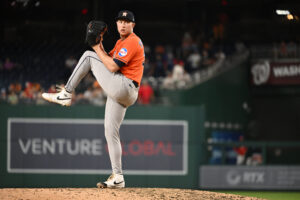
Paul Skenes turned in his last truly dominant start on May 12 at home against the Rockies. He threw eight shutout innings, allowed just two hits and no walks, and notched 10 strikeouts. Since then, Skenes has posted a 5.36 ERA over 47 innings. He’s gone fewer than six innings in six of his last nine starts, and seven of his 11 home runs allowed on the season have come during that same span.
It’s safe to say Skenes has been missing a certain je ne sais quoi on the mound over the last month and a half. And I say je ne sais quoi, which literally translates to, “I don’t know what,” because there are competing theories about what, if anything, is actually wrong with him. Some blame poor defensive play behind him and point to his expected stats as proof of unfortunate batted-ball luck. Some say it’s a mechanical issue, while others fear he’s pitching through a physical ailment.
It’s true that Skenes has been on the mound for several obvious defensive gaffes. Everyone remembers Opening Day and the bases-loaded fly ball that center fielder Oneil Cruz lost in the sun. The misplay turned a would-be sac fly into a bases-clearing triple. Fast forward to last week, when third baseman Nick Gonzales allowed two runs to score after his throw home on a bases-loaded grounder hit the runner, and it’s pretty easy to assume the defense behind Skenes has been letting him down all season. The numbers support the impression left by those glaring blunders. Overall, Pittsburgh’s defense has been worth -18 fielding runs (fifth worst in the majors). With Skenes on the mound, the Pirates have posted -7 FRV, which is tied for the worst defensive showing behind any pitcher this season. Moreover, most of that negative defensive value (-5 FRV) has come during his skid.
But defensive woes don’t account for everything that’s gone wrong for Skenes recently, least of all his sudden spike in home runs allowed. Over his last nine starts, he has a HR/FB ratio of 14.3%, contributing to a full-season mark of 10.8%. In 2025, he posted a 6.3% HR/FB ratio. However, sustaining his pace from 2025 was always unlikely. From 2015 to 2025, only six starting pitchers (minimum 160 IP) have managed multiple seasons with a HR/FB rate of 9% or better (Logan Webb, Kevin Gausman, Michael Wacha, Max Fried, Jose Quintana, and Justin Verlander). The feat occurred more frequently prior to 2015, but the ball was also leaving the park less often overall.
In general, a minuscule HR/FB ratio, in part, is due to some favorable batted-ball luck, meaning one could argue that Skenes’ below-average HR/FB ratio this season is largely a case of natural regression. That is, after all, the entire theory behind xFIP, which takes the traditional FIP calculation and replaces the pitcher’s actual home run total with his fly balls allowed multiplied by the league’s average HR/FB ratio. As a result, FIP and xFIP are largely in agreement on the 2026 version of Skenes.
The same cannot be said of his ERA and xERA, though. For the first time in his career, Skenes’ xERA is providing a sunnier outlook than his actual results. So far this season, his ERA sits at 3.62, while his xERA is 2.76. In his first two seasons in the majors, Skenes out-pitched his xERA by just over half a run. The expected version of ERA can be understood as a translation of xwOBA to the ERA scale. Using exit velocity and launch angle, xwOBA projects batted-ball outcomes based on historical results. Since it does not consider spray angle, batters who outperform their xwOBA are often adept at pulling balls in the air, since pulled fly balls tend to be more valuable than fly balls hit to center or the other way. Logically, the inverse would be true for pitchers. Those able to avoid letting batters pull the ball in the air are most likely to meet or exceed the bar set by their xwOBA allowed.
You Aren't a FanGraphs Member
It looks like you aren't yet a FanGraphs Member (or aren't logged in). We aren't mad, just disappointed.
We get it. You want to read this article. But before we let you get back to it, we'd like to point out a few of the good reasons why you should become a Member.
1. Ad Free viewing! We won't bug you with this ad, or any other.
2. Unlimited articles! Non-Members only get to read 10 free articles a month. Members never get cut off.
3. Dark mode and Classic mode!
4. Custom player page dashboards! Choose the player cards you want, in the order you want them.
5. One-click data exports! Export our projections and leaderboards for your personal projects.
6. Remove the photos on the home page! (Honestly, this doesn't sound so great to us, but some people wanted it, and we like to give our Members what they want.)
7. Even more Steamer projections! We have handedness, percentile, and context neutral projections available for Members only.
8. Get FanGraphs Walk-Off, a customized year end review! Find out exactly how you used FanGraphs this year, and how that compares to other Members. Don't be a victim of FOMO.
9. A weekly mailbag column, exclusively for Members.
10. Help support FanGraphs and our entire staff! Our Members provide us with critical resources to improve the site and deliver new features!
We hope you'll consider a Membership today, for yourself or as a gift! And we realize this has been an awfully long sales pitch, so we've also removed all the other ads in this article. We didn't want to overdo it.
In 2024 and 2025, Skenes kept his wOBA allowed just under his xwOBA, despite an above-average rate of pulled fly balls in 2025. This year, his pulled fly ball rate is back in line with his performance in 2024, yet his .274 wOBA allowed sits above his .260 xwOBA. Given his track record of outperforming his xwOBA, it’s reasonable to think Skenes has endured some unjust batted-ball luck this year and is due some positive regression.
However, even if his wOBA dips back below his xwOBA, that .260 xwOBA is still a career high, meaning there’s still some measure of Skenes’ recent underperformance left unaccounted for by bad luck and worse defense. So why is his xwOBA up? The literal answer is because batters are hitting the ball harder and in the air more. His average exit velocity allowed is up half a tick over last year, going from 87.6 mph to 88.1, and his average launch angle allowed has increased from 12.2 degrees to 15.0.
As you might expect, it’s his last nine starts that are really yanking those numbers up, with an average exit velocity of 90.4 mph and an average launch angle of 15.9 degrees. Part of the problem is that hitters are no longer swinging over his sinker at the 27% clip they did last season. Per Statcast’s bat-tracking data, hitters are swinging over the pitch just 9% of the time this year. Instead, they are able to take a pitch designed to generate groundballs and hit it in the air, where it’s much more likely to generate a negative outcome for the pitcher.
The other pitch getting knocked around more consistently this year is Skenes’ changeup. In 2026, his wOBA allowed on the pitch is up to .271, compared to .107 in 2025, while the pitch’s xwOBA has risen from .123 to .221. This season, hitters are on time with the pitch on 45% of their swings, compared to 39% in 2025, but more importantly, they’re making more solid contact, rather than tapping the ball off the end of the bat. Whereas last year hitters centered the pitch just 30% of the time, they’re now lining up the barrel 48% of the time.
But even though bat-tracking data offers insight on how hitters are getting it done against Skenes, we still haven’t locked in on why they’re able to do so. Skenes himself has been unwilling or unable to put a specific label on his struggles. Following his most recent start in Philadelphia, in which he allowed a career-worst seven earned runs, reporters asked Skenes about his plan to get back to his early-season form. And if he’d offered even a vague plan of action, it would be easier to believe that he’s about to turn things around, but instead he said, “I’m not sure.” He did pledge to figure out what’s going on and, “just keep attacking it,” but after nine ineffective starts, it’s disheartening to hear that Skenes and the Pirates’ coaching staff are still working through the identification phase of troubleshooting his issues.
Beyond that, what Skenes has mostly told the media over his last several starts is that he “didn’t execute very well” or that he “could have executed better.” Not very enlightening. But after his start on Wednesday, Skenes did allude to his falling behind in counts and throwing pitches that caught too much of the plate as explanations for how the Phillies managed to tag him for seven runs over four innings. Falling behind in the count points to a control issue, while pitches lingering over the heart of the plate is more of a command problem — two distinct, but nevertheless related concerns.
Speaking to control first, Skenes has been in the zone less this season, with his Zone% dropping from 50.8% to 46.4%. That’s not necessarily a problem for a pitcher like Skenes, who is known for inducing whiffs and weak contact on pitches outside the zone. However, the heat maps below show that he has been far less proficient in that regard this season.
 Source: Baseball Savant
His whiff rate is down across all four regions outside the zone, and his wOBA allowed on contact is down in all but one of the outside regions. Meanwhile, his inability to locate his sinker within the zone has likely led to the change in contact quality described above. Skenes was able to throw the pitch mostly in the lower half of the zone last season, while this year, the pitch’s locations are largely splayed across the middle of zone, which is basically the last place you want a sinker to cross the plate.

Rather than continuing to throw the pitch over the heart of the plate, Skenes has dramatically cut his usage of the pitch from late May onward. But by removing the sinker from his arsenal, he’s made the task of differentiating between his four-seamer, changeup, and splitter much easier for the hitter. Especially when his splitter and changeup locations are less competitive as well.


So it seems that in highlighting an inability to locate his pitches, Skenes did correctly call out one aspect of what’s been ailing him, but he (understandably) offered only the minimum viable explanation needed to answer the question and keep things moving. What he didn’t address is that nearly every pitch in his arsenal has experienced a decline in stuff this season.
PitchingBot Stuff Grades
| FA | 51.6 | 50.3 | 45.2 |
| SI | 57.2 | 60.2 | 51.5 |
| CH | 53.0 | 49.6 | 44.8 |
| FS | 53.3 | 56.1 | 50.5 |
| SL | 56.1 | 55.8 | 52.5 |
Now, diminished stuff grades tell us the overall quality of the pitch has taken a step back (at least according to the stuff model’s understanding of quality), but they don’t spell out for us which specific variables tanked the grade, so we’re left to do a bit of our own investigating. The inputs to a stuff model include velocity, movement (horizontal and vertical), release point, spin rate, spin axis, spin efficiency, and in the case of secondary pitches, the differential in velocity and movement relative to the pitcher’s primary fastball.
There’s one obvious variable impacting the stuff grades on Skenes’ four-seamer and sinker: velocity. His velocity was down to start the year and has continued its descent as the season has progressed.

After averaging 98.8 mph and 98.2 mph in 2024 and 2025, respectively, his average four-seamer velocity is down to 97.0 mph this year, and he has yet to touch triple digits even one time (despite doing so 13 times last season). According to Skenes and Pirates manager Don Kelly, dialing back the velocity is a conscious choice to preserve the pitcher’s longevity. In discussing the decision to de-emphasize velocity, Skenes said, “Velo doesn’t do you any good if you don’t have it when you need it.”
But does Skenes still have it when he needs it? I compared his average four-seam velocity with RISP in a close game to all other situations and couldn’t find any indication that he has been reaching back to get it when he needs it. Maybe he hasn’t felt as though he’s needed it, but I feel confident that at some point over his last nine starts, a 100-mph heater would have come in handy.
Four-Seamer Velocity
| 2024 | 99.1 | 98.8 |
| 2025 | 98.3 | 98.2 |
| 2026 | 97.1 | 97.0 |
For RISP situations, the score differential also had to be within three runs to ensure the game was reasonably close.
Another variable in the stuff-model soup is release point, which encompasses arm angle and extension. Skenes is throwing from a slightly higher slot this season, moving from a 23-degree angle to a 26-degree angle and adding an extra inch of extension. It’s not a huge change, but it might be enough to impact the distribution of force as the ball leaves his hand, which could subtly skew the spin and movement on his pitches. For example, this season Skenes is getting more glove-side movement on his slider but less arm-side run on his four-seamer and changeup, suggesting his wrist is less pronated, so he’s exerting less pressure on the inside part of the ball as he releases it. Such a change could also explain why he’s getting less drop on his changeup and splitter.
That more or less ends our examination of What’s Eating Paul Skenes, but before we conclude, we should acknowledge that there’s still some small sample weirdness going on here. For one, three of Skenes’ past nine starts have come against top-10 offenses (Dodgers, Cubs, Marlins), while in two outings, he faced the upward-trending Phillies. Another of those starts came in Colorado, where his heavy reliance on his four-seamer and changeup made it clear that he wasn’t confident in throwing his other pitches at that elevation. Skenes, who has a small, but meaningful, negative platoon split against lefties, also faced the three top offenses in terms of wRC+ from left-handed hitters — the Dodgers, Astros, and Cubs — with the Phillies ranking seventh on that list. So as we sit back and take in everything that we’ve learned about Skenes and his journey over the course of this season, and particularly these last nine starts, it’s worth underscoring that some of his woes stem from a rough part of the schedule bumping up against some bad defense and ill-timed batted-ball misfortune.
And to the extent that there actually is something wrong with Skenes, it’s likely not a situation where one weird trick will make it all better. Because something is a little hinky with his whole deal right now — from velocity, to command and control, to pitch movement, to mechanics — he’s got a lot to figure out. Fortunately for him, this is Paul Skenes we’re talking about. I trust that he possesses the perfect cocktail of motivation, stubbornness, and talent to get it done.










 English (US) ·
  French (CA) ·