

PROTECT YOUR DNA WITH QUANTUM TECHNOLOGY
Orgo-Life the new way to the future Advertising by AdpathwayNever change a running system? Not at Orbea. Despite the Wild’s status as one of the most successful eMTBs of recent years, the Basque manufacturer has fundamentally reworked its winning formula. A purpose-tuned Avinox drive system, the connected RS Ecosystem and a clearly defined philosophy sit at the heart of the new Wild LT, which is designed not to be more powerful, but better. We put it to an extensive test.
 Orbea Wild LT M-LTD RS | Avinox MS2 RS/800 Wh | 170/170 mm (f/r)
Approx. 22 kg in size L | € 13,499 | Manufacturer’s website
Anyone who has followed Orbea’s development over the past few years will quickly spot a pattern: the Basque brand rarely follow the mainstream. Rather than chasing trends, they consistently pursue their own vision. It’s an approach that has not only earned the Orbea Wild victory in our big E-MOUNTAINBIKE group test for two years running, but also won it a loyal fan base.
With the new Wild LT, Orbea are now opening a new chapter. The Avinox M2S RS motor, customised by Orbea on the software side, sits at the core of the Wild LT, but the more significant idea is that of a fully connected eMTB. Motor, suspension, drivetrain, dropper post and other electronic components are designed to function not in isolation, but as a unified system.
We don’t accept the standard.
-Orbea
With this, Orbea are bringing the RS philosophy that already shaped the Rise and, more recently, the Rallon RS, to their full-power eMTB range. The goal isn’t to combine the best individual components, but to create a bike that feels like a cohesive package. It’s an approach that certainly sparks curiosity.
Beyond the technical highlights, the new Wild LT relies on a proven recipe: a full carbon frame, 170/170 mm of travel front and rear, and the choice between a mullet or full 29er setup. Through the extensive MYO configurator, you can tailor the bike to your personal preferences in numerous areas, including the suspension, brakes, tires and wheels, and even choose a custom paint finish.


Orbea are pricing the new Wild LT with confidence. The flagship model with electronic suspension retails at € 13,499. In return, it tips the scales at approx. 22 kg in size L, which places it among the lighter full-power bikes currently available on the market. We tested the new Orbea Wild LT around Benasque in the Spanish Pyrenees and reveal whether the concept delivers on the trail.
The new Orbea Wild LT 2027 in detail
At first glance, you could easily mistake the new Wild LT for the analogue Rallon or the Rallon RS. The slim silhouette, the brace linking the down tube and seat tube, and the rectangular frame design give this full-power eMTB a surprisingly elegant appearance. Despite housing a battery in the down tube and a powerful drive unit, the Wild never looks bulky or overbuilt, fitting seamlessly into Orbea’s current design language with well-balanced proportions. The purple finish on our test bike suits it well. Those after something more understated or more eye-catching can turn to Orbea’s in-house MyO configurator, which covers both colour and component choices extensively.
The Wild LT impresses with more than just its looks. The robust motor cover is complemented by a protector that extends high up the frame, reliably shielding the carbon frame from stray rocks. The fitted Shuttle Guard prevents scratches when loading the bike onto the tailgate of a pick-up, while a rubber protector stops stones and dirt from accumulating between the main frame and the swingarm.

A generously-sized chainstay protector extending all the way to the seatstay ensures a quiet ride and, together with the standard chain guide, effectively prevents chain slap. On the new Orbea Wild LT 2027, the cables can either be routed cleanly through the headset or, for easier maintenance, fed into the frame through conventional bolted cable ports.
An FLP multitool with 2, 3, 4 and 5 mm Allen keys sits inside the rocker link, held in place by a magnetic mount, and is complemented by a 6 mm Allen key integrated into the rear axle, a setup that has you covered for most trail-side repairs. The omission of a T25 Torx key is a notable gap, given how frequently it is needed for brake rotors and cockpit components.


The Wild LT makes up for that elsewhere with plenty of attention to detail. Recommended torque values are printed directly next to the relevant bolts, a small touch that proves incredibly useful in day-to-day workshop use.
The Avinox M2S RS motor of the Orbea Wild LT 2027
With the Wild LT, Orbea are using the Avinox M2S motor system for the first time. According to the Basque brand, the key factors were not the system’s power figures, but rather its compact dimensions and the integration possibilities it offers.
What has Orbea changed on the Avinox system?
Orbea have added the RS designation to the Avinox M2S drive unit to reflect a software adaptation tailored to the Wild LT, with the hardware itself unchanged. The main development priority was reactivity. The standard Avinox system, the developers explain, responded too slowly for the trail performance they had in mind; delivering outputs of up to 1,300 W in a controllable manner requires power to build progressively.

Orbea therefore chose a different approach. The maximum power in the regular assistance modes (Eco, Trail, Turbo and Auto) has been limited to 750 watts, while responsiveness has been significantly increased. According to Orbea, the motor reacts around 3.2 times faster than the standard tune. At the same time, roughly five times less crank rotation is required to activate motor support.
This difference should be particularly noticeable on technical uphills. Short pedal inputs can be used far more effectively to clear obstacles or deliberately unweight the front wheel, an area where many powerful motors are at a disadvantage due to their delayed power delivery.
In addition, the maximum assistance ratio within each riding mode can be adjusted directly via the remote. The right-hand rocker switch allows you to increase or decrease the level of assistance without having to open the app. The modes of the FOX FLOAT X2 NEO shock can also be changed via the remote. Activating and setting up all these functions is somewhat complex at first and takes a little getting used to. After two days on the bike, however, we were using everything without any issues.
Despite the reduced maximum output in the standard modes, the full 1,300 W peak power and 150 Nm of torque remain available in the Boost mode for up to 60 seconds at a time. One of the key advantages of the RS tune is improved efficiency. According to Orbea, it can save between 20 and 25% of energy compared to the standard tune, depending on the riding scenario. Riders who still want access to the full power of the Avinox system can use the Avinox Ride app to create and customize additional assistance modes, including a mode that unlocks the system’s full power output.
The RS Ecosystem: One battery for nearly everything
The Wild LT’s main battery, available in 800 Wh or 600 Wh capacity and permanently installed in the frame, powers not only the motor but a range of electronic components. Charging runs via the port positioned above the motor, using either the 12 A fast charger or the standard 4 A charger depending on specification. Components drawing directly from the main battery include Orbea’s in-house dropper post, the handlebar remote, the Avinox touchscreen display, the electronic drivetrain and, on our test bike, the FOX FLOAT X2 NEO shock. Wiring for the optional Avinox lighting system is already in place, with Orbea offering matching mounts for installation. The only external batteries on our test bike can be found in the two NEO sensors and the SRAM AXS Pod. Since both components are extremely energy-efficient, battery replacements should be few and far between.

For now, the connectivity is largely limited to a shared power supply. At the same time, however, this close integration opens up exciting possibilities for the future. Once all components are connected, their data could also be used to further automate functions or optimise how the various systems work together.

As well as the hardware works together, the current setup still requires a surprising number of apps. Depending on the specification, you may need the Avinox Ride app (drive unit), the RS app (dropper post), SRAM AXS app (rear derailleur) and the FOX app (shock). Riders who enjoy fine-tuning every aspect of their bike will be able to live with this, but a single, centralised solution would undoubtedly be more convenient in the long run.
The most important technical details of the Avinox M2S RS motor system
- Maximum output in temporary Boost mode: 1,300 W
- Maximum torque in Boost mode: 150 Nm
- Maximum output in all other modes (Eco, Trail, Turbo, Auto): 750 W
- Maximum torque in all other modes: 130 Nm
- Full-power assistance modes can be added and customized via the app
- Battery: 800 Wh
- Drive unit weight: 2.63 kg
The spec of our Orbea Wild LT 2027 test bike
Our Wild LT M-LTD RS test bike relies on a FOX Factory suspension package with 170 mm of travel front and rear. Up front, a FOX 38 Factory fork with the GRIP X2 damper takes care of suspension duties, while a FOX FLOAT X2 Live Valve NEO Factory shock handles the rear.
Using sensors integrated into the bike, the system analyses riding conditions and terrain in real time, automatically adjusting compression damping accordingly. The aim is to provide greater support while pedalling, while maintaining traction and sensitivity on the trail. If you’re looking for even more capability, the MYO configurator allows you to upgrade the fork to 180 mm of travel. The Wild LT is even approved for dual-crown forks with up to 200 mm of travel.

The RS Ecosystem also includes Orbea’s in-house MC10-RS Smart Dropper Post. Depending on frame size, it offers up to 240 mm of travel and is controlled directly via the Orbea remote, which is also used to operate the NEO shock modes. The remote impresses with excellent ergonomics and proved robust throughout our testing. The only aspect that takes some getting used to is the button logic: as standard, the lower button increases assistance while the upper button decreases it. If you prefer the opposite arrangement, you can customise the controls via the RS app.
Shifting is taken care of by a SRAM XX Eagle AXS Transmission drivetrain paired with E*thirteen Helix Race carbon cranks. Braking comes courtesy of SRAM Maven Ultimate brakes, which use 200 mm rotors front and rear and suit the bike’s powerful character perfectly.


Our test bike rolls on OQUO MC32 Team Power aluminium wheelset. On the flagship models, Orbea spec a DT Swiss 350 DEG hub as standard, which incorporates a defined amount of freehub deadband to reduce the effects of pedal kickback. Alternatively, you can also choose a OQUO MC32 LTD Power carbon wheelset from the the MyO online configurator.

Our test bike pairs a Maxxis Assegai up front with a Maxxis Minion DHR II at the rear, both in the soft MaxxGrip compound and robust Downhill casing. It is a well-judged combination for demanding trails, though the softer compound does reduce rear tire longevity. The standard specification is more conservative: the front retains the Assegai in MaxxGrip but with the lighter EXO+ casing, while the rear gets a Minion DHR II in the harder MaxxTerra compound with DoubleDown casing. For many riders, that setup will be more than sufficient. Those who regularly ride rough, aggressive terrain would do well to consider a DoubleDown casing up front at the next tire change, or to select the upgrade directly through the configurator. The cockpit is rounded off by an OC Mountain Control stem with an integrated Garmin mount and an OC Mountain Control MC10 carbon handlebar with 20 mm rise.
Tuning tip: Use the configurator to tailor the bike precisely to your preferences.

Orbea Wild LT M-LTD RS
€ 13,499
Specifications
Motor Avinox M2S RS 150 Nm
Battery Avinox 800 Wh
Display Avinox 2" O-LED DP100
Fork FOX 38 Factory GRIP X2 170 mm
Rear Shock FOX FLOAT X2 Live Valve NEO Factory 170 mm
Seatpost MC10 RS 240 mm
Brakes SRAM MAVEN Ultimate 200/200 mm
Drivetrain SRAM XX Eagle AXS Transmission 1x12
Stem OC Mountain Control MC11 mm
Handlebar OC Mountain Control MC10 Carbon 800 mm
Wheelset OQUO Mountain Control MC32 Team Power 29"
Tires MAXXIS ASSEGAI, MaxxGrip, DH/ Minion DHR II, MaxxGrip, DH 2,5"/2,4"
Technical Data
Size S M L XL
Specific Features
Flip Chip
Mulitool
The geometry of the Orbea Wild LT 2027
Orbea offer the new Wild LT in four frame sizes, S to XL, covering rider heights between 1.50 m to 2.05 m. In size L, the bike has a reach of 480 mm in the Low setting and 486.25 mm in the High setting, paired with long 448 mm chainstays, a steep 78° seat tube angle and a comparatively tall stack height. The head angle is appropriately gravity-focused, coming in at 63.9° in the High setting and 63.3° in the Low setting. At the same time, Orbea’s “Steep’n’Deep” design allows the use of dropper posts with up to 210 mm of travel across all frame sizes, and up to 240 mm in sizes L and XL.
 The flip chip in the lower shock mount allows you to switch the Wild LT’s geometry between a high and low settings. Our preferred setup: full 29er wheels combined with the High position.
Orbea have also refined the rear suspension, reducing anti-squat by around 20%. This is intended to allow the suspension to move more freely while simultaneously reducing pedal kickback. Combined with the evenly progressive leverage curve, it promises a controlled and predictable ride with excellent traction. A flip chip in the lower shock mount also lets you fine-tune the geometry to suit your preferences. If you plan to switch between a full 29er and mullet setup later on, however, you’ll need a separate RockerLink.
All geometry figures shown in the low setting:
| Seat tube | 400 mm | 405 mm | 410 mm | 420 mm |
| Head tube | 110 mm | 120 mm | 130 mm | 140 mm |
| Head angle | 63,34° | 63,34° | 63,34° | 63,34° |
| Seat angle | 77,5° | 77,5° | 77,5° | 77,5° |
| Chainstays | 448 mm | 448 mm | 448 mm | 448 mm |
| BB Drop | 28 mm | 28 mm | 28 mm | 28 mm |
| Wheelbase | 1.230 mm | 1.257 mm | 1.289 mm | 1.318 mm |
| Reach | 430 mm | 455 mm | 480 mm | 505 mm |
| Stack | 628 mm | 637 mm | 647 mm | 656 mm |
The other spec variants of the new Orbea Wild LT 2027
Orbea offer the new Wild LT not only with a carbon frame but also in an aluminium version. Thanks to hydroforming processes and carefully optimised material distribution, the Wild LT Hydro is claimed to deliver the same ride characteristics as its carbon counterpart. Both frame versions share the same geometry, rear suspension kinematics and 170 mm of travel.
Both the carbon and aluminium versions are available in four and three pre-configured build options respectively, and can be ordered as either a full 29er or mullet version. All models feature the new Avinox M2S RS motor. However, only the carbon version offers a choice between a 600 Wh and an 800 Wh battery, while the aluminium model is available exclusively with the 800 Wh battery.
 Orbea Wild LT M-Team RS | Avinox M2S-RS/800 Wh | 170/170 mm (f/r) | € 9,999 | Manufacturer’s website
Positioned below our M-LTD RS test bike in the range is the Wild LT M-Team RS, priced at € 9,999. Here, you have to forgo the electronic FOX Live Valve NEO suspension system, with a conventional FOX Float X2 Factory shock taking over rear suspension duties instead. The specification also includes a SRAM GX Eagle AXS rear derailleur, SRAM X0 crank arms and SRAM Maven Silver brakes. Compared to the Maven Ultimate, the latter mainly differ through the use of an aluminium brake lever and the absence of titanium hardware, though this makes virtually no difference to the Maven’s characteristically immense braking power.
 Orbea Wild LT M10 | Avinox M2S-RS/800 Wh | 170/170 mm (f/r) | € 8,499 | Manufacturer’s website
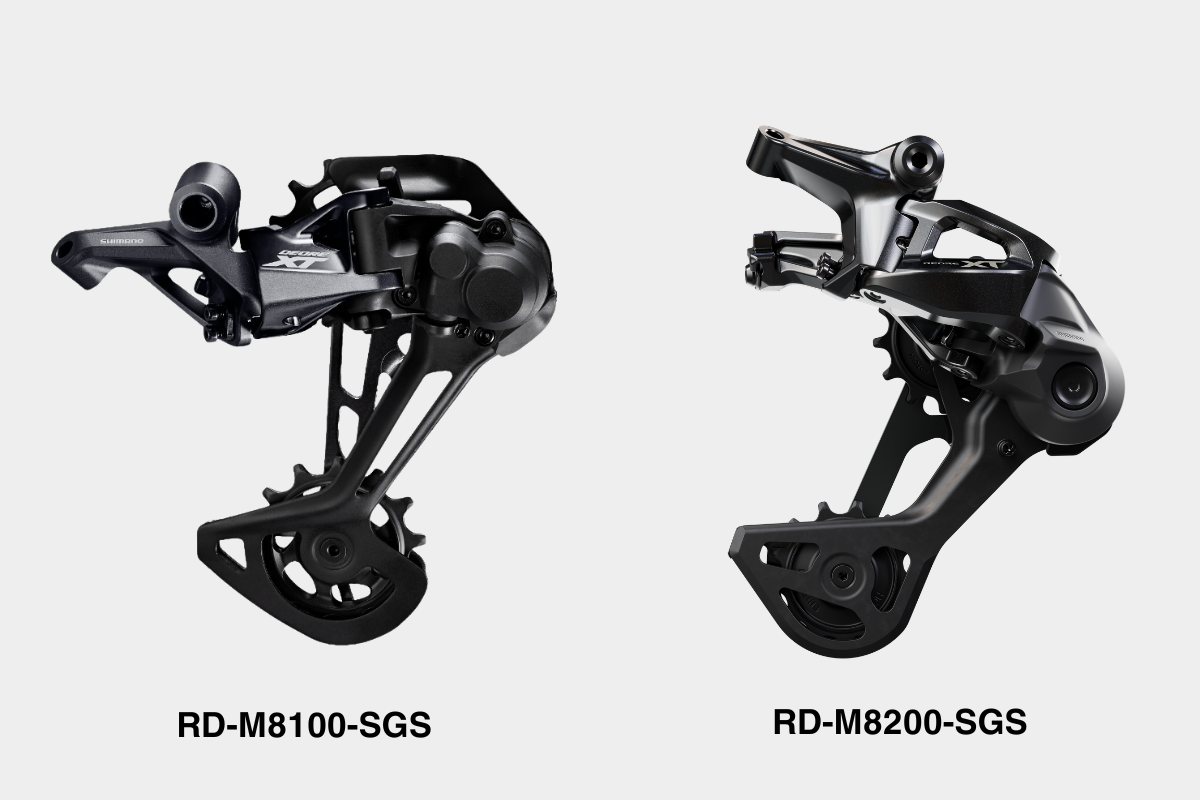
Retailing at € 8,499, the Wild LT M10 relies entirely on Shimano components, including an XT M8200 drivetrain and matching XT four-piston brakes, all paired with a robust DT Swiss H1900 Spline aluminium wheelset. The suspension package stays resolutely high-end: a FOX 38 Factory fork paired with a FOX FLOAT X2 Factory shock.
 Orbea Wild LT M20 | Avinox M2S-RS/800 Wh | 170/170 mm (f/r) | € 6,999 | Manufacturer’s website
At € 6,999, the Wild LT M20 marks the entry point into the carbon Wild range. One notable feature is its mixed suspension setup, combining a RockShox ZEB Base fork up front with a FOX Float X Performance shock at the rear. Shifting is handled by Shimano’s Deore M7200 drivetrain, while Race Face AR30 aluminium wheels and Shimano MT420 brakes help keep costs under control without compromising where it matters. Other changes are found in the controls: here, Orbea replace their in-house RS remote with the standard Avinox control unit and pair it with a mechanical dropper post instead of the electronic version.
If you’re looking for the most affordable way into the Wild LT range, the aluminium models are where you’ll find it. The most accessible Wild LT Hydro starts at € 5,999 and inherits the same Avinox M2S RS motor and 800 Wh battery as its more expensive carbon siblings. To hit this price point, the aluminium models use a mechanical Orbea seatpost and the standard Avinox remote rather than Orbea’s proprietary remote and electronic dropper post.
The new Orbea Wild LT 2027 on the trail
How does it climb?
From the first metres, the new Orbea Wild impresses with a highly balanced riding position. You sit centrally and compactly between the wheels, well integrated into the bike’s geometry. The steep seat tube angle contributes to the sporty position and keeps the front wheel firmly planted on steep climbs.
The Avinox M2S RS motor delivers plenty of punch and, thanks to its increased responsiveness, reacts immediately while remaining easy to control. It responds instantly to pedal inputs without ever feeling nervous or overly aggressive. On the trail, the assistance often feels more powerful than the quoted 750 watts on paper would suggest. Activate Boost mode and you’re rewarded with a serious surge of acceleration, which proves particularly useful for quick sprints and technical climbing sections.

Particularly impressive is the level of traction. The Wild climbs technical ascents with enormous grip and generates consistent forward momentum even on loose surfaces. Wheelspin is virtually non-existent, while the front wheel remains remarkably composed, even on steep sections. At around 22 kg, our test bike also feels pleasingly agile. It can be placed precisely through tight switchbacks and technical climbing sections, proving itself to be a highly capable climber.
The electronic FOX FLOAT X2 Live Valve NEO Factory shock also plays its part. While it provides additional support on fire roads and keeps the rear suspension riding higher in its travel, it opens up almost instantaneously when encountering roots, rocks and other obstacles. As a result, the Wild LT combines a very efficient ride feel with excellent traction. That said, the benefit is somewhat less pronounced on an eMTB than on an analogue bike, as the motor already offsets many of the efficiency gains.


One point of criticism remains Orbea’s in-house dropper post. In Smart mode, it responds with a slight delay and drops noticeably slower than established competitors. For most riders, this is unlikely to be an issue, though ambitious trail riders may wish for a little more responsiveness here as well.
How does the new Orbea Wild LT 2027 perform on the descents?
As soon as the trail points downhill, it becomes clear where the new Wild LT’s priorities lie. With the flip chip in the low setting, it places you deep within the frame and creates a highly integrated riding position that inspires confidence straight away. Despite its generous suspension travel, the Orbea Wild feels surprisingly compact and comes across as significantly more agile than its geometry figures might suggest.
The Wild never feels sluggish. Despite its long 448 mm chainstays and clearly gravity-focused intentions, it’s remarkably easy to lift onto the rear wheel, carve precisely through berms and flick playfully from one line to the next. Particularly impressive is the balance between agility and composure. Many bikes sit firmly at one end of that spectrum, but the Wild manages to combine both characteristics exceptionally well. As a result, the fun factor is correspondingly high. Whether you’re riding fast flow trails or rough, natural singletrack, the Wild feels at home in almost every situation.

The rear suspension is controlled and predictable, always communicating how much travel remains in reserve. Traction is a particular strength, with the suspension keeping the bike planted through rough sections. The Wild LT finds its best form on fast, technical trails, staying composed through rock gardens and under heavy impacts.


Another highlight of the Orbea Wild LT is the handling. The bike is intuitive to ride, tips willingly into corners and transitions from one lean angle to the other with surprising ease. Even in the full 29er configuration, it remains remarkably agile, although in extreme situations, when trails get exceptionally steep and you’re deep into the suspension travel, the large 29-inch rear wheel can come uncomfortably close. Riders looking for maximum freedom of movement will be better served by the mullet setup. The low centre of gravity inspires plenty of confidence and ensures that the Wild LT remains predictable even as speeds increase.
Over the course of the test, however, we actually preferred the Wild LT with the flip chip in the high position. The slightly higher bottom bracket reduces pedal strikes, while the steeper head angle adds even more agility without noticeably compromising the bike’s excellent composure. Combined with the full 29er setup, this proved to be the most balanced configuration for us.

One aspect that stood out during this test was the front end, which sits on the stiffer side of the spectrum. On extremely long and rough descents, that eventually starts to take a toll on your forearms. Acoustically, however, the Wild LT sets a benchmark, remaining pleasantly quiet on the trail. No annoying rattles spoil the grin on your face.


The Orbea experience
Since 1969, Orbea have operated as a cooperative, with employees also acting as shareholders and playing an active role in shaping the company’s direction. This structure also directly influences how profits are used. A portion of the company’s earnings is invested in social and charitable projects. According to Orbea, around 20% of profits are allocated to the cooperative’s solidarity and social funds.
Over recent years, several million euros have been channelled through the Orbea Foundation into projects focused on sustainable mobility, environmental initiatives and the promotion of cycling.
The region around Mallabia and the Spanish Pyrenees, where we were able to test the new Wild LT, also benefits from these investments. This is precisely how Orbea see their role: not only building bikes, but also supporting the infrastructure and communities that make our sport possible in the first place.


Who is the new Orbea Wild LT 2027 the right eMTB for?
The new Wild LT is aimed at riders looking for a modern full-power eMTB that excels across an exceptionally wide range of scenarios. Its greatest strengths lie in the combination of outstanding traction, intuitive handling and the impressive balance between composure and agility. The Wild inspires confidence on almost any trail and in virtually every situation, while delivering a huge amount of riding fun.
The right bike for:
All-round adventurers
If you only want one eMTB in the garage, the Wild LT is an incredibly versatile companion. Whether it’s a quick after-work ride, an alpine day tour or a demanding enduro trail, the Wild feels at home almost everywhere.
Tech enthusiasts
With its one-battery concept, Avinox RS tune and FOX NEO suspension, the Wild LT is one of the most exciting technology packages currently available. If you enjoy exploring new features, this bike is right up your street.
Individualists
Few eMTBs can be tailored so extensively to personal preferences. From battery options and component choices through to custom paint finishes, the Wild LT offers enormous freedom and is aimed at riders who don’t want an off-the-shelf bike.
Not the right bike for:
Bargain hunters
The Wild LT is firmly positioned in the premium segment. If your priority is getting as much bike as possible for the lowest possible price, there are more affordable alternatives on the market.
App sceptics
As well as the ecosystem works, the current setup still requires multiple apps for the motor, suspension, drivetrain and dropper post. If you prefer to set up your bike once and never think about your smartphone again, the Wild LT is unlikely to be the ideal match.
Conclusions about the new Orbea Wild LT 2027
With the new Wild LT, Orbea again demonstrate that they rarely take the easy route. Rather than joining the current full-power e-MTB arms race, the brand has chosen its own path, using the Avinox platform as a foundation for a concept built around the interaction between all components. The result is a composed, capable e-MTB with excellent traction, intuitive handling and a serious appetite for fun. On the climbs, the Wild LT delivers outstanding performance; on the descents it strikes an excellent balance of composure and agility. The connected RS system earns its place, even if the number of apps required still leaves room for improvement. What matters most, however, is this: the new Wild LT makes its case not through the spec sheet, but through the grin it puts on your face after every ride.

Tops
- Strong all-rounder
- Exceptionally balanced suspension
- Excellent balance and composure
- High levels of agility and stability
- Huge fun factor

Flops
- Multiple apps required for setup and operation
- Orbea’s in-house dropper post responds with a slight delay
For more information about the Orbea Wild LT 2027, visit Orbea.
Did you enjoy this article? If so, we would be stoked if you decide to support us with a monthly contribution. By becoming a supporter of ENDURO, you will help secure a sustainable future for high-quality mountain bike journalism. Click here to learn more.
Words: Benedikt Schmidt Photos: Rupert Fowler, Eduardo Moreno








 English (US) ·
  French (CA) ·