

 3 days ago
8
3 days ago
8
PROTECT YOUR DNA WITH QUANTUM TECHNOLOGY
Orgo-Life the new way to the future Advertising by Adpathway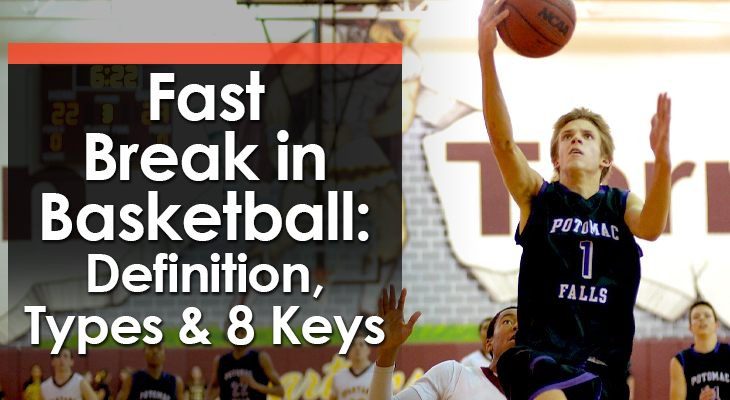
A fast break is when a team pushes the ball up the court immediately after gaining possession, looking to score before the defense can get organized.
It's the easiest way to create high-percentage shots in basketball.
And while every team runs the occasional fast break, the teams who commit to it (and practice it daily) turn it into a genuine competitive advantage.
What Is a Fast Break in Basketball?
A fast break is an offensive strategy where a team moves the ball up the court as quickly as possible after a steal, blocked shot, defensive rebound, or made basket.
The goal is simple:
Attack before the defense gets set, creating a numbers advantage (2-on-1, 3-on-2) or an uncontested layup.
You'll also hear the fast break called "transition offense" because it happens while both teams are transitioning - one from defense to offense, the other from offense to defense.
Here's why it works so well:
Following a steal or a rebound, the new offense can attack immediately, while the new defense needs a second or two to find their matchups and get organized.
That means the offense starts nearly every possession with a small head start.
It's much easier to maintain an advantage than it is to create one against a set defense... which is exactly why the best offensive teams SPRINT the floor on every change of possession.

How a Fast Break Works (The 4 Phases)
Every fast break follows the same four phases:
1. The Stop – The break starts with the defense. Your team gains possession through a steal, a blocked shot, a defensive rebound, or by inbounding quickly after an opponent's made basket. Live-ball turnovers create the best fast break opportunities because the defense is facing the wrong way.
2. The Outlet Pass – The rebounder immediately passes to a teammate (usually a guard) near the sideline or pushes the ball themselves. The longer the outlet pass, the closer it gets you to the basket. Think of Nikola Jokić, Wes Unseld, or Kevin Love grabbing a rebound and firing it the length of the floor in a split-second for an uncontested layup.
3. Filling the Lanes – Players sprint the floor in spread lanes — wings run wide to the sidelines, the ball handler attacks the middle, and a rim-runner sprints straight to the front of the hoop. Wide spacing stretches the retreating defense and opens up driving and passing lanes.
4. The Finish – The offense converts before help arrives: a layup, a dunk, or an open jump shot. The layup is always the first option. And every fast break should have a trailer sprinting behind the play, because missed fast break layups are one of the most common (and most fixable) wasted possessions in basketball.
Why Run a Fast Break?
There are five big reasons why I recommend fast break basketball to almost every team:
1. Easy Scoring Opportunities – Scoring against a set half-court defense is hard at every level. Fast breaks generate layups and open shots before the defense is organized. Great teams expect to score a high percentage of their points in transition.
2. You Will Have Poor Shooting Nights – Fast break layups are one way to win on the nights when your jump shots aren't falling... and every team has those nights. If your offense relies on shooting a high percentage every game, you're going to be disappointed often.
3. Transition Defense is HARD – Watch any youth or high school game and you'll see players stuck in "no man's land" after a shot goes up — not crashing the boards, not sprinting back. Teams who walk the ball up the court never exploit this weakness.
4. It Wears the Opposition Down – Playing fast never gives the defense a chance to catch their breath. Teams who aren't used to the pace will make more and more mistakes as the game goes on. It also creates more possessions, which means more playing time for your bench and more development for your full roster.
5. It Beats Zones and Presses – The best offense against a zone defense is to score before the zone is set. The same goes for beating pressure — once you break the press, attack immediately instead of letting the defense recover.
Types of Fast Breaks
Coaches generally run one of two fast break systems:
1. The Numbered Break – Every player is assigned a specific lane or role they must fill on every possession. For example, the 2 always runs the right wing, the 3 always runs the left wing, the 5 always rim-runs. Famous examples include Dean Smith's "Carolina Break" and Paul Westhead's Loyola Marymount system.
2. The Free-Flow Break – No assigned lanes. Players sprint the floor and fill whatever lane makes sense from wherever they are on the court. The general rule: if you're ahead of the ball, run wide; if you're behind the ball, fill the middle.
Which one should you use?
Plenty of great programs have run numbered breaks... but I don't recommend them, especially for youth and high school teams.
Three reasons why:
a. You never know where players will end up – If your shooting guard just contested a shot on the left wing, do you really want them sprinting sideways across the court to fill their assigned right lane? I'd rather they take off and get the layup.
b. Players will get their roles mixed up – The numbered break requires flawless communication as players substitute in and out. That won't happen. You'll end up with two players sprinting the same wing arguing about whose lane it is.
c. Players stop reading the floor – Like set plays, assigned lanes remove the decision-making from the game. Players end up running their routes without thinking instead of learning to read the defense and attack the open space.
8 Keys to Fast Break Success
1. Develop a Tough Defense First – The best fast breaking teams are built on defense. I recommend man-to-man or the pack line defense. It's possible to run off made baskets, but it's MUCH easier to run off stops... and best of all off live-ball turnovers. Show your players the correlation between defensive stops and easy transition points.
2. Let Anyone Push the Ball – Don't force your rebounders to pause and hunt for the point guard. Empower every player to grab a rebound and go. That pause of a second or two is exactly the advantage the fast break is built on - even NBA teams now train their bigs to "catch and go" for this reason. For youth coaches, this doubles as development: turnovers may increase short-term, but your whole roster learns to handle the ball.
3. Instill a Fast Break Mindset – I recommend the term "RACE." We want to race down the floor every possession to explore a potential advantage. A concept I picked up from a Final Four coaches' clinic makes this concrete: after every change of possession, each player's first three steps must be quicker than their opponent's first three steps. Win the first three steps consistently and you'll pick up 2-3 extra transition scores a game.
4. Pass Ahead Instead of Dribbling – The ball moves faster through the air than it does on the bounce. Build the habit of passing up the sideline to gain separation from the defense. If the ball-side wing isn't open, the ball handler can "slice" through the middle and look to the opposite wing - defenses load to the ball side, which leaves the weak side open.
5. Attack Advantage Situations Aggressively – In a perfect world, every break ends in a 1-on-0 layup. More realistic are the 2-on-1 and 3-on-2. In a 2-on-1, we always want a layup. In a 3-on-2, we want a layup or a wide-open jump shot. Many players are indecisive in these moments, so drill them constantly until attacking becomes automatic.
6. Use Breakout Dribbles – When a player catches in space with no teammate ahead, they should advance the ball with big, aggressive dribbles. Teach "chest to the floor" in a sprinter's stance with long crossover dribbles. This covers maximum distance and protects the ball from trailing defenders.
7. Hunt the Paint – Help your players understand WHY you're playing fast: to get the ball into the paint before help arrives. If the rim-runner has two feet in the paint, your perimeter players MUST look to pass it to them (if bigs aren't rewarded for sprinting the floor, they'll stop sprinting). And when a defender gives a long closeout to a wing in transition, that's an invitation to shot fake and attack.
8. Finish Under Control – Sprinting at full speed is only half the skill... finishing is the other half. Teach players to raise their eyes early, get on balance, and either finish the layup or jump stop and pivot to find a teammate. A head-down, out-of-control sprint to the rim usually ends in a wild miss, no matter how open the floor was.

Flowing Into Your Half-Court Offense
The best transition teams never come to a full stop.
Think of your offense as covering three situations:
Situation 1: Live-ball change of possession – Run the fast break immediately. Pass ahead and look for the quick score.
Situation 2: Defense is back, but not organized – This is the secondary break window. Defenders are scrambling, matchups aren't sorted, and help isn't in position. Flow into one or two simple actions to attack before they settle.
Situation 3: Defense is back and organized – Run your half-court offense or a set play from a neutral start.
Most teams are decent at situations 1 and 3.
It's the middle window - those few seconds between "no layup" and "defense fully set" - where games are won. If you can keep pressure on with smart actions and good spacing, you'll create quality shots before the defense can react.
Here are two actions we use in that window:
1. Pistols
A common NBA action triggered by a wing entry, either off the pass or a dribble handoff. It creates an immediate two-player game on the wing while the defense is still recovering.

2. Klay
Run when the ball is in the slot. A "Klay Cut" is our term for what some coaches call a "ghost screen" or a "running slip." The 4 sprints at the ball handler, fakes a ball screen, and slips into open space. The defense has to guess, and either the ball handler gets a free driving lane or the 4 pops open for a shot.

Both actions flow straight into the 4-out motion offense. Gain an advantage with the break, maintain it through Pistols or Klay, and continue into your motion offense without ever letting the defense get set.
Fast Break Drills
There are no magic drills that instantly turn a team into an elite transition squad.
The real secret is emphasizing transition in everything you do. Basketball is a game of constant transition, and the easiest way to improve transition play is to transition a lot in practice. Full-court, competitive small-sided games are the best tool for the job.
That said, here are two drills we've found especially valuable:
a. 3-Minute Games
This is a very simple concept, but it's great for helping your players develop a fast break mindset.
And even if you aren’t a huge transition team, it is an excellent conditioner early in the season.
Simply full court scrimmage for 3 minutes.
Score the game as you normally would with one exception:
Award a point every time the offensive team gets the ball below the foul line in 5 seconds or less.
If possible, assign an assistant coach or parent the task of counting down from five on every change of possession.
This rule encourages the offense to SPRINT and look to pass ahead if they want the potential extra point.
Award this point regardless of if the offensive team scores on that possession.
For example...
If the offense gets the ball below the foul line in 5 seconds and passes to the rim-runner for a layup, that would be a 3-point possession.
b. 5-on-5-on-5
This game can be played 3-on-3 or 4-on-4, but 5-on-5 allows you to work on the Pistols and Klay options when your team doesn't score in primary transition.
Here's how it works:
Two teams play 5-on-5, with a third team standing on the sideline.
(if you have 20 or more players, four or more teams can play)
Play until someone scores.
If Team 1 scores, Team 2 is out.
Team 1 then pushes the ball the other direction as Team 3 sprints on.
The team entering must touch half court and communicate their matchups as they quickly get into their defensive positions.
This is a fun game that develops offensive and defensive transition, while also serving as a great conditioner.
If you prefer to increase individual accountability, you can play with fewer players. For example, 3 on 3 on 3 makes it even more obvious who is not executing in offensive and defensive transition.
Who Invented the Fast Break?
Frank Keaney is most often credited with originating the fast break at the University of Rhode Island in the 1920s and 30s, where his teams averaged nearly 80 points a game in an era when most teams barely scored 50.
Cam Henderson of Marshall University is also recognized as one of the early innovators of the break.
And John McLendon, who studied under basketball's inventor James Naismith at Kansas, pioneered the fast break style at historically Black colleges in the 1940s and 50s, pairing it with full-court pressure and literally writing the book on it (Fast Break Basketball, 1965). Much of the modern up-tempo game traces back to McLendon.
Fast Break FAQ
What is a fast break in basketball?
A fast break is when a team pushes the ball up the court immediately after gaining possession - off a steal, block, rebound, or made basket - looking to score before the defense can get set. It usually produces a layup or an open shot from a numbers advantage like a 2-on-1 or 3-on-2.
What's the difference between a fast break and transition offense?
The terms are often used interchangeably. When coaches do separate them, the fast break refers to the immediate sprint for a layup or numbers advantage, while transition offense covers everything from the change of possession until the half-court offense begins - including the secondary break.
What is a secondary break?
The secondary break is what a team flows into when the primary break doesn't produce a shot. Instead of pulling the ball out and resetting, the offense runs quick early-offense actions (like Pistols or a ghost screen) while the defense is back but not yet organized.
Who leads the NBA in fast break points?
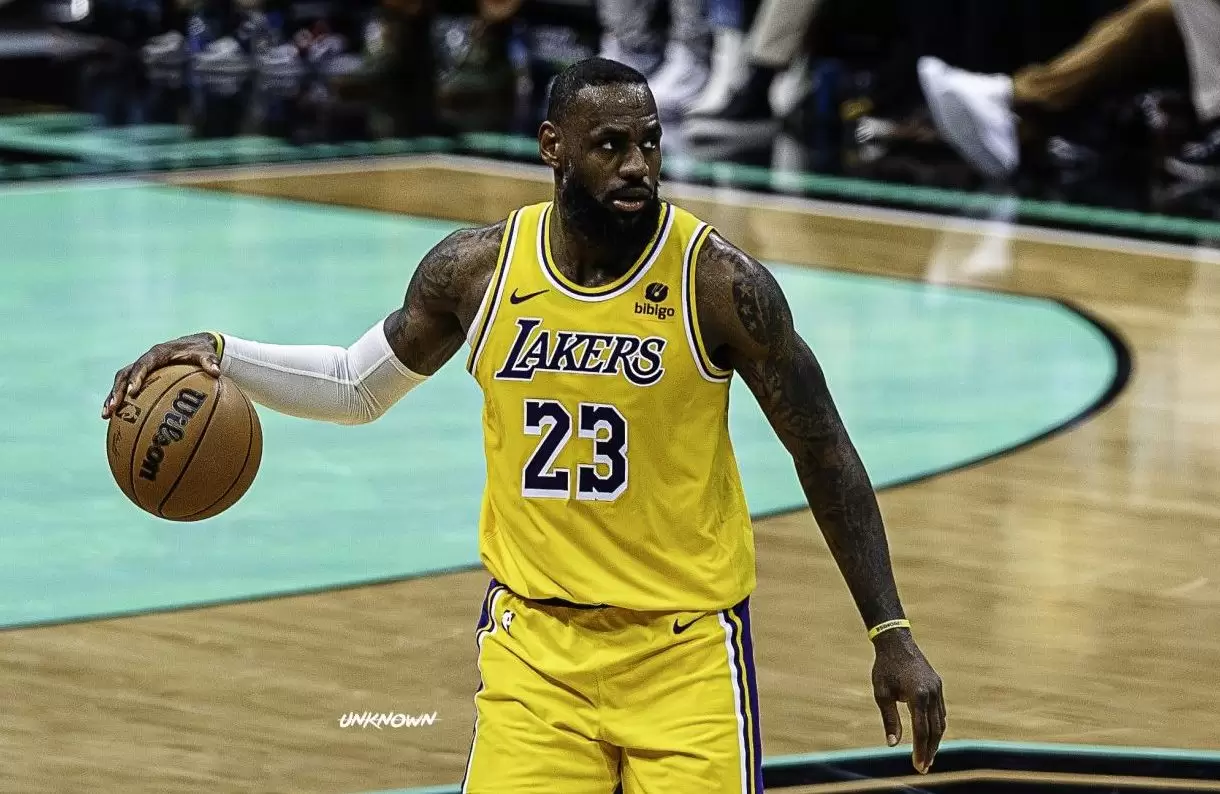
In the 2025-26 season, LeBron James led the NBA in fast break points per game, with Tyrese Maxey and Kawhi Leonard close behind. The Toronto Raptors led all teams at nearly 19 fast break points per game.
What are the best fast break drills?
The best fast break drills are full-court and competitive - 3-Minute Games, 5-on-5-on-5, and the 30-Second Cycle are three we recommend. Small-sided games (3-on-3 and 4-on-4 full court) are especially effective because every player gets more decisions and more sprints per possession.
Conclusion
Committing to fast break basketball can benefit almost any team.
Sprint the floor on every change of possession, pass ahead, hunt the paint, and flow into your offense without stopping.
Even if your team is never the fastest on your schedule, the habit of advancing the ball quickly to explore scoring opportunities will keep constant pressure on the defense - and win you easy points that walking the ball up the court leaves behind.








 English (US) ·
  French (CA) ·