

 3 weeks ago
33
3 weeks ago
33
PROTECT YOUR DNA WITH QUANTUM TECHNOLOGY
Orgo-Life the new way to the future Advertising by Adpathway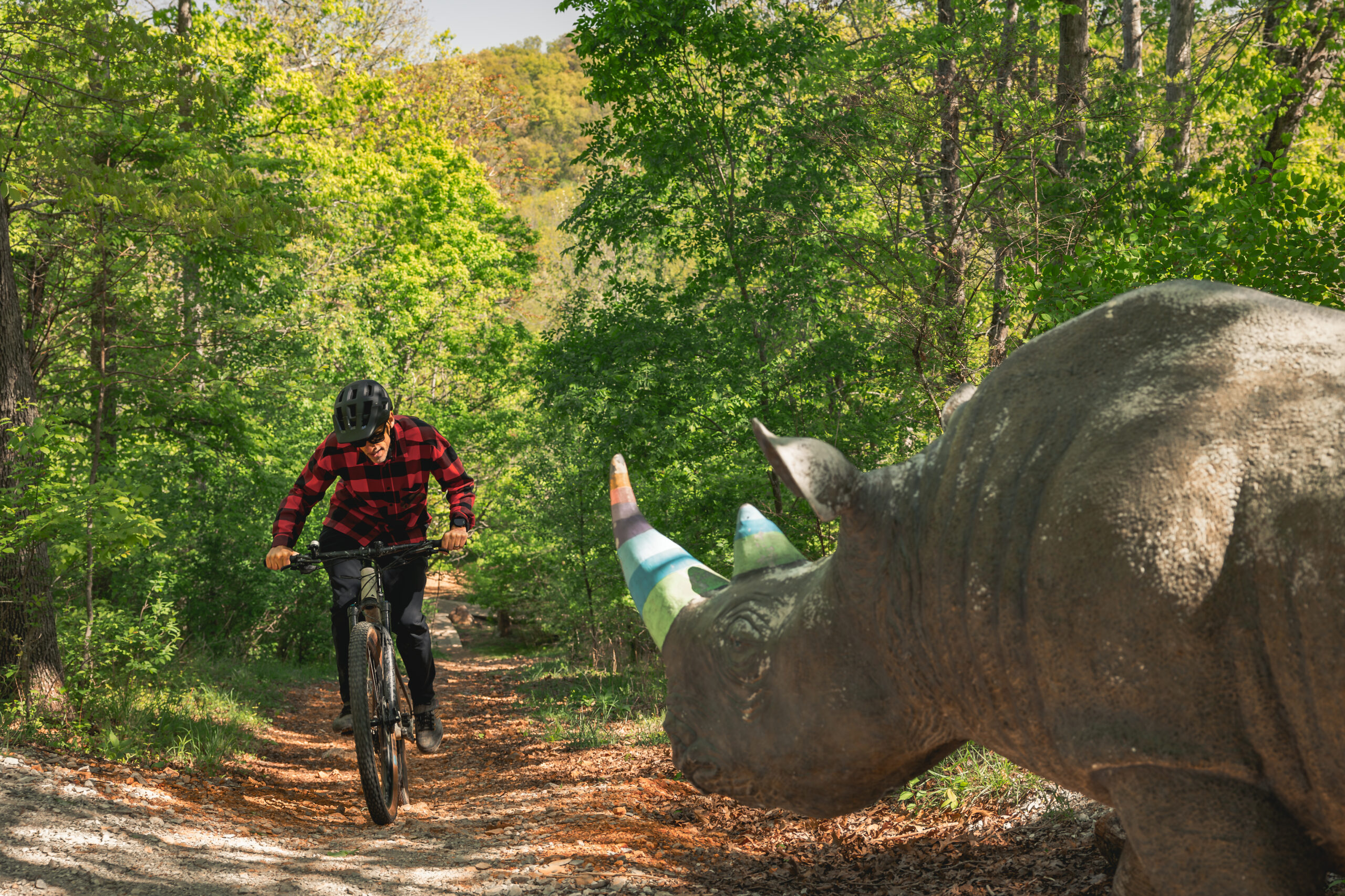 File photo: Mike Cartier.
I don’t know about you, but the moment I arrive at a mountain bike trailhead, I’m a ball of anxious energy, raring to ride. It’s the same feeling I used to get pulling into the parking lot at Six Flags and seeing the throngs of people who arrived before me. These days, I’m lucky if I remember to put my helmet on before I zoom onto the trail!
But lately, I’ve been thinking that my pre-ride routine might be missing something. Should I be stretching? Warming up? Meditating? I called up my friend Ben Turits, former elite XCO mountain bike racer and co-owner of the Endurance Collective in Durham, NC, for answers.
While it’s no surprise that warming up before an endurance race is important, I learned that a proper warm-up is beneficial for all types of rides — whether you’re at the bike park, out for a trail ride, or racing downhill.
What a warm-up actually does
Though it might sound obvious, a pre-ride warm-up is designed, in large part, to heat your body up. “Warming up in any sport is trying to increase body temperature to get your muscles more malleable,” Turits told me. Literally? “Literally. Like a diesel engine.”
As your body temperature rises, circulation increases and your heart rate goes up. Movement becomes easier, more fluid. Not only does warming up your body help you move more freely, but it also reduces the risk of soft-tissue injury, according to Turits.
Before a ride on a hot day, increasing your body temperature probably isn’t necessary and, in fact, could be dangerous. Still, it’s important to get blood flowing and muscles moving ahead of a big effort. Watching World Cup cross-country race coverage at a very hot Lenzerheide last month, I noticed riders spinning on trainers while wearing bulky cooling vests filled with cold packs and ice. The idea is to target the warm-up to large muscle groups, such as the legs, while keeping core body temperature at a safe, comfortable level.
On cold days, warming up is a no-brainer. Cool, stiff muscles can feel painful initially, and a proper warm-up makes all the difference.
Do a short warm-up for a long ride
It might sound counterintuitive at first, but for long rides, a short warm-up may be all you need. For example, if you’re heading out for an all-day epic ride, you can start slow and use the first mile or two to get warmed up. Turits says this even applies to some racing disciplines, like XC Marathon.
“You’re riding for 60km and there is going to be a period of 30 or so minutes where it’s hard. But then the race is going to settle out,” he said. “The longer the event, the less intense the warm-up. The shorter the event, the more intense the warm-up.”
 File photo: Jeff Barber
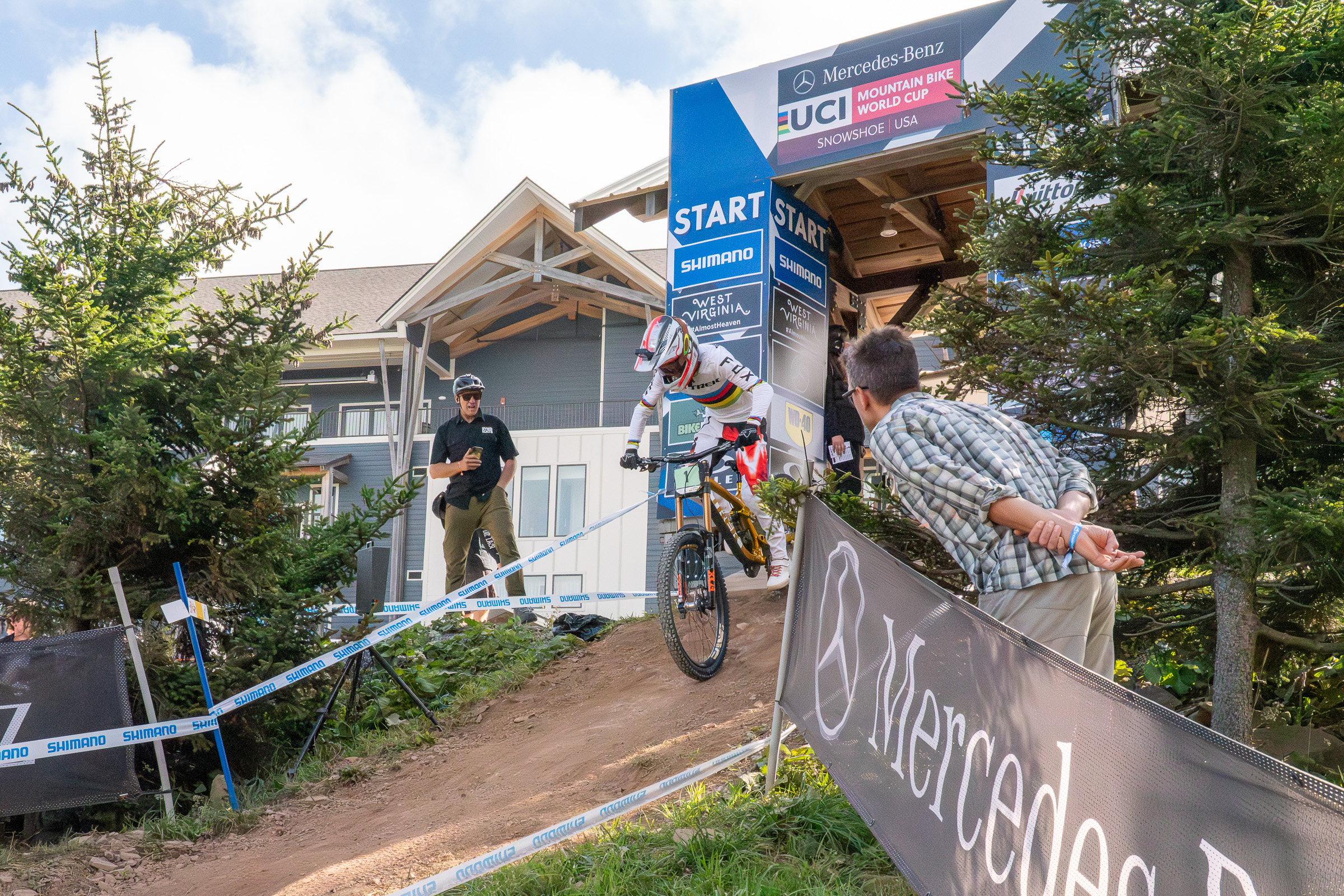
For super short rides — like a three-minute pinned downhill run or a short-track race — a longer warm-up is ideal. Turits points out that even for downhill racers, “warm-up is really important” because the races are so intense right out of the gate. “That last beep goes off and […] you’re going 100-100% right away. You are at your limit, and you don’t stop for three minutes. If you spend the first 30-45 seconds of that race warming up, you’re not going to win that race.”
To prepare for that level of intensity, downhill racers are “at the start line, and they’ve got their enduro bikes on those Feedback Sports trainers up there, usually,” spinning hard for a good 10-15 minutes, he said.
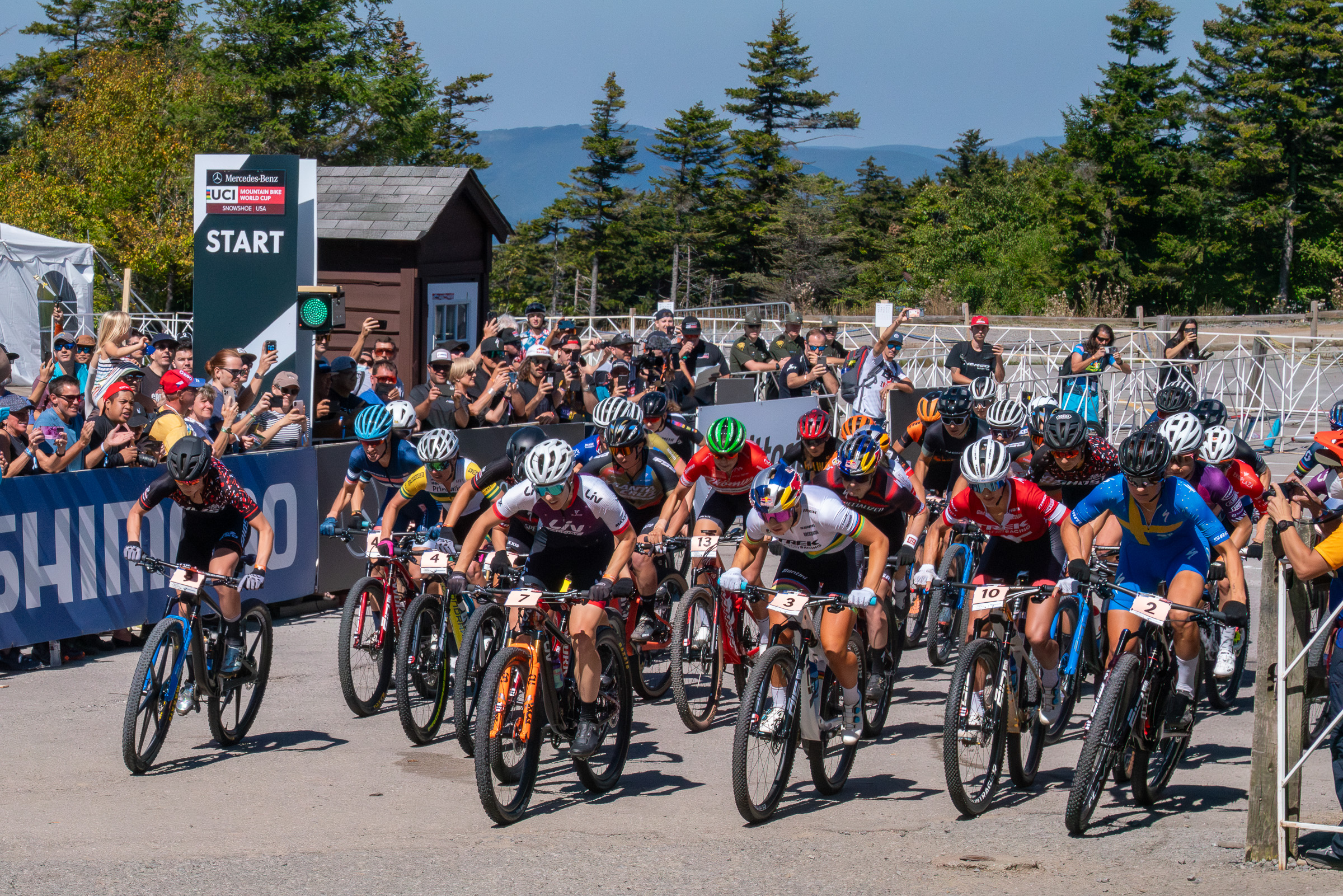
The same goes for short-track XC racers, where their race is an all-out sprint lasting just 20-25 minutes.
“All of those riders have done intense warm-ups on the rollers after they’ve done some intervals on the course, so when they go to the start line, they are dripping with sweat,” Turits said. “They are a hot engine that is smoking, coming off the rollers a minute before their call-up. The reason is, when the gun goes off, they’re 100% right off the line.”
Skip the static stretches and go dynamic
While riding on a trainer before a race or pedaling around the parking lot before a ride is a good way to warm up your muscles, stretching can be helpful as well. However, we’re not talking about the stretches your gym teacher probably taught you back in middle school.
When many of us think about stretching, we think about touching our toes and holding that position for 15 seconds. That type of stretching is fine for general mobility and recovery, but not before a ride. Rather, dynamic stretching — essentially moving your body in ways that activate muscles and joints — is the key.
“You’ll see a [professional downhill] rider like Asa Vermette, or, you know, Loic Bruni, they’re up at the start line with their [resistance] bands, and they’re doing fast-twitch warm-up stuff,” Turits said.
Not only does this type of warm-up activate important muscle groups, but it’s also a great way to prepare your nervous system for the ride.
 File photo: Jeff Barber
Your nervous system needs a warm-up too
That nervous parking-lot energy I mentioned at the beginning might seem like a good thing ahead of a big ride, but oftentimes it can get us into trouble. Here, Turits points out that pro downhill racers like Vermette and Bruni have another trick up their sleeves. Not only are they warming up on trainers and using resistance bands before the race, but they’re also “juggling tennis balls or bouncing balls against the wall, preparing their nervous system to react quickly.”
And it’s not just pro downhill racers who need to prepare their nervous system for a run. Bike park riders can benefit as well. “Your nervous system needs to adjust to the speeds that you’re going to expose your body to,” he said.
For many of us, it’s common to roll right off the lift and start ripping down the trail cold. Turits recommends taking a couple of laps on a familiar green trail to get your body and your mind used to high-speed riding. Here especially, the mantra “pre-ride, re-ride, freeride” makes a lot of sense. Our nervous system just isn’t ready to go 100% right out of the gate.
Turits says that having a structured warm-up routine can also help calm pre-ride and pre-race jitters. “Routine is really helpful for riders who have a lot of nerves. Sticking to that routine is something that they have control over.”
Everyone’s warm-up needs are different
It’s clear that there are benefits to warming up before a ride, especially for shorter, more intense workouts. However, some riders will benefit more than others.
“My business partner here at Endurance Collective, Matt, is really good at riding really fast from the standing start,” Turits said. “Some people are really good at that. I am not one of them. I’m a diesel engine. I need 20-30 minutes for my body to really feel good. Then I can go even harder.”
“Once my body is warmed up — I can throw down.”














 English (US) ·
  French (CA) ·