

 3 weeks ago
46
3 weeks ago
46
PROTECT YOUR DNA WITH QUANTUM TECHNOLOGY
Orgo-Life the new way to the future Advertising by AdpathwayPublished August 20, 2026 10:27AM
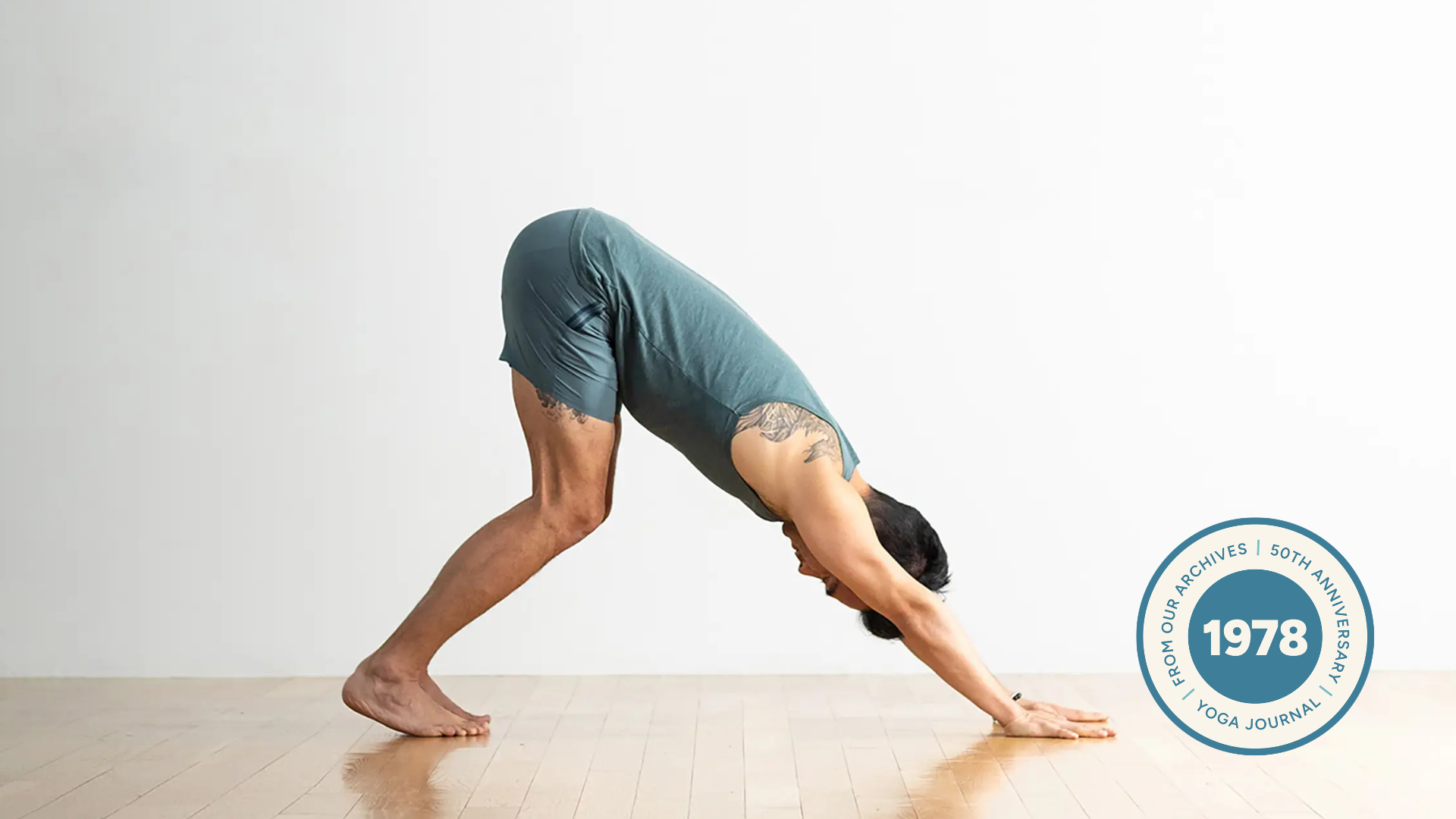
Yoga Journal’s archives series is a curated collection of articles originally published in past issues beginning in 1975. This article about Hero Pose (Virasana) first appeared in the September-October 2002 issue of Yoga Journal.
Every time you confront a challenge and see it through with endurance and courage, you become a hero or heroine. Whether you are clearing up a misunderstanding with a friend, breathing through a long hamstring stretch in a yoga class, or dwelling in the unknown until clarity is revealed, the journey through difficulty can be uncomfortable yet is always deeply gratifying.
During these tough situations when you show up for life to face your demons—or strengthen a weak inner or outer muscle—you grow. Your self-esteem increases, you feel less afraid, and you gain the wisdom of your experience.
Take a moment to ask yourself to what extent you are able to be present and compassionate in the face of the challenges in your life. Can you refuse to run from what requires your energy and kind attention and choose instead to stay in the fire of transformation?
You Have Heroic Qualities
The famous mythologist Joseph Campbell said that the hero or heroine’s journey begins with the person as an Everyman or Everywoman living a humdrum, mundane life until called upon to rise to a challenge, confront evil with good, discern wrong from right. After facing great fear, the heroine ultimately discovers that she is stronger than she thought. As Campbell says in The Hero with a Thousand Faces (MJF Books, 1996), “We each discover that we can survive ordeals we did not think we could survive.” Confronting the difficulty not only benefits our own personal growth but also serves to inspire others. “The hero comes back from this mysterious adventure with the power to bestow boons on his fellow man,” says Campbell. Whether the journey is big or small, the hero or heroine acquires a greater sense of wholeness and often becomes a role model for others.
Endurance, strength, and steadiness are the qualities that help us meet the trials in our lives and choose the best actions. These qualities are all cultivated in Virasana (Hero Pose). Virasana grounds the large, heavy femur bones and roots the earthy first chakra energy of the legs and feet back to the earth. Virasana relieves stiffness in the heels, ankles, calves, and knees and alleviates fatigue in the legs. Because Hero Pose stretches the chest and increases the capacity for deep breathing, it’s a good pose for practicing breath awareness, opening the heart, and centering at the beginning of a yoga session.
Long hours sitting in cars and chairs, knee injuries, and tight quadriceps have altered our natural ability to sit comfortably between our feet and can make Virasana quite a challenging pose for the average adult. In contrast, children are fine practitioners of Virasana. They simply plop into this pose with ease, without any props or assistance. If you have the opportunity, watch a child in Virasana and let this little person be your guide into the pose. Moreover, take inspiration from the childlike qualities of curiosity, creativity, and determination that fuel the hero.
 (Photo: Andrew Clark)
How to Practice Hero Pose (Virasana)
To practice Virasana, begin on a padded surface in a kneeling position, both knees and feet about hip-distance apart. Place a yoga block or a thick book in between your feet, checking that the feet are straight back—not sickled—and the soles face the ceiling. Take hold of the bulk of your calf muscles and gently roll them outward (in the direction of your baby toes). Moving the calf muscles out of the way will allow you to sit more comfortably, and it also helps to open the knee joints. For some students, however, rolling out the calves irritates the knees, so notice what feels best for your body. Then sit down on your height and tune in to the pose.
The decision to relax rather than grip, even in the face of fear, is a conscious and brave choice.
Knees In Virasana, it’s good to feel a little stretch in the knees; however, if your knees hurt, first try sitting on more height. A second remedy is to put a piece of material such as a folded sock or washcloth behind the knee, in your knee joint, before you kneel. This handy prop serves to create space in the joint, and it’s a good trick to remember if ever your knees give you difficulty in a seated pose or hip opener.
Spine If you notice that your back is slouching and you can’t maintain the natural curve of your lumbar spine (the lower back should move slightly in and up), that’s another reason to add more height. Don’t be concerned if you need to sit on a lot of height to do Virasana comfortably. The pose requires less heroic efforts with patient practice. (Years ago, I heard a teacher remark that you start in Virasana by sitting on a phone book, and each day you rip out a page.)
Feet/Ankles Virasana is a wonderful antidote for flat feet, heel pain, and calcaneal (heel) spurs. Over time, the stretching of the ankles and the feet can encourage proper arches to form. However, in the beginning you may experience some discomfort in your ankles. If so, roll up a sticky mat or towel and place it beneath your ankles, allowing your feet to drop off the prop and settle on the floor. Eventually, your body will become accustomed to the stretch, and you will no longer need the roll.
Once you feel comfortable in the pose, try to draw your knees together. If this causes pain in the knee, back off, but do try to keep the knees in line with your hips, not wider than the hips. Then tilt your pelvis forward just a bit, so that you’re situated on the front edge of each sitting bone—but make sure your torso isn’t leaning forward.
Let the heads of your femur bones drop and actively elongate up through your waist, pressing the crown of your head upward. Relax your floating ribs toward your back body, and release your shoulders down your back. Rest your hands on your thighs.
Ground and Expand
Notice how you are feeling now and what sensations are arising in your body. Maintaining your alignment, ask yourself how you can relax here even more. The decision to relax rather than to grip, even in the face of impatience or fear, is a conscious and brave choice.
As you stay in this pose for one to three minutes, you can practice this grounding meditation. Close your eyes and begin to breathe into your belly. Imagine a grounding cord, like an anchor or a tree trunk, descending from your tailbone down into the center of the earth. Each time you exhale, visualize roots penetrating deeply down, and each time you inhale, draw the stabilizing energy up into your body, continuing until you feel truly connected to the ground.
To release from Virasana, come to a raised kneeling position and remove the height you were sitting on. Bring the legs out of the pose one at a time, swinging your heels toward the center of your body rather than to the outside to release your bent legs in a way that is safe for your knees. Then sit and stretch out your legs straight in front of you in Dandasana (Staff Pose), reaching through your heels and knees.
Virasana frequently plays the hero within a yoga session, decreasing inflammation in the blood vessels of the legs and coming to the rescue of people who stand for long periods of time. Because Virasana stretches the thighs, enhances flexibility in the hips, and brings balance to the feet, it’s a wonderful recovery pose after an arduous standing practice. It is also one of the few poses that you can do right after eating; in fact, it helps to ease heaviness in the belly.
If you are practicing standing poses and hip openers that externally rotate the hips in preparation for Padmasana (Lotus Pose), the classic seated meditation posture, Virasana is an important counterpose because it creates an internal rotation in the thighs and knees. And finally, as Virasana becomes more and more comfortable for you, it’s a fine pose by itself for meditation.
If you want to become as conscious, embodied, and loving as possible, you are on a heroic journey. As you face your demons, you symbolically slay them, often through befriending them and accepting the darkness as well as the light. Practiced with courage and persistence, Virasana will help you ground your intention, expand into stillness, and await a signal for your next move.









 English (US) ·
  French (CA) ·