

PROTECT YOUR DNA WITH QUANTUM TECHNOLOGY
Orgo-Life the new way to the future Advertising by Adpathway
Following the 2026 Sea Otter Classic, Miles met up with Loren Mason-Gere of Astral Cycling to try two 32-inch hardtails back-to-back on various terrain to see if all the theoretical talk at the expo stood up on the trail. Find their first impressions and a surprising discovery after Miles broke his first 32-inch spoke here…
Editor’s Note: Loren works at Astral, a company currently selling 32-inch wheels. However, the idea for this story was developed from our shared curiosity about the new platform and the two 32-inch hardtails we happened to have with us. Loren is a talented rider, and I value his opinions.
As expected, 32-inch bikes and components were the talk of the 2026 Sea Otter Classic, though there weren’t any major surprises unveiled. Fox showed off their prototype fork, there are a bunch of new tires on the way, and smaller framebuilders are jumping into the scene with small-batch 32-inch bikes.
Still, one thing stood out to me: the amount of theories and marketing speak around 32-inch bikes. Most folks in the booths hadn’t actually ridden a 32-inch bike or tested their products themselves, leaving more questions than answers. Reflecting on the expo, it feels like all 32-inchers have been lumped together into one mysterious box, which doesn’t do the public justice.
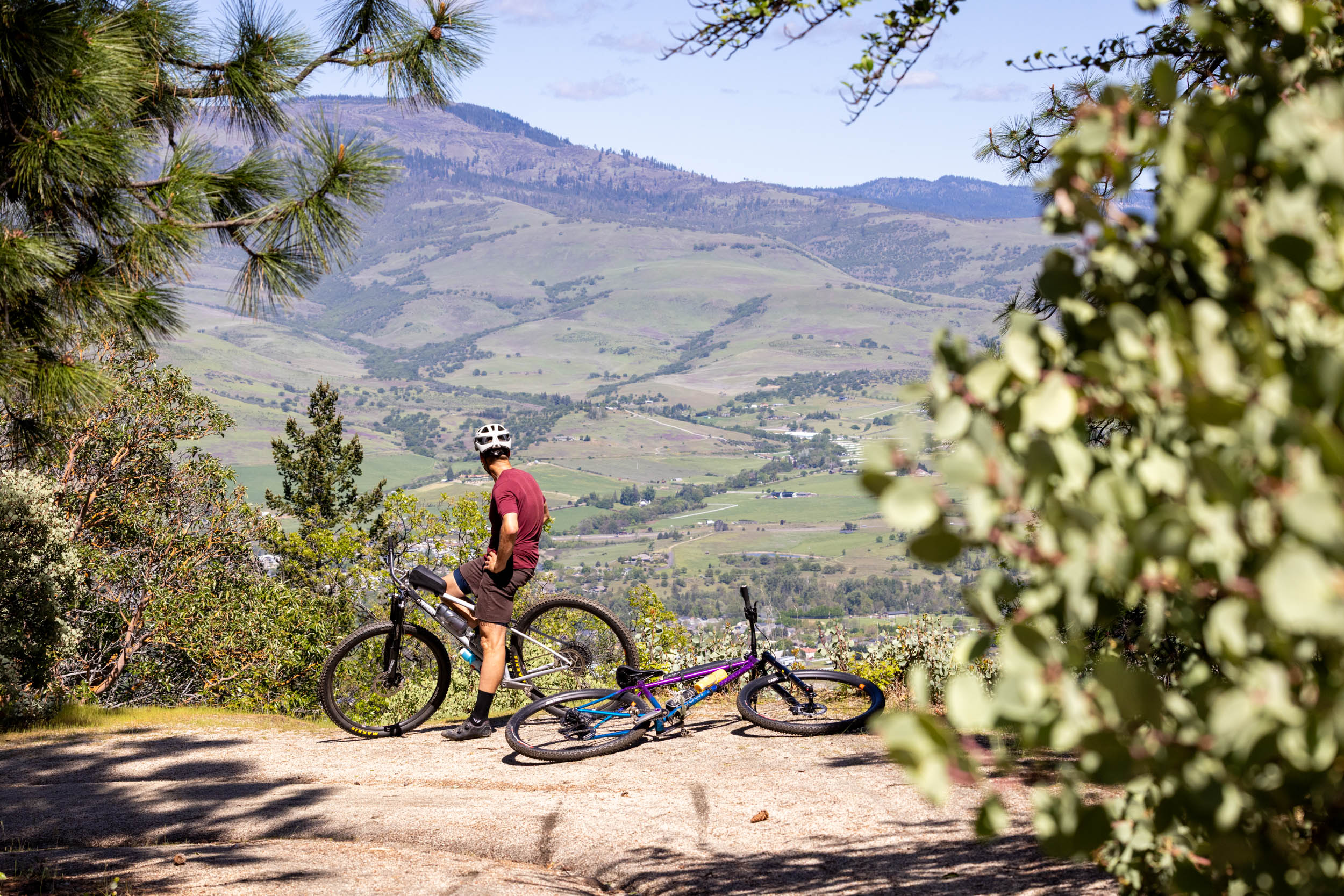
Loren Mason-Gere, the director of sales and marketing at Astal Cycling and Rolf Prima, shared these feelings, and we thought it would be fun to get out for a ride on two 32-inch hardtails to share some real-world first impressions. This isn’t a bike review. Rather, it’s an opportunity to provide unbiased thoughts on how two very different 32-inch hardtails fared in different terrain. Our findings might surprise you.
Two 32-Inch Bikes in the Forest
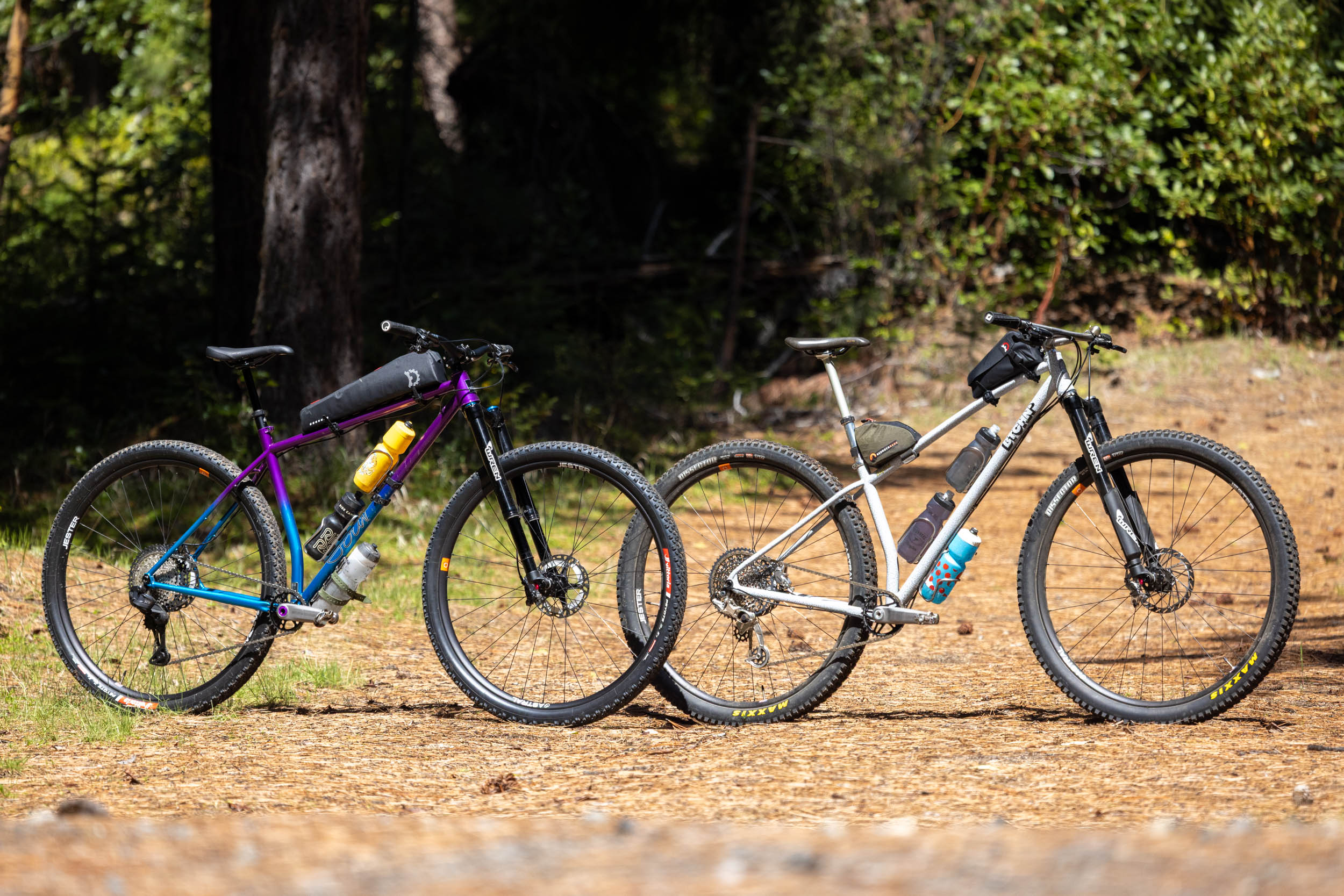
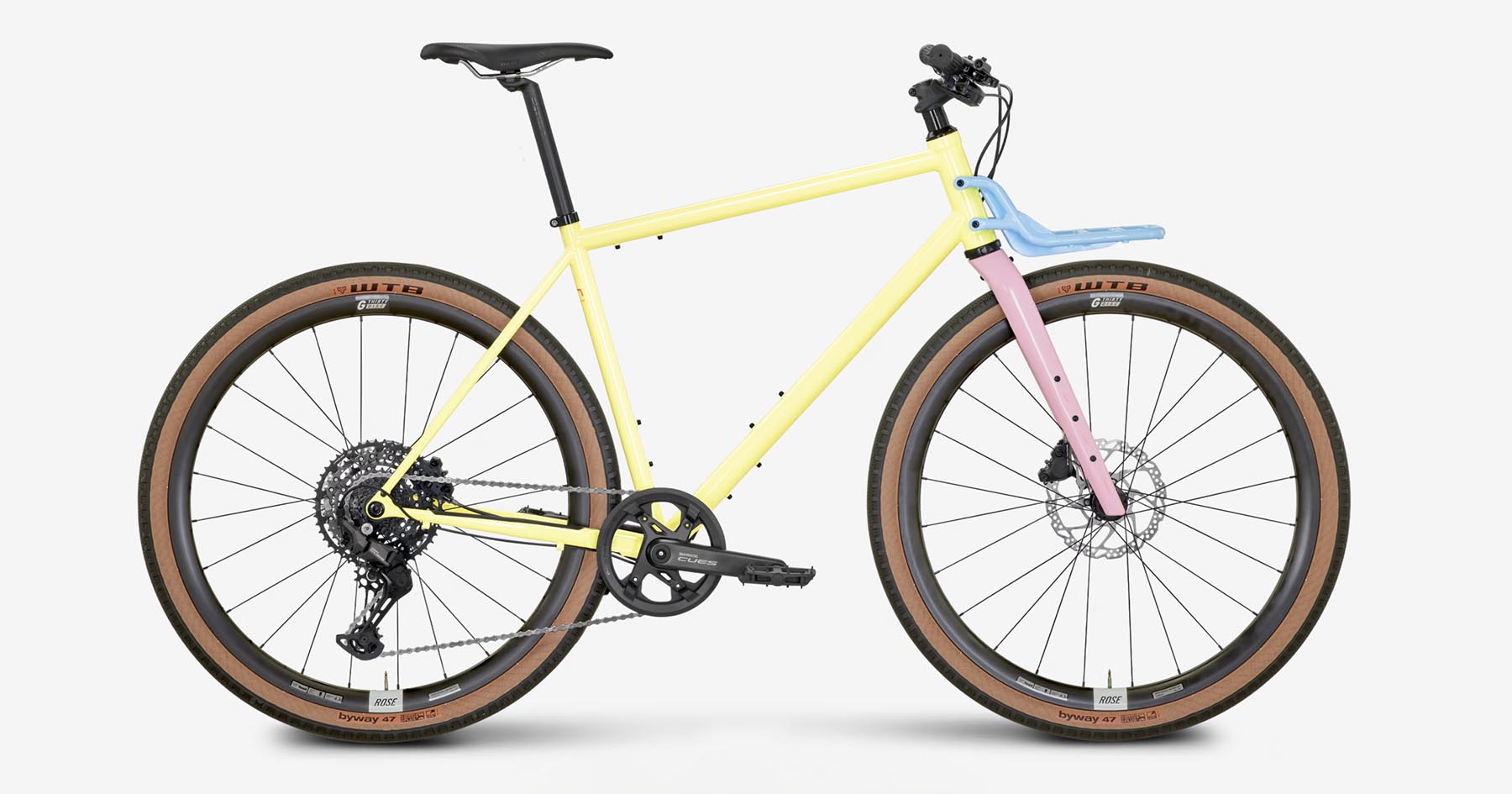
For context, Loren had the newly released BTCHN’ Alpina 32-inch hardtail, and I was riding the Sour Pasta Party 32. They were both set up with 120mm travel Wren forks, dropper posts, and Astral’s new Jester alloy 32-inch rims. One important difference was the tires. The Alpina had 32 x 2.4” Maxxis Dissectors, which measure close to 2.4” wide, while the Pasta Party had 32 x 2.4” Vittoria Peyotes, which are closer to 2.2” or 2.3” wide. Vittoria knows they run small, and the production version will be wider. We swapped bikes a few times during the ride to experience both 32-inch hardtails back-to-back, and the results were eye-opening.
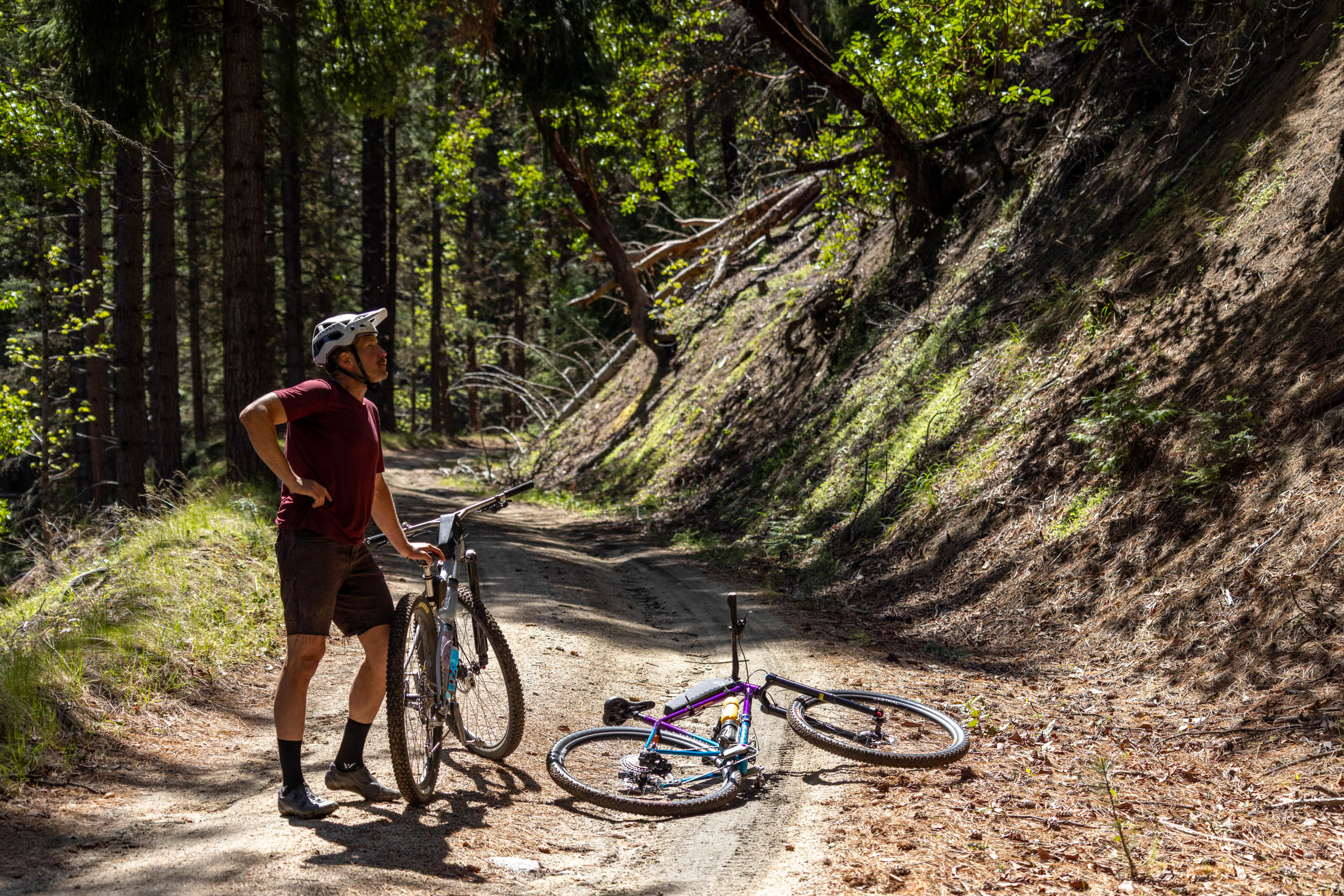
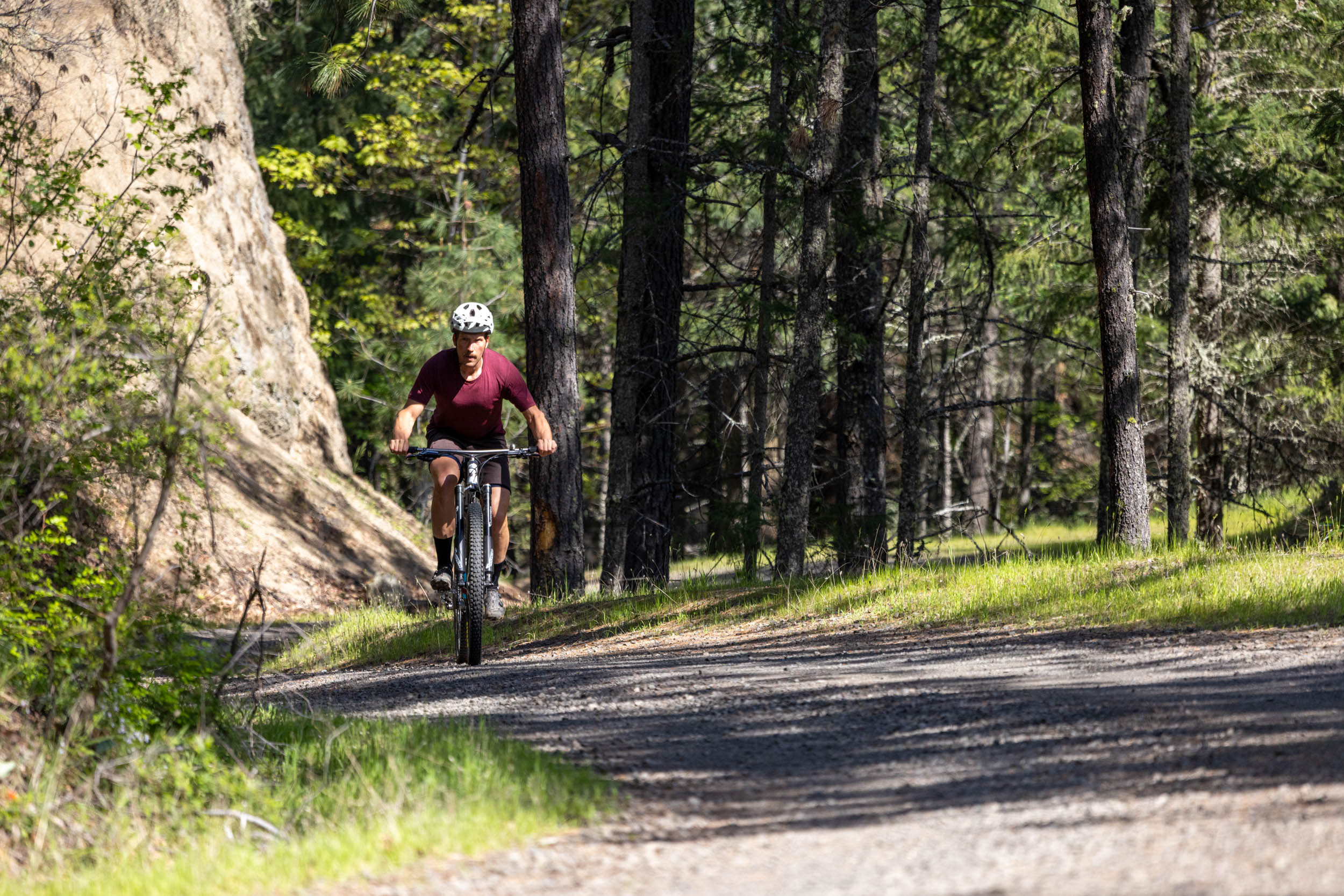
Our ride took us through the trails around Ashland, Oregon, where Loren currently lives. He knows the trails well, so he put together a goofy mixed-terrain route that took around four hours to complete. It included a mix of gentle fire-road climbs, punchy singletrack, short technical sections, and steep descents. Overall, I think the ride provided a worthy testing ground for the bikes. I’ll share a full review of the Pasta Party 32 this summer, but we thought it would be helpful to provide some firsthand experience from our ride.
Speed and Rollover
Miles: Speed and rollover are probably the two most talked-about benefits of 32-inch tires, and, like the move to 29-inch tires, they’re mostly true. I found these characteristics most noticeable compared to 29-inch tires on light grades, where it felt effortless to maintain momentum. On steep climbs, the larger diameter wheels felt like they were working against me. It got harder. Part of this also comes down to gearing, which I’ll touch on below, but on rolling terrain and long, not-so-steep climbs, it felt efficient.
My only previous 32-inch ride was on Alec White’s (of White Industries) custom Falconer 32, and on one particular low-grade climb, it felt like someone giving me a soft push from behind. It was an interesting and eye-opening feeling. There’s a fine line in finding that effortless momentum and the larger wheels working against you, which makes me think 32-inch wheels will find their place, but it won’t be for everyone or every style of riding. When I hit that sweep spot, it had me mostly thinking about 32-inch as a gravel bike replacement.
The larger-diameter tires rolled over obstacles well, but I wouldn’t say it was any better than with 29-inch tires. It was especially noticeable on rock rolls and short sections of rock gardens, where momentum could help keep the tire moving. On rock rolls, the larger-diameter wheels made them feel smaller and reduced the chance of throwing me off my line. It felt great and was noticeably different from 29-inch wheels. Despite the Sour Pasta Party’s short dropper post, I felt like I could roll my way through most of the terrain we rode.
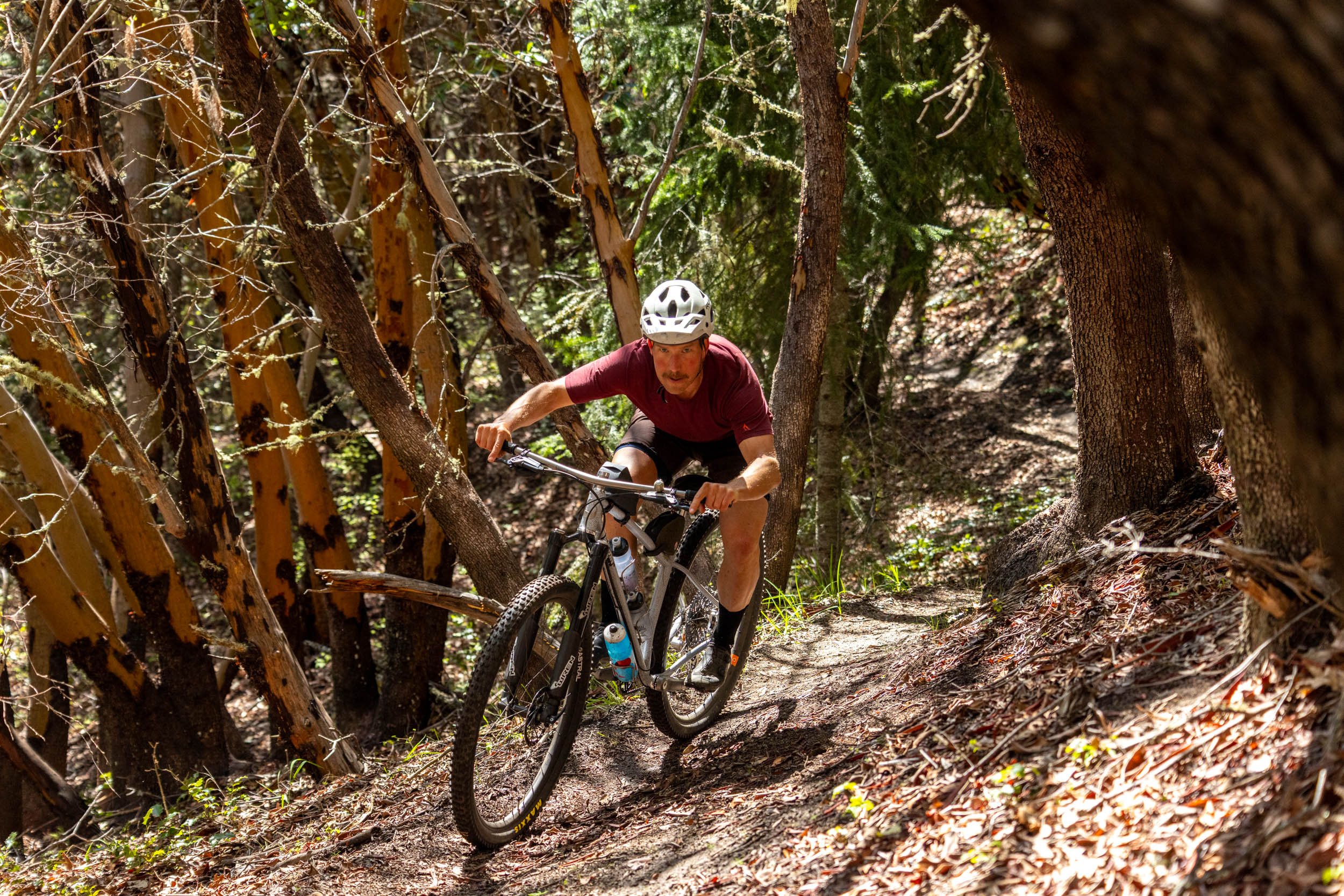
Loren: If you want to come to a quick, visceral conclusion about 32” bikes’ rolling speed, the best way to do it is this: Take your current 29” bike and ride with someone on a 32”. You’ll notice just how much faster they get moving. On rolling terrain, they’ll simply coast away from you, carrying momentum up and down trail inundations and taking off like banshees on steep downhills. I’ve done it. It is frustrating and semi-exhausting, enough to curse my “little,” “twitchy” 29-inch hardtail.
Back aboard 32” wheels, I notice immediately how quick they roll, and with a stability that makes it easy to get along with. The downhill and flat accelerations shouldn’t be surprising, but the easy travel on low-grade roads initially took me by surprise. On 2-5% grades, their momentum clearly makes up for any weight penalty. On steep trail climbs, I find myself working for it but still able to push a lot of gear-inches. They offer heaps of traction that allows standing and cranking over the top of climbs where otherwise I’d lose traction, and the stopwatch generally suggests a faster rate of travel, even on sections where the weight penalty seems like it would outweigh the rolling speed. Longer rock rolls felt smooth and composed, and I often found myself straight-lining over rocks or roots that I normally would dodge.

At the outset of our ride, I imagined I would keep us on the tamer trails in the area, but we quickly found ourselves galloping down shreddy trails I know well but have never hit on a hardtail. This was particularly true aboard the Alpina, whose trail-oriented feel and grippy Maxxis Dissector tires beg to be let loose. Tires make a big difference.
Handling and Cornering
Miles: I was a little nervous going into the ride with the fast-rolling Vittoria Peyote tires on the Sour. Thankfully, 32-inch tires have a larger contact patch than 29-inch tires, and I think that plays an important role in how the bike handles. It took more effort to lean the Sour and push through corners, but I rarely lost traction, which is impressive considering how slick the tires were.
The BTCHN’, on the other hand, served up loads of traction, thanks to chunkier tread. As with my findings on speed and rollover, it handled better when going fast. No doubt, 29-inch tires feel easier to maneuver when moving slowly through technical terrain, but the 32-inch tires want to roll straight and fast.
Both bikes had a familiar feel, and I think anyone who has ridden 29-inch bikes won’t be totally thrown off by the larger-diameter wheels. Despite rolling faster in most scenarios, the 32-inch wheels made for slower reactionary adjustments, like dodging funky protruding rocks or stumps. Maybe it will take some time to get used to it, but I often found myself letting the tire lead the way, trusting it would roll over any surprises.
Something to note is that most current 32-inch bikes are using the standard ~44mm offset used for 29ers, repurposing 29″ forks rather than designing 32″ forks from scratch. I think this is another example of the industry moving quickly, perhaps too quickly, to adopt a standard that evolved too fast. In theory, 32-inch bikes should use larger fork offsets to achieve a similar steering experience. Peter Verdone has an interesting article on this very subject that’s worth reading. I ran this by Danial Yang of Neuhaus Bikes, and he says it doesn’t make sense that fork manufacturers are copying the shorter offsets found on enduro forks, and that gravel and XC suspension 32″ fork offsets should be greater for sharper steering and stability. “It’s just mainstream bike world not critically thinking,” Daniel explained.
Loren: The biggest surprise to me about 32” wheels has been how natural the handling is. It is true that there is an adjustment from 29”, and tight switchbacks can take some more muscle, but the purpose-built MTBs I’ve ridden actually handle it quite well. When you stall out on a trail, the large contact patch and wheelbase help you stay upright, even if the corner is a bit more laborious. That said, when you combine tight corners with steep terrain, it absolutely takes more muscle. Riders who prefer to sit and spin, or aren’t trained to apply low-speed torque, will find that frustrating. Generally, I’d say my success rate on corners like those is the same on 29” or 32” wheels, but achieved in slightly different ways. This demands fitness, and someone who rides less might find it taxing. Similarly, if your trails require hopping around corners or are wildly steep, the big wheels might be a drag.
When in flowing, meandering terrain, things feel natural, composed, and joyful. Much is said about how well 32-inch wheels “go in a straight line,” but the magic is really in making turns at speed. “At speed” is the key thing here, as the big wheels like momentum and turn best when going faster. I’d need to ride more rocky, tight terrain, such as Sedona, or Tucson, Arizona, to really be able to speak to rock-crawling abilities.
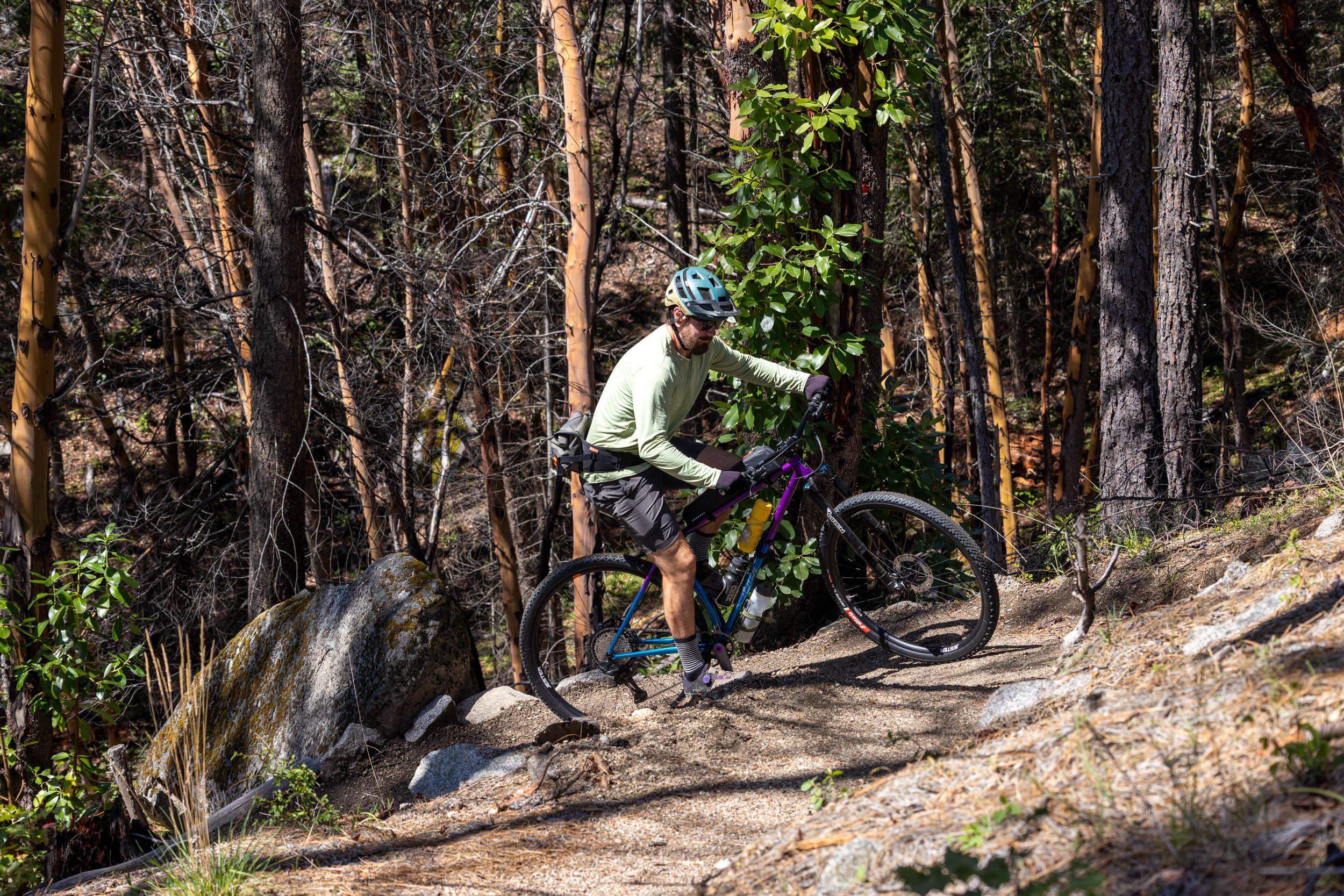
When it comes to lifting the wheels, jumping, or flicking the bike around, a 32-inch wheel is a different experience. There can be no doubt that the bigger, heavier wheels and tires are more cumbersome to move in many situations, though I find the large front contact patch does a great job of supporting the bike during nose manuals or pivots through corners.
Tire Choice
Miles: I was surprised by how much tire choice affected the two 32-inch bikes. It’s no shocker that the Peyote’s minimal center tread and small side lugs felt drastically different than the Dissector, a knobbier trail tire, but I believe that the larger contact patch means tread characteristics are even more discernible.
The BTCHN’ dished up more grip than perhaps any other hardtail I’ve ridden, and the Sour was fast and zippy. While I think the sweet spot would be somewhere in between, the Peyote’s speed seemed to make better use of the 32-inch platform. The upcoming Kenda Dagger 32 x 2.4” tire we reported on at Sea Otter looks like an exciting option.
Loren: The biggest takeaway from our two-bike swappy-ride was this: tire and bike set-up choices drastically impact the experience of any mountain bike, and 32” even more so. Given the impact those big wheels have on the ride experience, comparative tire weight, the large contact patch, and the increased grip that creates, tire choice for 32” will be more important than ever.
The Btchn’s Maxxis Dissectors represent the most aggressive end of the 32” tire spectrum available, while the Vittoria Peyote on the Sour sits on the far edge of XC-race.
Among my first impressions of the BTCHN’ was that I wanted at least a faster-rolling rear tire. All 32” wheels and tires take more to get moving, and they weigh more, no matter how fast the tread. With something as chunky as the Dissector, the rear wheel feels draggy for seemingly little benefit. While I appreciated the ripping grip of the front tire, I had stopping power in spades (especially for a hardtail) and knew I could get by with less in exchange for more speed.
When I switched to the Sour, the Peyote tires made it feel like an absolute lightning bolt. Those suckers roll! But when it came time to descend, it was only the recent rain and near-perfect dirt that kept me able to let loose. If it were my own bike, I’d choose something in the middle of these two treads or, when loose conditions demanded it, a faster rear paired to a chunky front tire—a combination I tend to prefer on most bikes, regardless of wheel size or intended riding purposes.
Geometry
Miles: I expected the Sour Pasta Party 32 and BTCHN’ Alpina to have major geometry distinctions. They ride completely differently: the former is a cross-country speed machine, and the latter is a trail bike. We didn’t compare their angles until a few days after our ride, and we were both surprised that they were similar.
I’ll save my deeper impressions for my review of the Pasta Party 32, but this served as a great reminder that all 32-inch bikes aren’t the same. I feel as if the industry has lumped them all into one weird bucket, but depending on geometry, component choice, and various other factors, 32-inch bikes can be tweaked and dialed in to suit your preferences.
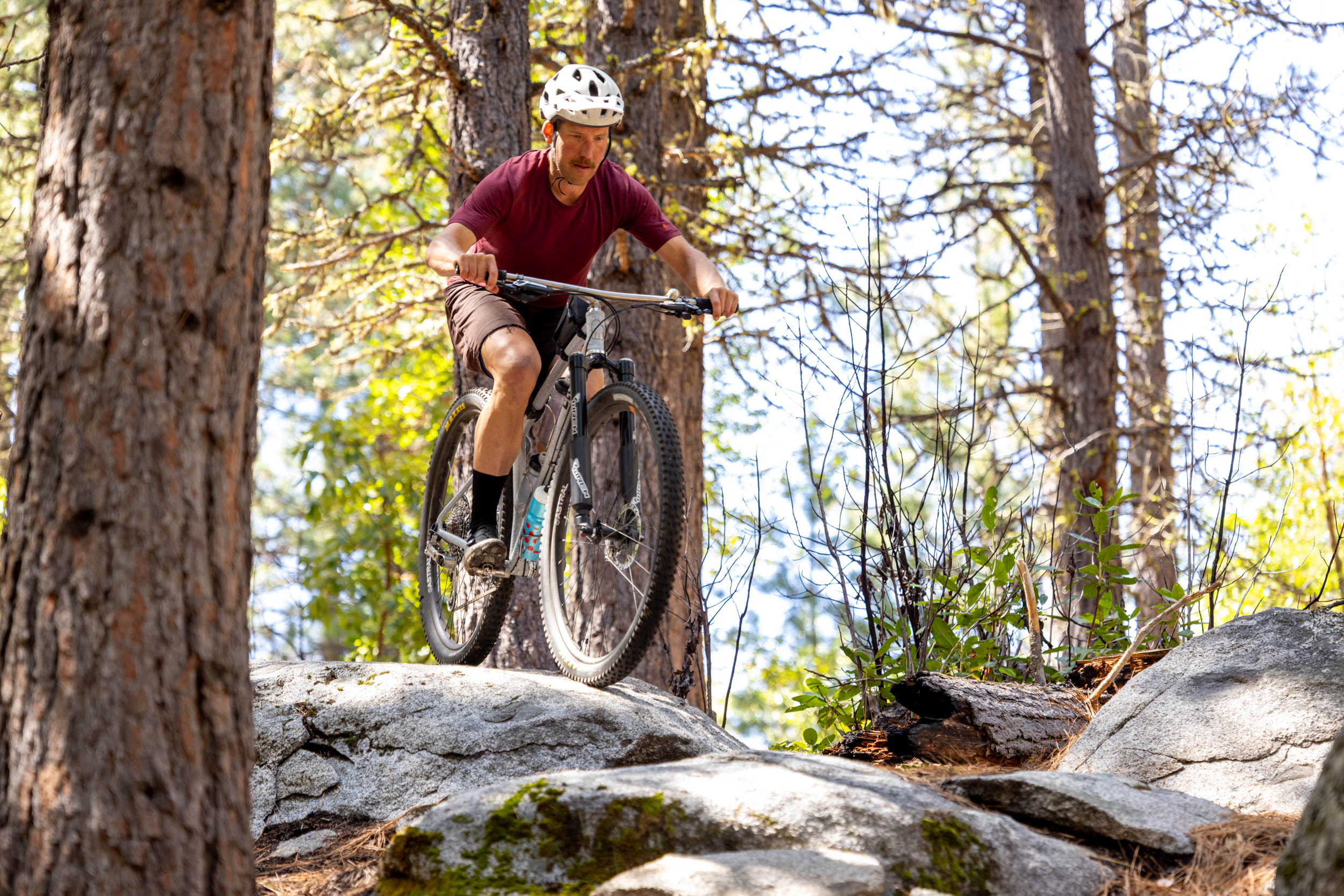
Loren: While I resisted the temptation to review the geometry charts for these bikes, I know both their designers and their preferences, so my initial takes were biased. The Sour Pasta Party is a 32” iteration of a 29” bike intended to scratch the itch of hard-pedaling XC types. It is the most pedal-able and race-oriented of Sour’s line. Meanwhile, the BTCHN’ is built to be a do-it-all trail bike, and designed by one of the most demonically fast bike handlers most of us know. That is to say, I expected it to shred.
While my initial impression generally held true, that is at least in part due to their tire and cockpit setups. For a true back-to-back test, we’d need to control those variables. Nonetheless, some differences still stood out. In short, the Sour immediately prodded the lost XC-kid in me to smash the pedals harder, pedal through corners longer, and pump the terrain up and down the trail while approaching redline. But when we got back to more technical terrain, I found myself eager to switch back to the Alpina.

A couple of days later, Miles and I both took the blindfolds off and did some comparative analysis of the two bikes’ geometries and found them to be more similar than expected. It is a good reminder that the confluence of many small differences in bike design can lead to a big difference in on-the-trail experience, but also that bike setup can impact it just as much, if not more. I suspect that we could get either bike to ride more like the other with the same bar height and tire choice, but they’d never be “the same.” While there will certainly be many common attributes to bikes with 32” wheels, the variations will be plentiful and meaningful. This is a new type of bike. Not a new bike. There is a lot of room for preferences and variations.
What We Liked
Miles: At 6’1”, I’d consider myself 32-inch curious. Unlike Loren, who pedals hard and has some racing experience, I usually pedal lightly for long periods. I’ll have short bursts of speed now and again, but I don’t tend to push hard for hours on end. For me, what stood out was how effortlessly 32-inch bikes roll up meandering, low- to mid-grade climbs. Where some 29-inch or smaller wheels start to feel sluggish, the fast-rolling 32-inch Vittoria Peyotes just want to keep rolling.
Although other factors, such as tire pressure, tread style, and terrain, were at play, I’m positive that the larger contact patch of the 32-inch tires was noticeable when leaning through corners and berms. Even with the short dropper post, high top tube, and tall front end, I was blown away at how much traction the Vittoria Peyotes offered. Most of the time, I don’t gravitate toward such fast-rolling tires, but the 32-inch platform gave me some newfound confidence on them. I’m eager to see if this continues to hold true back home in the Pacific Northwest.
Loren: I’m a 6’3” rider with a penchant for pedaling hard, riding all day, a background in XC and endurance riding, and a preference for shorter-travel (120-140mm) full-suspension bikes, hardtails, and adventure. It shouldn’t be a surprise that 32” wheels are appealing to me, but what has surprised me is just how easy I’ve found them to get used to. After just a few pedal strokes, the 32” bikes I’ve ridden feel natural, and most adaptations have come easily. I like how “in the bike” it feels, and it makes me wonder if my experience on these wheels isn’t the direct equivalent of a shorter rider’s experience on 29”. The rolling speed is impressive, and the traction is great. They roll over small bumps and handle rock-rolls both much better than your average hardtail. I found this particularly true on the trail-oriented BTCHN’ with burly tires.
What will take some more time?
Miles: The biggest holdup for me wasn’t how 32-inch wheels felt while riding, but my gearing. Larger-diameter wheels call for lower gearing, so both Loren and I were laughing when we realized the Sour had a 30T chainring and the BTCHN’ had a 32T. I could have sworn I was pedaling a 34T or 36T chainring, judging by how quickly I ran out of easy climbing gear on some steep sections of trail. For bikepacking, this could become a real issue. I’ve been known to run as small as 28T chainrings on steep, singletrack-heavy bikepacking trips, and a 32-inch setup would mean I’d need to go smaller. Thankfully, 24T and 26T chainrings do exist, but the real question is whether or not bike manufacturers will start speccing these bikes accordingly.
Like Loren, I also felt a bit out of place on the shelfy, rocky sections of the trail that tended to push the rear end of the bike up behind me. On both bikes, the 32-inch wheels and tall front end resulted in a high riding position, which made slow, techy riding a little scary at times. The BTCHN’, with its lower top tube and longer dropper post, was much easier to lean and move around, but I still think riding more technical terrain will take some more rides to really get used to.
Loren: I generally take time to adapt to a bike. I ride best when I ride a lot on one machine. Having only a few rides on these bikes, it is hard to tell which nuances are intrinsic to the larger wheels and which were just an adjustment period. On my first ride, I got stuck in a tight corner I make every time on my own 29” bike, but thinking back to the first time I rode it on a longer trail bike, I realized I got stuck then, too. These are new bikes. They do new bike things. We learn as we go.
The thing I’m unsure about, and that could trip up some riders, is the taller rear end. While we hit some legitimately steep terrain, it is not the steepest in my backyard. Even still, the rear wheel found my butt at least once. In multi-step rock rolls or step-downs in the midst of steep trails, I sometimes found myself too far over the front wheel, or feeling “pushed” from behind. This threw me off my line, and I had to dismount. Some of this is due to the big wheels, but I was also riding trails that I’ve never tackled on a hardtail. Without rear suspension to engage and slacken out the back of the bike, the fork compressed and got steep, quick. Add a quick ass-slap from the rear tire, and it was a bit spooky. Is that just a 32” issue, or a 120mm hardtail on trail bike terrain issue? Probably some of both.
Wrap Up + I Broke A Spoke
A month after our ride, I snuck out on my first overnighter on the Sour Pasta Party 32 and broke a spoke after a stick entered my wheel. I don’t think any spoke would have survived, but it made me wonder. Considering how many new tires are on the way and how many brands are designing bikes around the new platform, I figured getting a spare spoke in Canada would be easy. To my surprise, it’s not.
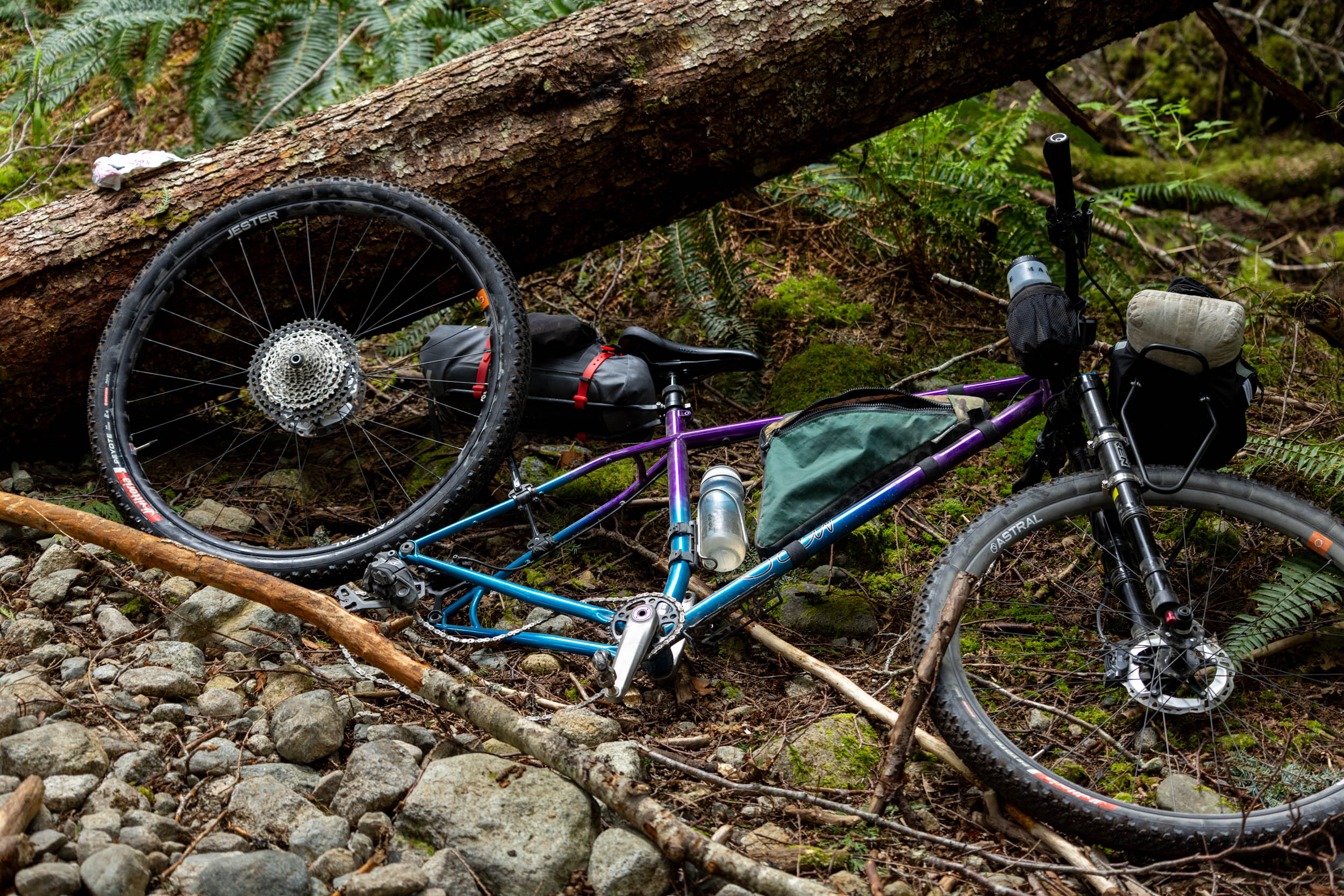
From what I’ve heard by asking around bike shops and framebuilders, most people don’t have access to finished spokes or blank spokes long enough for 32” wheels. Russ at Switzerland Trail in Colorado did some digging for me, and it sounds like Sapim should be stocking 32” spokes soon. Alpina spokes come in a 340mm length that can be cut down for 32” wheels, and Wheel-Parts Shop in the Netherlands has them available. Velocity gets spokes direct from Pillar in Taiwan, but they’re not stocked by your average bike shop, so they may be hard to get. I reached out to David Folch at DirtySixer Bikes, and he said he has blank spokes on hand if I need them. In other words, manufacturers may be making these spokes, but the distribution channels where shops and builders get spokes are not yet carrying them.
All things considered, it’s not easy for me to get a replacement spoke in Canada right now, so for the last week, I’ve been riding the bike one spoke down—a sure sign that Astral built up a nice wheel. It seems the industry has been so caught up in tire options that they’ve forgotten a pretty important piece of the puzzle. Oh, and don’t get me started on spare 32” tubes.
Wrapping things up, I’m still impressed by how smaller brands and framebuilders like BTCHN’ and Sour really helped push this whole 32-inch thing along. Obviously, it’s not mainstream yet, and perhaps it never will be, but as tall riders, Loren and I are both excited about it for certain applications.
I’ll share more thoughts on the Sour Pasta Party 32 and how it has performed as a bikepacking rig soon. Stay tuned! In the meantime, let me know if you have any specific questions about the new wheel size in the Conversation below.
Further Reading
Make sure to dig into these related articles for more info...
FILED IN (CATEGORIES & TAGS)
Plan
Please keep the conversation civil, constructive, and inclusive, or your comment will be removed.








 English (US) ·
  French (CA) ·