

 13 hours ago
2
13 hours ago
2
PROTECT YOUR DNA WITH QUANTUM TECHNOLOGY
Orgo-Life the new way to the future Advertising by Adpathway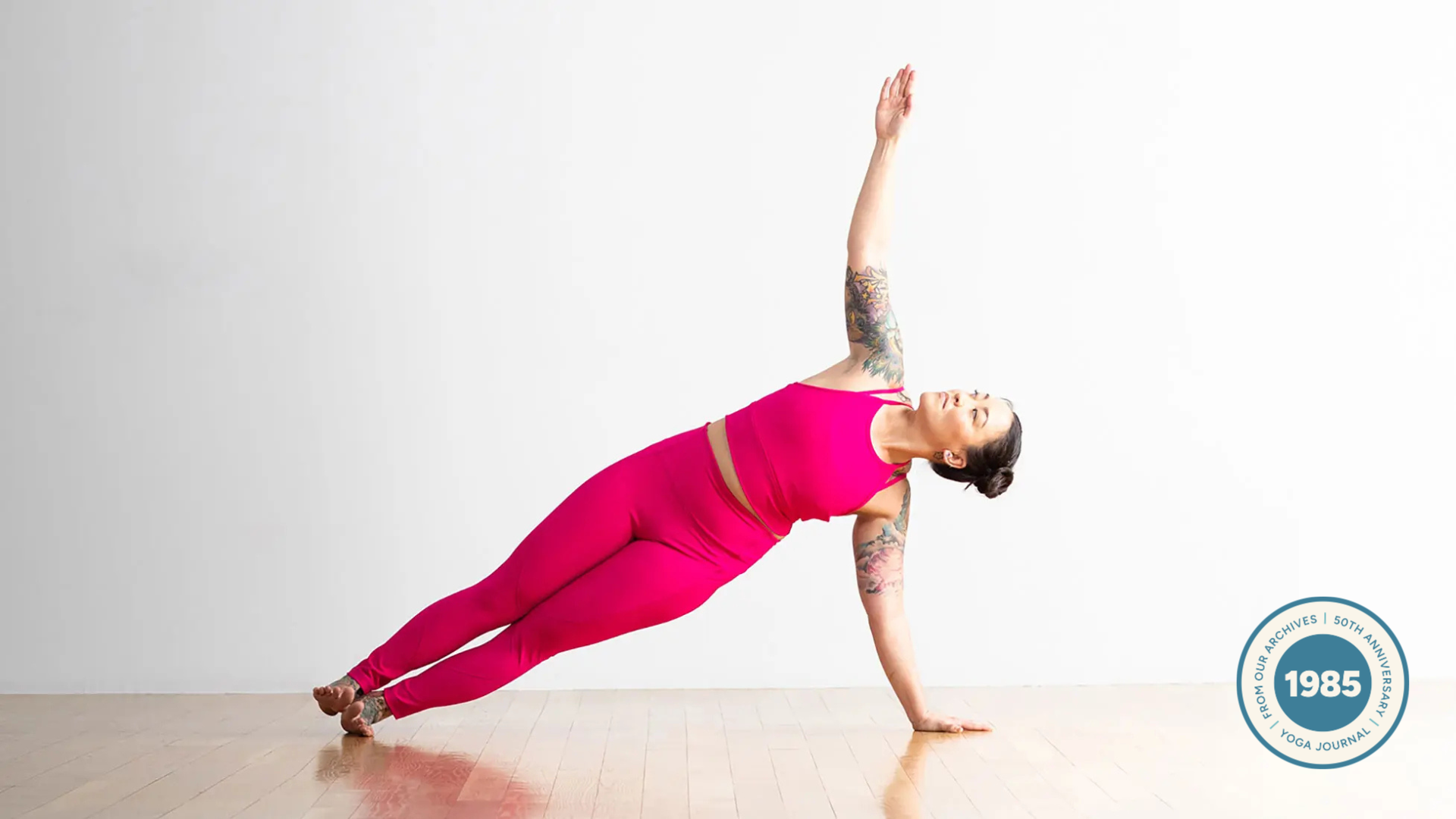
(Photo: Andrew Clark)
Published June 8, 2026 12:52PM
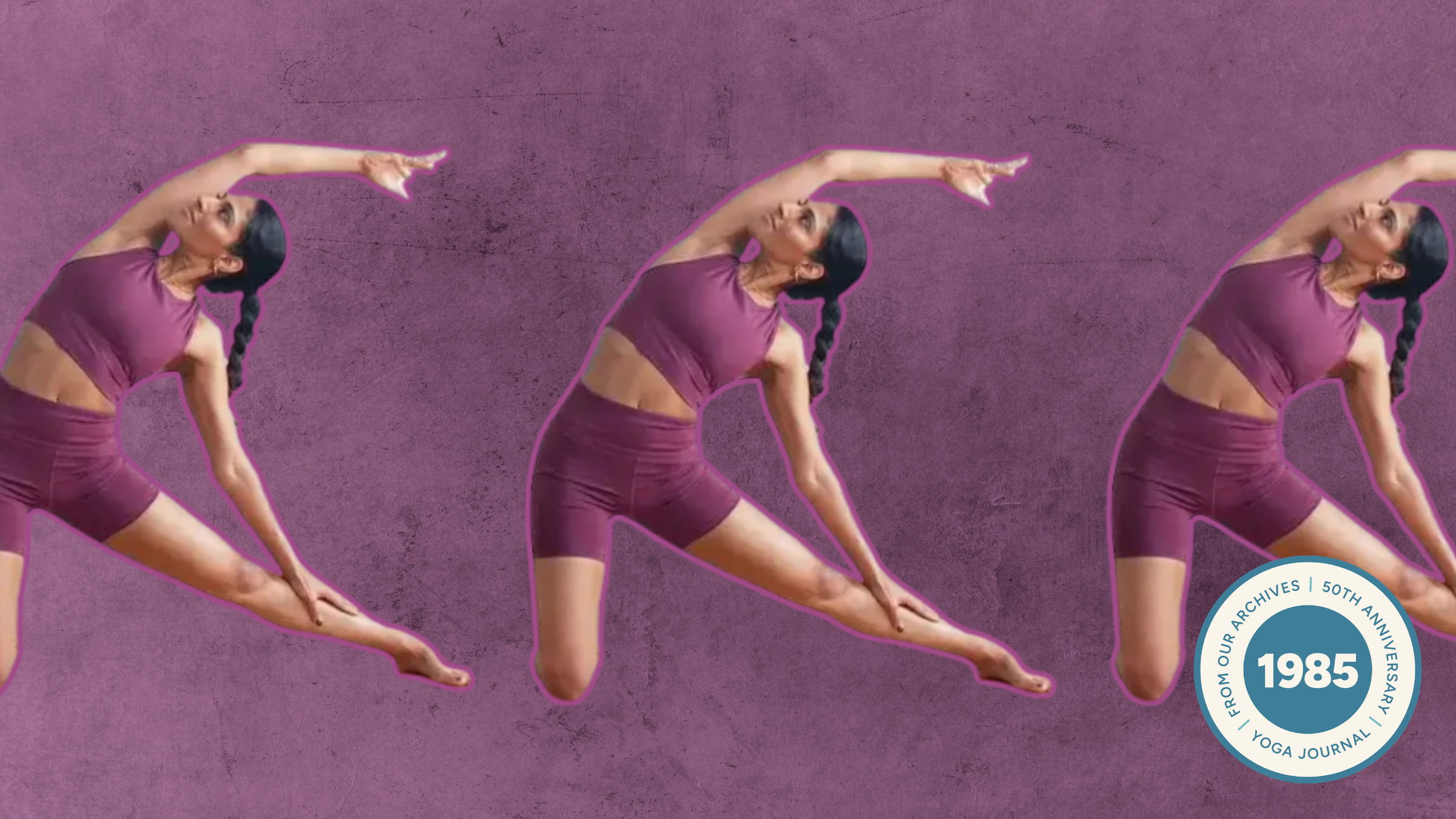
Yoga Journal’s archives series is a curated collection of articles originally published in past issues beginning in 1975. This article on the arm balance known as Vasisthasana (Side Plank) first appeared in the November-December 1985 issue of Yoga Journal.
Vasisthasana (pronounced Vas-is-ta-sana) is a pose of balance and of strength for the abdomen and arms. Balance is required to carry the weight on the sides of the feet, and strength is needed to support the body with one arm in the pose known as Side Plank.
How Vasisthasana Strengthens Your Body
The pose requires strength in the elbow extensors, the tricep brachii muscles of the back and outer upper arm, and the longer latissimus dorsi, which attaches the pelvis and the upper arm and helps to extend the shoulder joint. This muscle keeps the shoulder from collapsing. In addition, the abdominal muscles help to stabilize the front of the trunk and to prevent the trunk from rolling backward. Other shoulder muscles also come into play, e.g., the internal and external rotators.
This underscores an important fact about how the body moves against the force of gravity. The stronger the pull of gravity on a certain body part, the more muscles and muscle fibers are recruited to help with the action. Because an unusual demand for support is being made by placing great weight on one arm, many if not most of the muscles in the area of the shoulder joint and arm must contract to lend strength and stability to the stressed area.
Therefore, to equalize the action of muscles in this asana (pose), it is beneficial to enlist the help of the abdomen, the inner thigh muscles, and the buttocks. Because of the action of the oblique abdominals and muscles, the tightening of the abdominals will help to keep the trunk from rolling backward. The oblique abdominals lie in a criss-cross pattern across the lower front abdomen and aid in twisting motions as well as in support for the abdominal contents and, indirectly, for the lower back.
The Unexpected Benefit of Vasisthasana
Vasisthasana’s strengthening effect on the arms can have an interesting psychological effect as well. The arms symbolize one’s ability to work in the world, to control one’s environment, to create and change, to be independent and self-confident. The physical expression of the brain’s ability to think, the arms and hands carry out the orders of the brain and effect change around us. By strengthening the arms, one gains a feeling of being efficacious. This feeling is an important one in the study of yoga because of the interplay of strength and surrender in the asanas.
Learning to surrender, to let go, is fundamental to the practice of yoga. But letting go, whether it be of the hamstring muscles in a forward stretch or of the ego’s attachment to its view of reality, requires strength and a will to accomplish. Without strength, surrender becomes collapse and disintegration. Paradoxically, then, one must practice the asanas of strength in order to learn the art of letting go with awareness. Vasisthasana not only teaches the body strength, but also helps the mind remain one-pointed by focusing it on keeping the body balanced.
This integration of strength and balance one’s ability to let go to the moment as it is.
How to Practice Vasisthasana
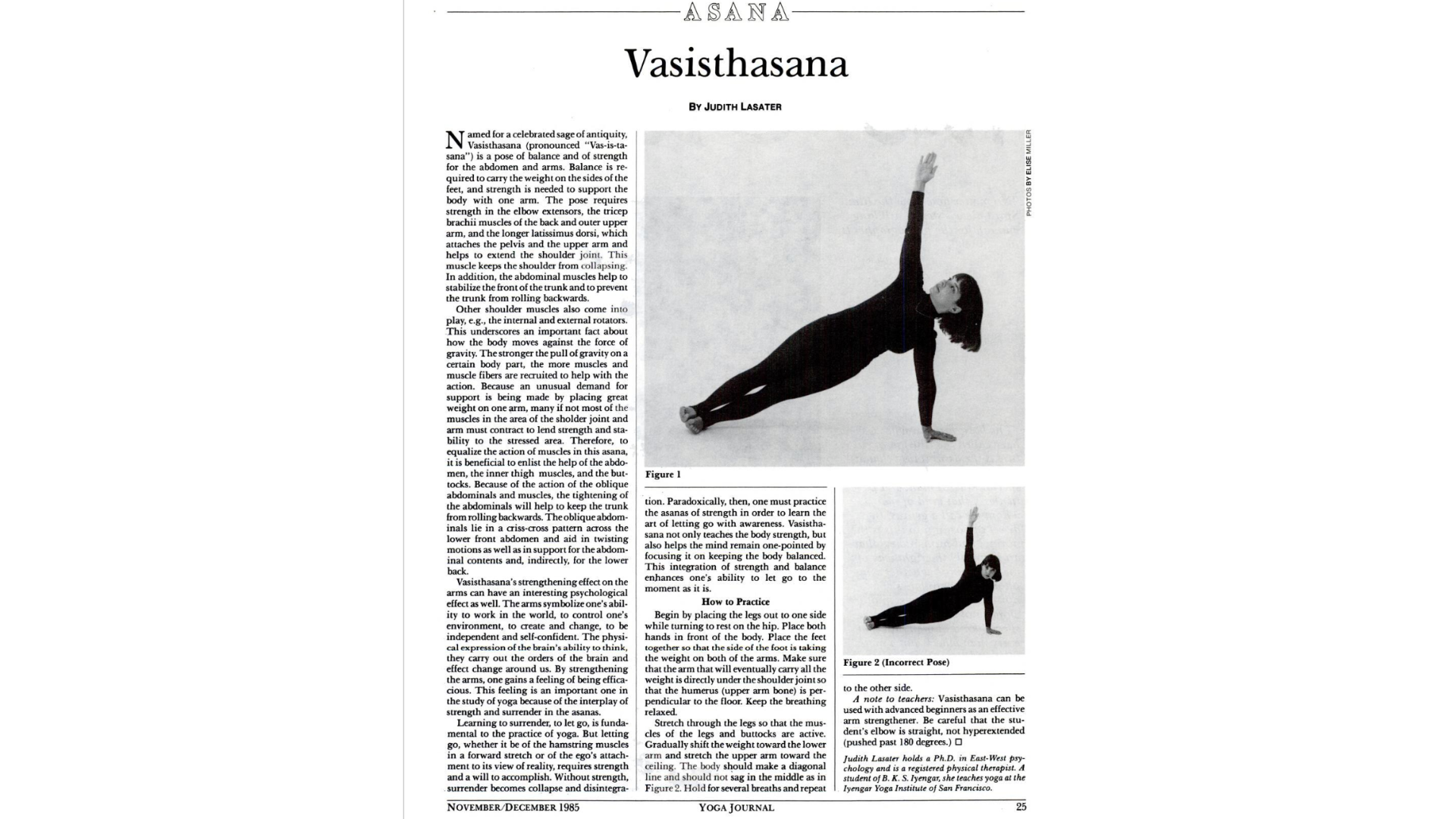
Begin by placing the legs out to one side while turning to rest on the hip. Place both hands in front of the body. Place the feet together so that the side of the bottom foot is against the mat. Make sure that the arm that will eventually carry all the weight is directly under the shoulder joint so that the humerus (upper arm bone) is perpendicular to the floor. Keep the breathing relaxed.
Stretch through the legs so that the muscles of the legs and buttocks are active. Gradually shift the weight toward the lower arm and stretch the upper arm toward the ceiling. The body should make a diagonal line and should not sag in the middle as in Figure 2. Hold for several breaths and repeat to the other side.
A note to teachers: Vasisthasana can be used with advanced beginners as an effective arm strengthener. Be careful that the student’s elbow is straight, not hyperextended (pushed past 180 degrees).








 English (US) ·
  French (CA) ·