

 2 weeks ago
16
2 weeks ago
16
PROTECT YOUR DNA WITH QUANTUM TECHNOLOGY
Orgo-Life the new way to the future Advertising by Adpathway Charles LeClaire-Imagn Images
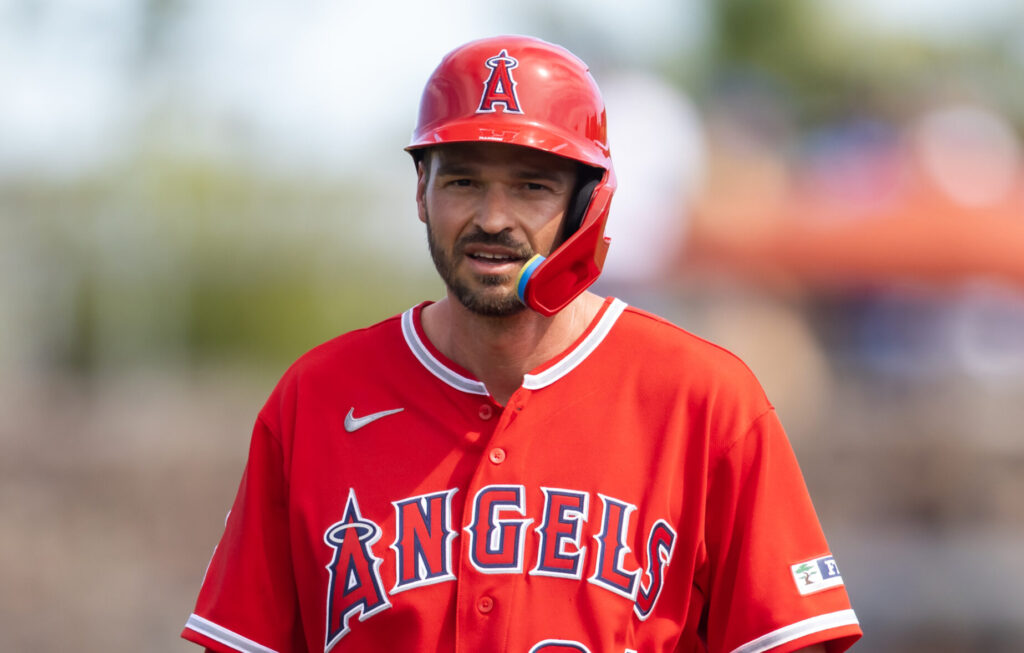
Hunter Feduccia is striving to establish himself behind the dish in Tampa Bay. Acquired by the Rays from the Los Angeles Dodgers as part of a four-player swap at last summer’s deadline, the 28-year-old former LSU Tiger is currently sharing time with Nick Fortes as the left-handed side of a platoon. His pedigree is that of a mid-level prospect. A 12th-round pick in 2018, Feduccia has been described by Eric Longenhagen as “a fairly well-rounded defensive catcher,” but also as a “bat-first backup catcher who struggles to control the run game.”
His offensive numbers in limited major league action are nothing to write home about. Feduccia has just a 63 wRC+ over 184 plate appearances, although his stroke has been showing signs of promise. So far this season, the Lake Forest, Louisiana native is slashing .278/.365/.370 with a 111 wRC+ in 62 trips to the plate. Moreover, he went yard for the first time Thursday afternoon in Tampa Bay’s 5-3 win over the Baltimore Orioles.
But it’s not his bat that I wanted to talk about when I sat down with him prior to a recent game at Fenway Park. What I was interested in were certain nuances of his position, particularly when runners are attempting to pilfer bags. While Feduccia remains a below-average thrower, he’s put a lot of effort into trying to improve that part of his game over the years and has a strong understanding of the components that go into it. I began by asking him how catchers are trained to throw.
“From a young age, you’re taught to have as short of an arm as you can,” replied Feduccia, whose fellow Alfred M. Barbe High School alums include former big league left-hander Wade LeBlanc, as well as infielders Garin and Gavin Cecchini. “The transfer is very similar to turning a double play: You’re trying to be quick and short while getting as much out of your body as you can. That and staying on top of the ball to get good backspin. Sometimes you’ll end up grabbing it with a two-seam grip and it will run on you, but if you have a clean delivery, that will help take care of the bad grip.
“Some catchers are different, obviously,” he added. “While you want to be over the top, Patrick Bailey has one of the better pop times and transfers in the game, and he kind of goes sidearm. It’s kind of finding what works for you — your arm slot, how your feet work — so I wouldn’t say there’s just one way to transfer, or throw, the ball.”
Exactly where a catcher is taught to throw the ball on steal attempts is something else I wanted to hear about. As has seemed evident in recent years, it is not directly at the base.
You Aren't a FanGraphs Member
It looks like you aren't yet a FanGraphs Member (or aren't logged in). We aren't mad, just disappointed.
We get it. You want to read this article. But before we let you get back to it, we'd like to point out a few of the good reasons why you should become a Member.
1. Ad Free viewing! We won't bug you with this ad, or any other.
2. Unlimited articles! Non-Members only get to read 10 free articles a month. Members never get cut off.
3. Dark mode and Classic mode!
4. Custom player page dashboards! Choose the player cards you want, in the order you want them.
5. One-click data exports! Export our projections and leaderboards for your personal projects.
6. Remove the photos on the home page! (Honestly, this doesn't sound so great to us, but some people wanted it, and we like to give our Members what they want.)
7. Even more Steamer projections! We have handedness, percentile, and context neutral projections available for Members only.
8. Get FanGraphs Walk-Off, a customized year end review! Find out exactly how you used FanGraphs this year, and how that compares to other Members. Don't be a victim of FOMO.
9. A weekly mailbag column, exclusively for Members.
10. Help support FanGraphs and our entire staff! Our Members provide us with critical resources to improve the site and deliver new features!
We hope you'll consider a Membership today, for yourself or as a gift! And we realize this has been an awfully long sales pitch, so we've also removed all the other ads in this article. We didn't want to overdo it.
“I don’t know exactly when they started teaching this, but it’s more to the right side of the bag,” Feduccia told me. “The infielder will set up there to give you a good target. If you tag the runner before he gets to the bag, you have a better chance of not getting swim-moved, and things like that. If you accidentally pull your throw to the left side of the bag, you’re not giving yourself as much of a chance as when it’s toward the runner.”
According to a former big league catcher who has been managing in the minors for 15 seasons, not throwing directly at the bag became in vogue shortly after video review was introduced. Matthew LeCroy, who is now at the helm of the Rochester Red Wings, the Triple-A affiliate of the Washington Nationals, told me that teams discovered that throws to the first base side were yielding out calls at an increased rate. Henceforth, catchers are typically taught to target their throws a few feet to the right.
How stances and footwork are taught has also changed. One knee down has become increasingly commonplace, and more than framing and blocking go into that equation. As were LeCroy and most every other catcher, Feduccia was once traditional with his setup, only to switch to one knee “five or six years ago.” And while some catchers prefer right knee up, and others are more comfortable left knee up, that preference primarily applies to when thefts aren’t possible.
“With no runners on, I’m left knee down, right knee up, but with runners on, I’m right knee down, left knee up,” Feduccia explained. “With my left knee down, I’m not able to transfer my legs and throw as quickly. It is easier to throw with my right knee down. The knee can kind of get in the way of the arm — it can kind of bang into it — whereas with it down, I’m more free and have more range of motion.”
LeCroy, who along with managerial duties is involved with catching instruction, informed me that what Feduccia described is commonplace. As for his thoughts on the one-knee-down stance as a whole, he is all for it. Had it not been a rarity when he was squatting behind the plate for the Nationals and the Minnesota Twins from 2000-2007, he would not only have embraced the style, but he also feels that it would have made him a better catcher.
As for Feduccia’s defensive prowess, he is aware that throwing hasn’t been one of his strengths. Asked about the reported imperfection, he cited his frame as one of the issues.
“I have longer limbs — longer arms, longer legs — whereas the traditional catcher has shorter limbs,” reasoned Feduccia, who is listed at 6-foot-1, 215 pounds. “The stubbier guy, I guess you could say, is the stereotype. When it’s going badly for me, it’s usually because my transfer is a little too big when I’m coming up out of my legs. When that happens, I have to try to minimize the movement. I have to narrow down everything so that it is a quicker, cleaner transfer.”




![[Highlight] First-pitch leadoff home run for Yandy Díaz](https://external-preview.redd.it/Z2U3ajhlNm4xNTZoMa31FJ3YnPLlWGMO6owEjyDZWMWkOc0yK6x85tqDBKe4.png?width=640&crop=smart&auto=webp&s=520c0a301a4c40c003debc8156847bb57f1737f9)
![[Highlight] Paul Goldschmidt starts the scoring in Cleveland with a 2-run blast](https://external-preview.redd.it/NjBndTBwOTcxNTZoMRQXl7j2nip-2RfiYGmU3YUhvWqzaBrhxS3DBbmj-9ZK.png?width=640&crop=smart&auto=webp&s=c1a68d9b73b415c05758a0ab9f6b8971cbaf7ece)






 English (US) ·
  French (CA) ·