

PROTECT YOUR DNA WITH QUANTUM TECHNOLOGY
Orgo-Life the new way to the future Advertising by Adpathway
The new Rogue Panda Picketpost Rack-Top Bag is a unique top-opener with a roll-top closure, a backpacking-inspired mesh pocket, and two width options to fit various racks. We tested a prototype, got out for a shake-down ride with Rogue Panda’s founder, and tried out the final version over the weekend. Find all the details on the Picketpost Rack-Top Bag and a peek at the upcoming Elden Rack-Top Bag here…
A sudden spring heat wave had Emily and me beelining for higher elevations in search of cooler temps. A quick look at the weather forecast set our sights on Flagstaff, Arizona, which turned out to be one of the best decisions we could have made. Not only is Flagstaff a mountain bike paradise, but it’s also a stop on the Arizona Trail, and it happens to be home to Rogue Panda Designs, a bikepacking bag brand that has been designing and manufacturing high-quality bags for over a decade.
During my time in Flagstaff, I spent a good chunk of time with Rogue Panda founder Nick Smolinske, and I have a Field Trip coming soon. Most of our conversations focused on racks and rack bags. Rogue Panda has set itself apart from other bag makers by zeroing in on gear that’s purpose-built for the demands of the Arizona Trail, and all of its products are named after places or trailheads along the route. This means their bags are mostly for riders who prioritize weight, efficiency, and natural bike handling. Focusing on the back of the bike, their Ripsey seat pack (first released in 2022) offers the smallest tire-to-saddle clearance we’ve seen on a dropper-compatible seat pack. It’s an excellent option for some trips, but the resurgence of lightweight racks has had Nick brainstorming a lightweight rack top bag.
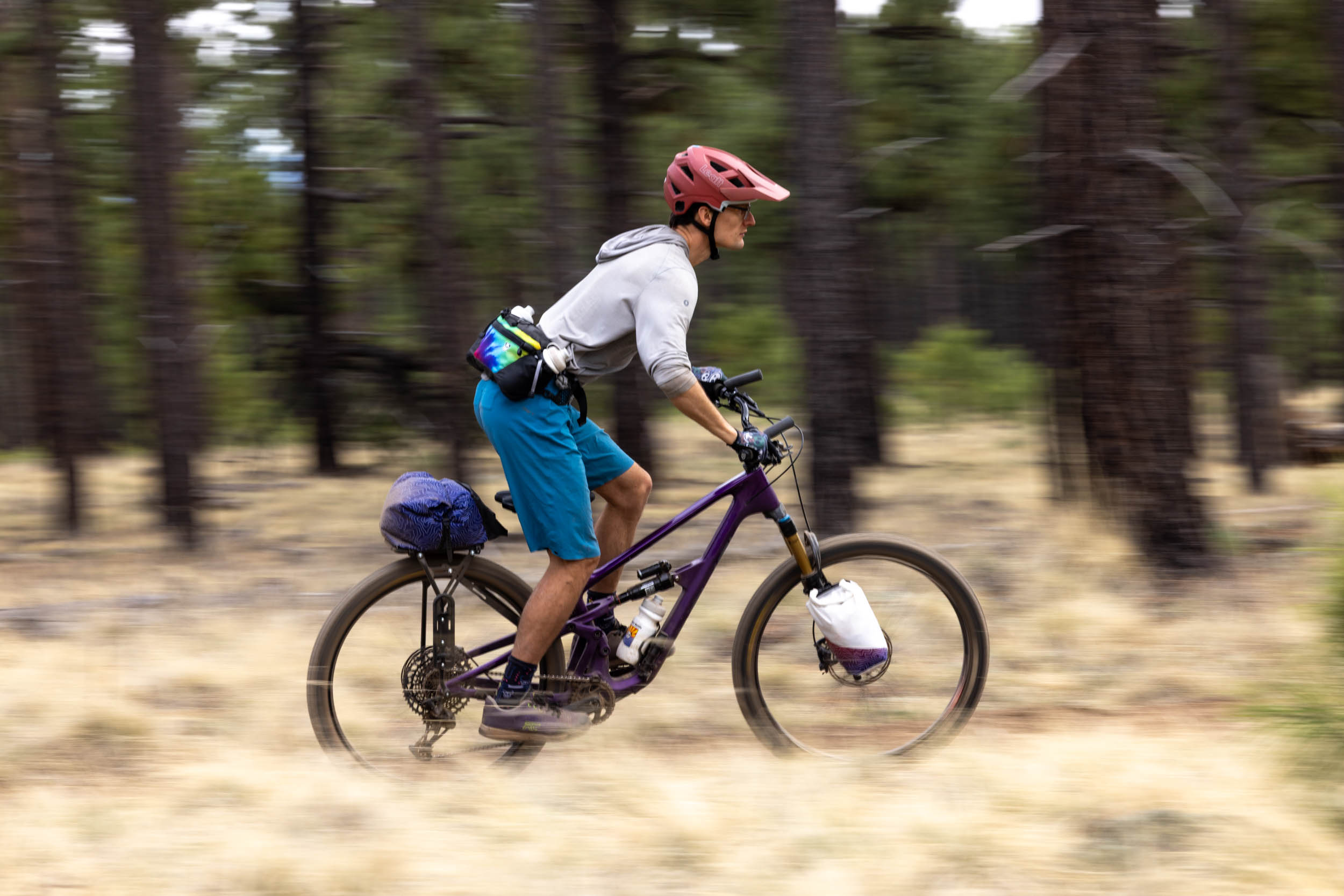
During our visit, Nick was working on a prototype top-opening rack bag, which Emily and I both tested on an AZT overnighter. I also got out for a shakedown ride with Nick on some Flagstaff trails to see how the bag worked on his full-suspension trail bike, and most recently, Nick sent over a finalized design for us to try out on a spring campout back home in British Columbia.
Picketpost Rack-Top Bag Overview
Despite being a slight departure from their Ripsey dropper post seat pack, a product that required some serious investment and development to create, the Picketpost Rack-Top Bag still feels like a Rogue Panda product. By that I mean it’s designed to be lightweight, minimal, and suitable for technical terrain and singletrack.
The Picketpost Rack-Top Bag is inherently simple. It’s essentially a top-opening dry bag with a slanted shape to provide plenty of clearance for dropper posts—a non-negotiable for Nick. The bag’s base has Hypalon loops for lashing Rogue Panda’s RPGP Straps to your rear rack, and the roll-top closure comes with your choice of G-hook buckles or Austere cam-lock buckles at either end, with webbing straps that girth-hitch onto the rack rails. The prototypes pictured above used their rubber RPGP Straps to secure the roll-top, but we all agreed they were slightly awkward to use.

The bag comes in two widths to accommodate all manner of racks. The wide version will fit racks 5-6″ wide, such as the OMM Elkhorn or Tumbleweed racks, and the narrow version fits most racks from 3.5-4.5″ width, including the Mica Rat Tail and OMM Divide. The wide version’s base is 12.5″ long by 6″ wide, and the narrow version is 12.5″ long by 4″ wide. Nick played around with a longer version for the narrower bag to regain some capacity, but it didn’t fit well on the racks. The wide version holds approximately 14L, and the narrow version fits 2L less.
At the rear of the bag is an interesting mesh pocket, similar to the exterior pockets on modern ultralight backpacking packs, for stashing extra layers or other goodies. The entire bag is seam-taped, so there’s no need to pack sensitive gear in additional waterproof bags, and each Picketpost is made to order in your choice of fabric, color, and print, including custom printed-in-house options for those who want to get creative.
From Prototype to Production
One thing Nick found frustrating about running racks and rack-top bags is that they often limit dropper-post functionality, which is one of the main benefits of ditching the seat pack. For AZT riding, it’s more enjoyable to have full dropper-post use, which is why the bag is slanted at the front. At 6’1″ tall, I’ve never been too frustrated by squishing a rack-mounted dry bag with my saddle dropped, but for shorter riders, keeping the area clear under the saddle/dropper post is crucial. For Emily, who’s 5’6″ tall and rides a medium frame, most rack-top bags end up touching the backs of her legs, limiting her dropper travel.
Looking at the photos above, there’s plenty of clearance between Emily’s saddle and the Picketpost bag, and no chance of anything brushing up against her legs while pedaling. The prototype she tested during an overnighter on the Arizona Trail was mounted on a Mica Rat Tail rack, enabling her to use her entire dropper post without interference, a first for her. The production version is a few inches short, so interference with the dropper post/saddle should be minimal—even on small frames—when running racks like the Rat Tail that tuck under the saddle.

One of my favorite elements of the Picketpost bag is its massive opening. Although it’s designed to stay attached to the bike at camp, the rubber straps aren’t the quickest to remove and reinstall, so packing and unpacking are made easy thanks to a generously sized roll-top closure. The bag’s top rim has multiple separate stiffeners, allowing the sides to fold inside like a paper bag before rolling it closed. Both sides then cinch down against the rack, using the girth-hitched Austere buckles or G-hook buckles, depending on your preference.
The only real drawback of such a minimal design is that the bag itself has no structure or stiffeners holding its shape. There’s padding in the base, against the rack, but it’s otherwise just fabric. How clean the bag looks ultimately depends on how much care you put into packing it and what’s inside. Because it’s easiest to leave the bag installed on the rack, stuffing big voluminous items like sleeping bags or puffy jackets inside hasn’t been my first choice. Instead, I’ve been getting the best results by packing it like a seat pack, with dense items in the middle/bottom and smaller, malleable items stuffed around them. Using some larger ditty bags or compression sacks might be a good option if you find it hard to keep top-opening bags organized.
Gone Bikepacking
If you treat the Rogue Panda Picketpost Rack-Top Bag like a top-opening handlebar bag, it’s a great place to stuff overflow items, additional food, or layers. Unlike a handlebar roll, which isn’t easy to get in and out of during the day, the top-opening design expands and contracts as needed. Emily and I found it worked great for stashing our camp stove, sleeping pad, camp pillow, some extra layers, camp shoes, and other small-ish dense items.
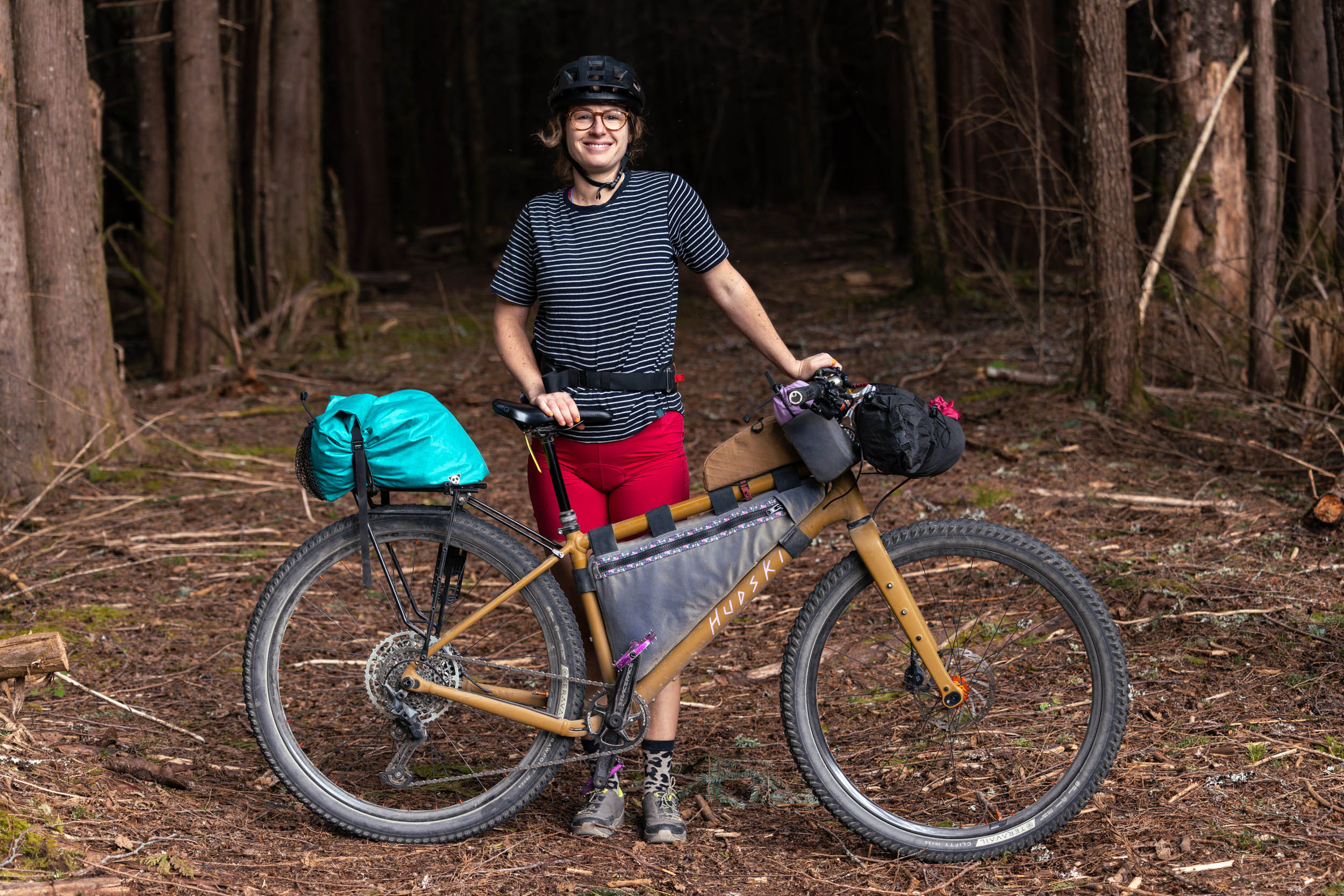
We mounted the Picketpost bag slightly too far back here, which explains the saggy rear end. Shifting it forward on the rack fixed this.
If you take care when packing, the Picketpost is extremely stable. The four straps on the base get it 90 percent of the way there, and the main roll-top/side straps really lock the bag in place. Despite being taller and wider than the usual basic drybags I’ll sometimes strap onto rack platforms, it’s stable and wobble-free.
Because of its unstructured design, it sometimes felt a bit unwieldy, with excess fabric and bulging around the sides. I could see it being popular among shorter riders who can’t use a dropper post with a seat pack and want a larger-capacity rack-top bag for big trips, or those who want to avoid panniers. I also see the top-opening design working nicely alongside a multi-week expedition setup, where having some additional quick-access/overflow storage is sometimes helpful. Weighing in at just 235 grams (narrow) or 265 grams (wide) with all required straps, the Picketpost is among the lightest rack-top bags for its size. A large, lightweight dry bag would probably weigh less, but you wouldn’t get the benefits of a top-opening design, a padded base, and an exterior pocket.
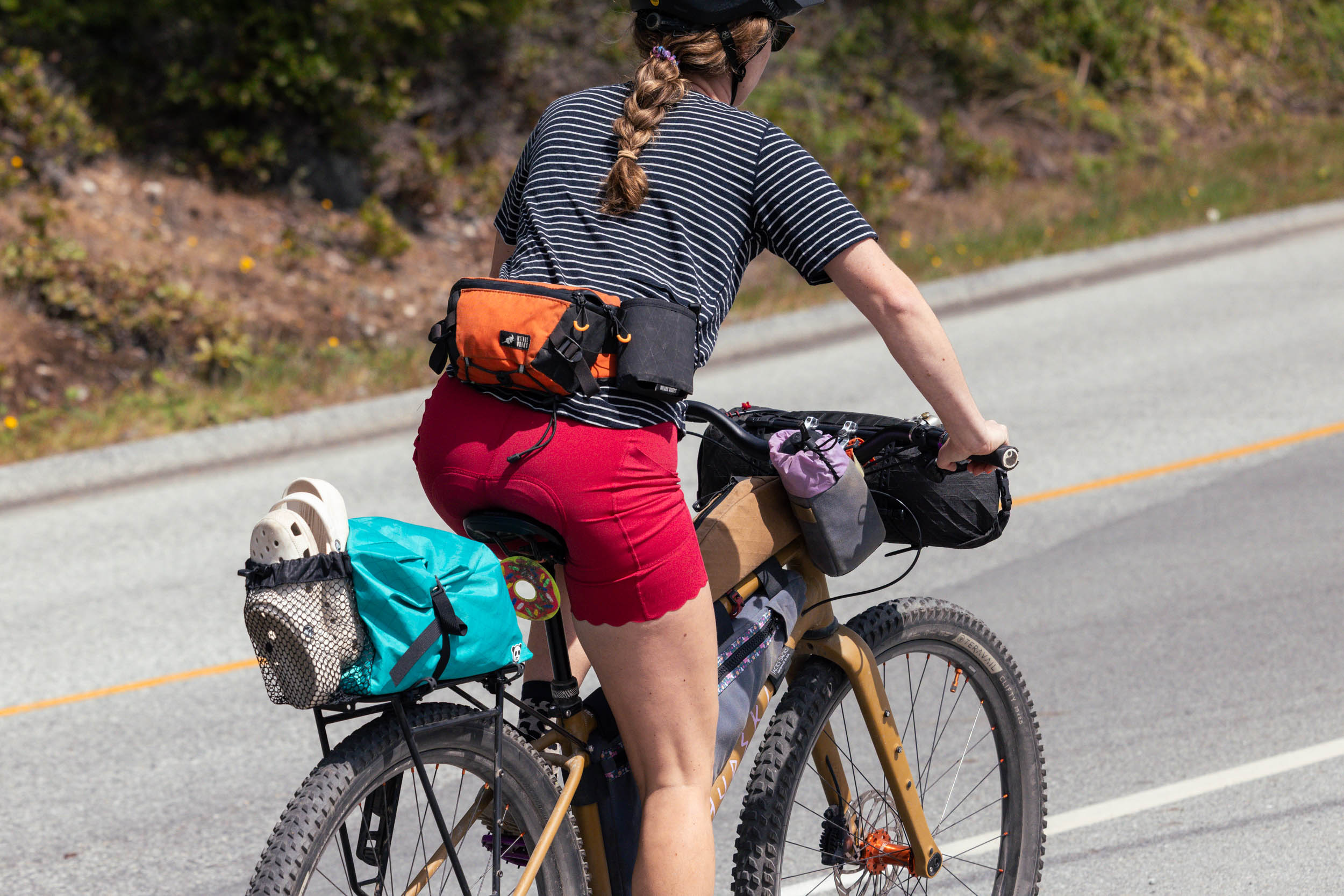
I’m getting hyper-picky here, but I would also have preferred to see the somewhat basic mesh material used for the pocket replaced with Dyneema stretch mesh or UltraStretch fabric, which is solid and tends to snag less on branches or bushes. I can only assume this is why the backpacking industry has moved to more modern stretchy fabrics for exterior pockets, and I think they offer the same benefits in a more durable package. Of course, a solid stretchy fabric doesn’t allow you to quickly see what’s inside, and isn’t as ideal for drying out wet gear, like a tent fly or rain jacket, but maybe Rogue Panda could offer some options.
Coming Soon: Elden Rack-Top Bag
Although the Rogue Panda team is still finalizing the design, we also had a chance to test out another rack bag that should be released sometime next month. The Elden Rack-Top Bag is named after Elden Mountain in Flagstaff, which the AZT equestrian bypass goes right past. It shares a similar construction to the Picketpost bag, with a padded base and minimal single-layer, seam-taped body, but instead of a top-opening closure, it uses a rear-opening roll-top that looks more like a traditional seat pack.

Unlike the Picketpost bag, the Elden Rack-Top Bag is designed to be easily removed at camp thanks to four G-hook buckles that connect to loops on the top of the bag, and then girth-hitch onto the rack’s top platform. When cinched down, the bag has virtually no movement, and the locking G-hook buckles don’t budge. At camp, removing the bag is quick, and the straps stay in place on the rack.
On top, there’s a generously-sized mesh pocket with a cinch closure. At first, I wasn’t sure the rear-opening pocket would be useful for anything but lightweight layers, but a friend tested it out on an overnighter this past weekend, and it also did a good job of holding extra water and a mango at one point. Because it can be removed easily, the Elden Rack-Top Bag can be used for bulky, compressible gear like clothing, a sleeping bag, a tent, or anything that is best stuffed. The Elden rack-top bag will also have a ~14L capacity, not including the large mesh pocket on top. We’ll share more when it becomes available.

Pros
- Lightweight for its size
- 14L is large enough to not require panniers or additional rear cargo for most trips
- Top-opening design is easy to access during the day
- Two sizes for different rack styles is a nice touch
- Mesh pocket is functional, although a Dyneema stretch mesh or UltraStretch fabric would be better
- Waterproof!
Cons
- Unstructured design results in some aesthetically unpleasing folds and rolls
- Somewhat tall when packed full, which means the weight can sit high on some bikes
- Four rack straps means it’s likely not coming off at camp
- Aa solid, stretchy fabric would be nice for some of these pockets
- Capacity: 14L
- Material (as tested): EPX200
- Weight: 265 grams
- Place of Manufacture: Arizona, USA
- Price: $150 USD
- Manufacturer’s Details: RoguePanda.com
Wrap Up
I’ve tested several rack-top bags over the last few years, and it’s safe to say I’m a little obsessed. Jay Petervary’s rack bag lineup is minimal, functional, and is a small improvement on a standard roll-top dry bag. Released this winter, the Old Man Mountain 12L Atlas Rack Pack takes the concept further with a welded construction and tapered front end. The one thing I hadn’t seen yet was a well-designed top-opening bag that takes some of the benefits of a top-opening handlebar bag and moves them out back.
The Picketpost Rack-Top Bag is a step in the right direction, and it was special to see multiple iterations, test prototypes with Nick, and provide feedback along the way. I appreciate that Nick didn’t stray from his AZT-approved, minimalist approach to bag design, which resulted in a super-stable, universal rack-top bag that leaves plenty of room for dropper post travel. I’m more excited for the upcoming Elden Rack-Top Bag because it can be removed more easily and faster at camp, but for certain trips, it’s great to have a bag that’s easily accessible during the day. For more information, visit Rogue Panda’s new “Rack and Fork Bag” page here.
Further Reading
Make sure to dig into these related articles for more info...
Please keep the conversation civil, constructive, and inclusive, or your comment will be removed.








 English (US) ·
  French (CA) ·