

 3 days ago
7
3 days ago
7
PROTECT YOUR DNA WITH QUANTUM TECHNOLOGY
Orgo-Life the new way to the future Advertising by Adpathway
A press break is the offensive plan a team uses to beat full-court pressure. The goal is not just to get the ball across half-court safely, it's to turn the defense's aggression into easy scoring opportunities at the other end.
At the high school level and below, I don't think anything loses games faster or more frequently than a team's inability to handle pressure.
But it doesn't have to be this way!
In this guide, I'll share the principles that beat any press, how to attack man-to-man and zone pressure specifically, and the alignment I recommend for most teams.
What Is a Press Break in Basketball?
A press break (also called "press offense" or a "press breaker") is a set of principles and a floor alignment a team uses to advance the ball against a full-court press.
The same concepts work whether the defense picks you up full-court, three-quarter court, or at half-court. And they work against both man-to-man and zone pressure.
Every good press break does three things:
1. Gets the Ball Inbounds Safely – Many presses are designed to steal the ball before it's even in play. A press break gives the inbounder reliable options.
2. Advances the Ball Without Turnovers – Quick passing and smart spacing move the ball up the floor faster than the defense can rotate.
3. Attacks the Press to Score – Pressing defenses gamble by sending extra defenders at the ball. A good press break punishes that gamble with layups.
Most teams get the first two right and completely ignore the third...
Which is exactly why so many basketball press break possessions end with the ball being walked over half-court instead of a layup.
That's a mistake we'll fix below.
6 Press Break Principles That Beat Any Press
There are dozens of press variations your team might face during a season...
2-2-1, 1-2-1-1, 1-2-2, man-to-man, run and jump, and on it goes.
You can't install a different press breaker for every one of them.
And you shouldn't try.
The main reason so many press breakers fail is that coaches rely on players memorizing a sequence of movements.
That can work... until a smart defense takes away the first pass and your players have no idea how to adapt.
Instead of creating robots who've memorized a pattern, we must develop players who understand HOW to break a press.
These six principles are the foundation:
1. The Pass Beats the Dribble – The ball moves faster through the air than any player can dribble it. Against pressure, advance the ball with quick, hard passes and save the dribble for attacking open space or escaping a trap.
2. Sideline, Middle, Reverse – Any time the ball is trapped, you want three outlets: (1) a sideline option, (2) a middle option, and (3) a reverse option behind the ball. It's very difficult for the defense to put two players on the ball while covering all three. With proper spacing, the trapped player simply has to stay poised and find the open teammate.
3. Never Stand Three in a Row – A receiver standing in a straight line behind their defender is invisible to the passer. Receivers must keep moving so there's always a clean passing angle. If you can't see the ball, the ball can't find you.
4. Catch With Your Eyes Up – Almost every press leaves a player open somewhere down the floor. The problem is that ball-handlers panic and never see them. Teach players to catch, chin the ball, and scan the whole floor before putting the ball on the deck.
5. Use the Retreat Dribble Against Traps – Good players don't mind being trapped because traps create openings elsewhere. But you must create space to make those passes. Execute a retreat dribble by turning your shoulders so the ball is behind you, putting your chin on your top shoulder to see the floor, and taking big push steps back. As the ball-handler pulls back, teammates should come toward the ball to shorten the pass.
6. Attack the Press to Score – Teach your players that the goal of press offense is to SCORE. Brian McCormick puts it perfectly: "Our goal is not to break a press to get the ball across half-court. Our goal is to break the press for a layup." When teams score layups against a press, coaches take the press off. When teams just survive it, there's no reason to stop pressing.
Master these six principles and the specific press your opponent runs starts to matter a lot less.
How to Break a Man-to-Man Press
Man-to-man pressure is a different challenge to a zone press.
Instead of defending areas and trapping in set spots, defenders deny their individual matchups and pressure the ball for 94 feet.
That means a man-to-man press break is won in two places: getting the ball inbounds, and freeing up your ball-handlers.
Here's how to do both:
1. Run the Baseline After Made Baskets – After an opponent's made basket, the inbounder can run the baseline. If the strong side isn't open, run to the other side and explore options there. This simple habit shortens passes and shifts the defense.
2. Get the Ball In Quickly – When the opponent scores, one player should immediately grab the ball, hustle behind the baseline, and look to inbound. Too many players drop their heads and walk the ball out of bounds, giving the press time to set up.
3. Screen and Seal Against Denial – If the defense denies the inbound pass, use screens to free your ball-handlers. But your screeners MUST be ready to receive a pass after screening. Many pressing teams switch all screens, so the screener should pivot and seal the switching defender on their back.
4. Screen Your Own Defender – Another weapon against a switching defense. If defenders want to jump out and switch every screen, screening your own defender makes that nearly impossible and frees a teammate to receive the ball.
5. Clear Out for a Good Ball-Handler – Some teams won't trap and will simply pressure your guard 1-on-1. If your ball-handler can win that matchup, give them space and get out of the way. If the defense baits the dribble and then sends a trap, that's when the pullback dribble earns its keep.
6. Use a Secondary Ball-Handler – Against an elite full-court defender, sometimes the better option is to let someone else advance the ball, then have your point guard come back to receive it after half-court. There's no rule that says your best player has to fight through 94 feet of pressure every possession.
7. Shorten the Passes Against Extreme Denial – Some teams sell out completely to deny the inbounds with a face-guarding defense and a "centerfielder" on the inbounder. Counter this by having all four receivers walk their defenders down toward the baseline. This shortens every passing option and creates space behind the defense — once the ball is in, the ball-handler simply reads the centerfielder and passes ahead.
How to Break a Zone Press
Zone presses trap in predictable places... usually the deep corners and along the sideline just before half-court, where the lines act as extra defenders.
That predictability is your advantage.
Here's the truth about beating any zone press:
Keep the ball out of the trap zones, flash a player to the middle, and reverse the ball faster than the zone can shift.
1. Inbound Away From the Corner – The deep corner near the baseline looks open because the defense wants you there. Inbound toward the middle of the floor or use the baseline run to create a better angle.
2. Flash to the Middle – Every zone press is vulnerable through its heart. A player flashing to the middle of the floor forces the defense to collapse, which opens the sidelines and the deep pass.
3. Reverse to Shift the Zone – Zone presses load up on the ball side. A quick reversal makes the entire defense rotate, and a rotating defense is a defense with gaps.
4. Look Diagonal After the Reversal – Once the zone shifts, the deep diagonal pass is often open for an easy attack. This is where layups come from.
Every zone press also has its own specific weakness. We've covered the most common ones in detail:
* 2-2-1 Press – A three-quarter court zone that traps on the sidelines. Beat it through the middle.
* 1-2-1-1 Diamond Press – Traps immediately in the corners off the inbounds pass. Beat it with the baseline run and quick reversal.
* 1-2-2 Press – A contain press that walls off the middle. Beat it with patience and ball reversal.
* 1-3-1 Press – Extended pressure with a dangerous middle interceptor. Beat it by attacking before it sets.
* 2-1-2 Press – Pressure up top with rim protection behind. Beat it with the middle flash.
The 1-4 Press Break
(Our Recommended Formation)
You can't install a different press breaker for every press you'll face this season. That's too much for players to remember, and it eats practice time you don't have.
The smarter approach is one versatile alignment that you tweak depending on what you're facing.
For most teams, I recommend the 1-4 press break.
The 1-4 press break (also called the "4 across press break") lines up four players across the floor at the free-throw line extended, with the inbounder behind the baseline.
It's my favorite way to attack full-court pressure... and once your players learn the spacing, it works against every press you'll see all season.
Benefits of the 1-4 Press Break:
1. It Works Against Man AND Zone Presses – Against a team that changes defenses, you don't want players looking to the sideline waiting for a play call. The 1-4 alignment eliminates that confusion because it can be used against any pressing defense.
2. It Makes Denial More Difficult – By bringing all players up, you eliminate back-side help. If the defense wants to deny every inbound pass, there's a wide-open court behind them for the deep pass and a layup.
3. It Forces Post Players to Defend Full-Court – Opponents must make a choice: bring a slow post player up to pressure, or concede the inbounds pass. Either option benefits the offense.
4. You Can Attack to Score – Most 1-4 press breakers eventually send a player deep. A player starting high and then breaking down the floor is much harder to guard than one standing deep the whole possession.
5. It's Flexible – There are many things you can do out of a 1-4 alignment. Adjust the options below to fit the personnel on your team.
Running the 1-4 Against Zone Pressure
Common zone presses include the 2-2-1, 1-2-2, and 1-2-1-1 looks, and this alignment is effective against all of them.
Consider the best way to use your personnel.
For example, do you want your point guard to receive the first pass, or would you rather they attack up the floor on the second pass?
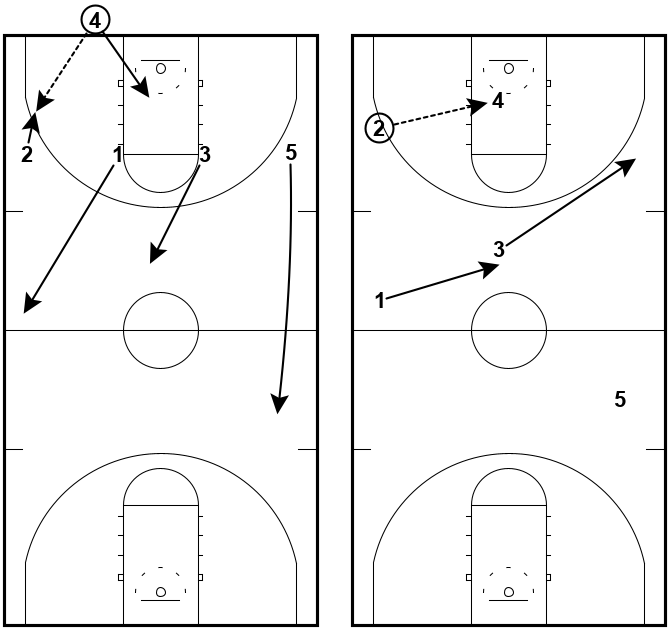
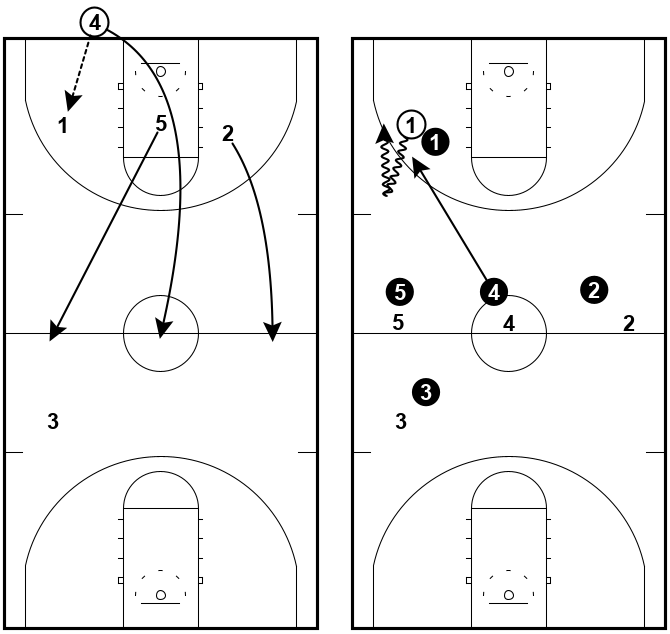
In the diagrams below, notice how the offense maintains sideline, middle, reverse spacing at all times, with the fifth player in the "deep diagonal" position.
If the ball is reversed, players fill both sidelines and the middle.
Running the 1-4 Against Man Pressure
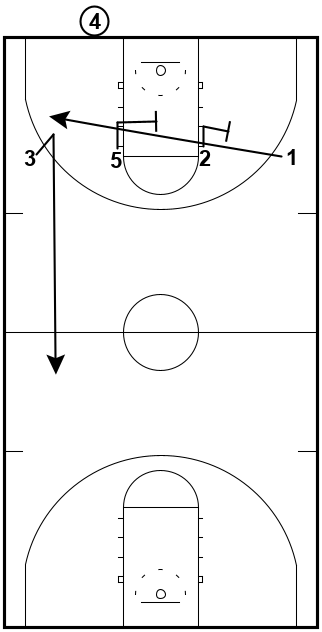
Against man-to-man pressure, use the screening actions covered in the man-to-man section above - screen and seal against denial, or screen your own defender against switches.
One detail worth stealing from the diagram below:
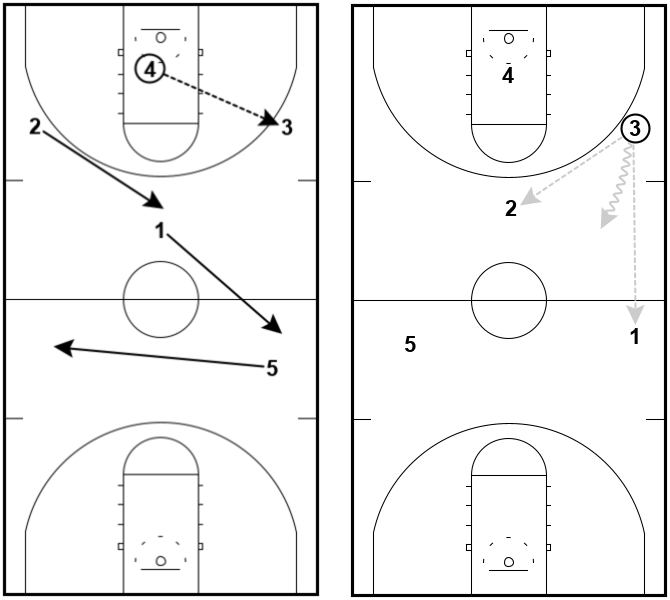
Have Player 5 (usually your post) set the second screen for Player 1 (your point guard). Against a switching defense, this creates two advantages: your point guard will usually be quicker than the opposing post player, and your post should be able to seal an opposing guard inside.
If the ball is inbounded to a strong ball-handler and the defense won't trap, clear out and give them space to work.
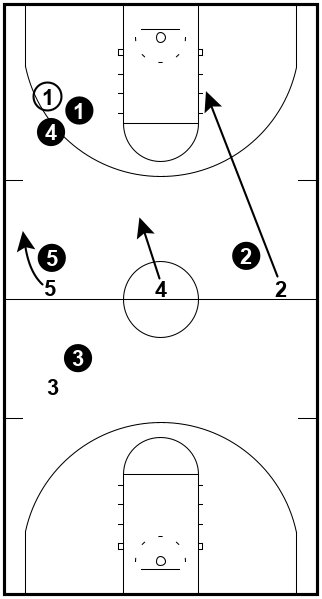
Some teams will let the ball-handler start to dribble, then send a late trap.
In the diagrams below, notice how Player 1 uses pullback dribbles as the trap arrives, and teammates come back toward the ball into sideline, middle, reverse spacing.
Press Break Tips for Youth Basketball
Full-court presses are brutally effective against young teams...
But not for the reason most coaches think.
1. Understand Why Presses Work Against Kids – It's a strength issue as much as a smarts issue. Breaking a zone press requires low, hard, fast passes between multiple defenders... and young players have to "wind up" to generate that power, which telegraphs every pass. They also can't throw the lob over the top. Until that strength develops, even a well-coached young team will struggle.
2. Teach Principles, Not Patterns – A memorized press breaker turns young players into robots: pass here, move here, dribble here. It works once or twice, then a smart defense takes away the first option and everything collapses. Teach the six principles above and let players make decisions.
3. Train With Full-Court Passing Drills – You don't need to teach your team a press just so they can practice against one. Competitive full-court passing drills and small-sided games develop the exact skills that beat pressure — moving into open space, spacing the floor, and passing in front of teammates.
4. Keep One Simple Alignment – When your team does need structure, one alignment with clear rules beats three memorized plays. The 1-4 is ideal for youth teams because the spacing rules never change no matter what press they face.
And a request from me to every youth coach reading this:
Please don't be the coach on the other side of this equation. Full-court pressing young kids wins games, but it teaches your players nothing about defense and turns the game into a turnover contest.
Press Break FAQ
What is the best press break in basketball?
There's no single best press break. The best one is a versatile alignment your players understand deeply. For most teams, we recommend the 1-4 press break because it works against both man and zone pressure without changing the spacing rules.
How do you teach a press break?
Teach principles before structure. Start with pressure situations in practice (small-sided games and full-court passing drills), then add your alignment once players understand spacing and trap responses. If you install the pattern first, players memorize spots instead of learning to read the defense.
What are the different types of press breaks?
Press breaks mostly differ in how many players start near the ball. Some coaches bring everyone up toward the baseline to shorten the inbounds pass (like the 1-4), while others keep two guards near the ball and send the rest deep to stretch the defense. There's no wrong answer - but whichever structure you choose, the principles underneath it stay the same.
How do you break a half-court press?
The same principles apply — the court just gets smaller. Flash a player to the middle, keep a reverse option behind the ball, and use the pullback dribble against traps. Spacing matters even more because there's less room to escape.
What are the best press break drills?
Full-court passing drills, 5-on-5 press trips, and small-sided games with a defensive overload (like 4-on-5 full-court) are the most effective. They train decision-making under pressure rather than a memorized route up the floor.
Should teams press in youth basketball?
Presses win games at the youth level, but they do it by exploiting physical immaturity rather than teaching defense. We'd rather see youth coaches play half-court man-to-man and use their practice time developing skills. But since other coaches will press you, every youth team still needs to train against pressure.
Conclusion
At some point this season, your team will face a full-court press.
Will your players panic, or will they attack it for layups at the other end?
Teach the six principles, install the 1-4 press break as your base alignment, and train decision-making against pressure every week in practice.
Do that, and you'll start looking forward to being pressed.









 English (US) ·
  French (CA) ·