

 13 hours ago
1
13 hours ago
1
PROTECT YOUR DNA WITH QUANTUM TECHNOLOGY
Orgo-Life the new way to the future Advertising by AdpathwayUpdated June 8, 2026 11:40AM
There’s nothing quite as frustrating as trying to stretch through lower back pain or tension that refuses to release. But if you’ve noticed that your discomfort worsens when you’re navigating an intense week at work, dealing with overwhelm, feeling entirely alone, or generally trying to carry too much in life, your stubborn tightness might be due to more than just muscle stiffness.
Back discomfort is one of the leading types of pain reported to doctors. According to surveys, about 30 percent of Americans report experiencing back pain and approximately 10 percent of the population navigate chronic discomfort due to back pain.
But as it turns out, chronic back pain isn’t always a strictly mechanical issue. It can also be a physical expression of feeling emotionally unsupported. Understanding this and practicing yoga for lower back pain relief can help.
Why Your Lower Back Pain Might Not Be Just Physical
Modern medicine now views back pain through a “biopsychosocial” lens, meaning your pain can be a combination of your physical health, your psychological state, and your social support system.
First, there could definitely be any of several different structural issues at play, including weakness in the glutes. This group of muscles supports everyday posture and movement of the spine. When these muscles are weak, the smaller, supportive muscles along the lumbar vertebrae compensate and take on an oversize role they weren’t designed to carry.
There can also be a psychological layer. “High emotional stress levels, particularly in a relational context, can make us feel physically unstable and ungrounded,” says Laura Snyder, a licensed Marriage and Family Therapist.
“When we feel unsupported, it disrupts our foundational sense of safety, Snyder explains. “Psychosomatic symptoms can absolutely manifest as a result: tension due to stress often causes ripple effects, including neck stiffness and shoulder or back pain.”
When this sense of support is perceived as missing, some people feel disconnected and experience an array of symptoms, including struggling to relax and fearing “everything will fall apart” if you slow down. This leads you to subconsciously “brace” your body, a physical attempt to “hold yourself together” when you don’t feel emotionally held.
As the American Psychological Association explains, this chronic muscular tension, often exacerbated by feelings of isolation and loneliness, keeps your body in a “fight-or-flight” loop. This loop can eventually become a state of functional freeze, a known driver of chronic pain.
Essentially, you might be constantly bracing, and your lower back is paying the price. If part of the problem is lack of emotional support, you can buy all the heating pads you want, but the pain might not stay away.
5 Yoga Poses for Lower Back Pain Relief
Yoga stretches are a well-documented approach to experiencing relief from intense back pain. Although to find lasting change in a chronic back condition, you want to stop thinking of your back pain as a structural glitch and start treating it as a signal that you might need to create more of a foundation for yourself, both in terms of physical strength and, potentially, emotional support.
Practicing yoga can complement the work you explore related to emotional needs by teaching you body awareness. This helps you discern where you might be protectively clenching your muscles and helps you understand how to release that gripping. In time, yoga can help you learn how to release tension. In this way, you start to become your own emotional foundation.
Yoga accomplishes this through more than stretching or strengthening. What makes a shape yoga is your presence and your awareness of your breath. The following yoga poses for lower back pain relief are designed to support both the physical and the biopsychosocial components to help shift you from unconscious and protective “bracing” to supportive strength. They specifically targeting stabilizer muscles—such as the multifidus, transverse abdominis, and pelvic floor—that support your spine and pelvis. Finally, your overworked muscles will be able to release—and you’ll be able to find enough ease to give more attention to anything in your life you want—or need—to change. Always consult with a physician when experiencing pain and before starting a new exercise routine.
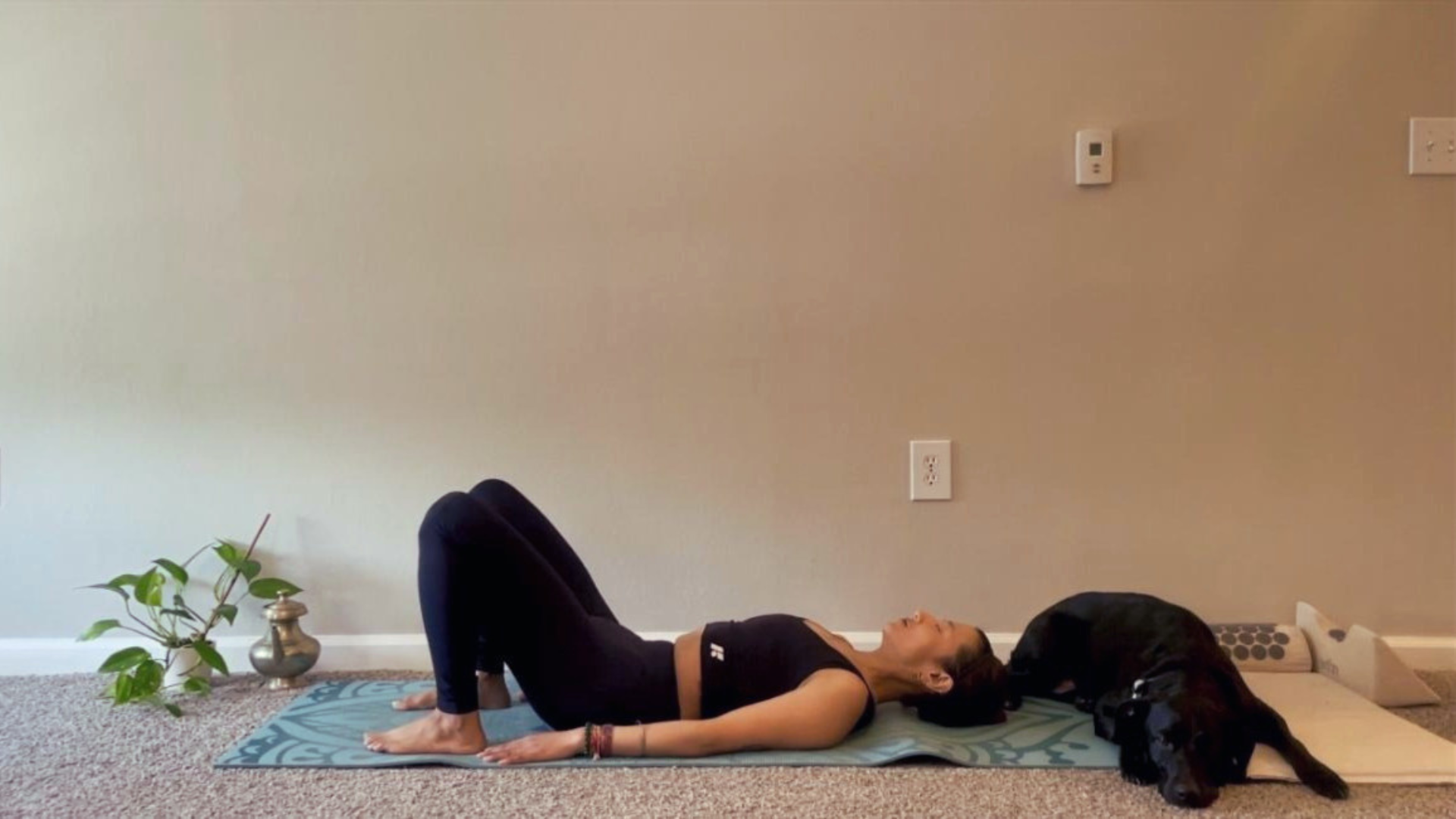
1. Bridge Pose (Setu Bandha Sarvangasana)
 (Photo: Anjana Rajbhandary)
Among the many Bridge Pose benefits is the fact it engages all the primary muscles along your backside—including your glutes. By practicing it with attention to where you’re engaging, you teach your body to rely on its largest muscle groups for support rather than forcing the smaller stabilizing muscles along the spine to do the heavy lifting.
How to: Lie on your back with your knees bent and your feet flat on the mat about hip-distance apart. Press through your heels to lift your hips toward the ceiling in Bridge Pose. Stay here for 3-5 breaths. Slowly lower yourself to the mat and repeat several times.
Focus on: Pay attention to your lower back and notice if you’re arching your back. To find a neutral, spacious sensation in your lumbar spine, practice lifting your pubic bone slightly toward your nose and reaching or tailbone toward your knees.
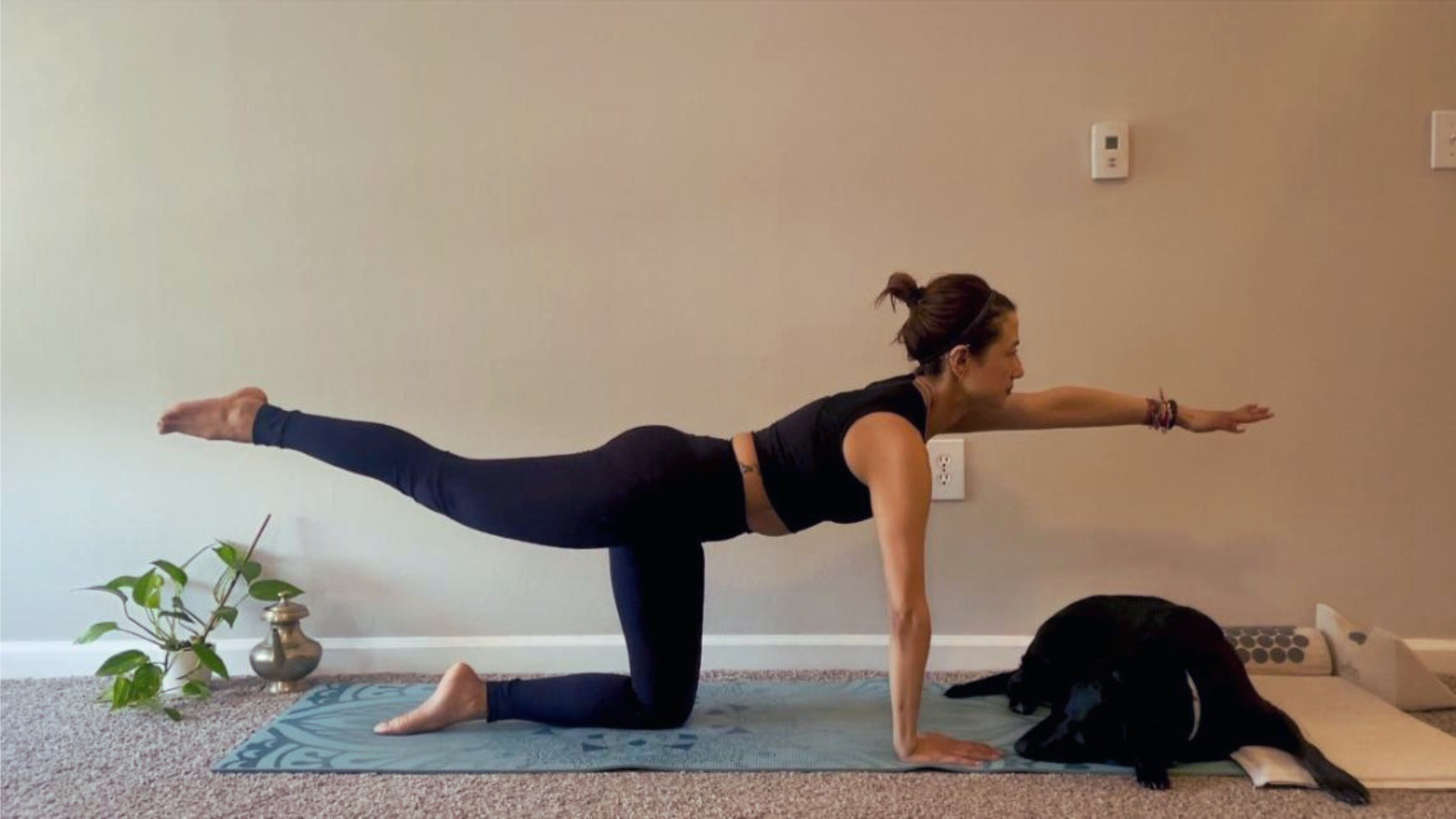
2. Bird Dog
 (Photo: Anjana Rajbhandary)
This cross-body challenge targets the muscles responsible for core stabilization. By demonstrating to yourself that your back can remain steady and safe even during movement, you create a new blueprint for your nervous system.
How to: Start on all fours. Simultaneously reach your right arm forward and your left leg straight back. Stay here for several breaths. Then lower your hand and knee to the mat and switch sides.
Focus on: The sensation of a completely level pelvis. Notice the engagement along your sides and throughout your core as the muscles work to keep you steady. Also, bring your awareness to your lower back and pay attention to the sensation of core muscles pulling inward to keep the spine long and supported.
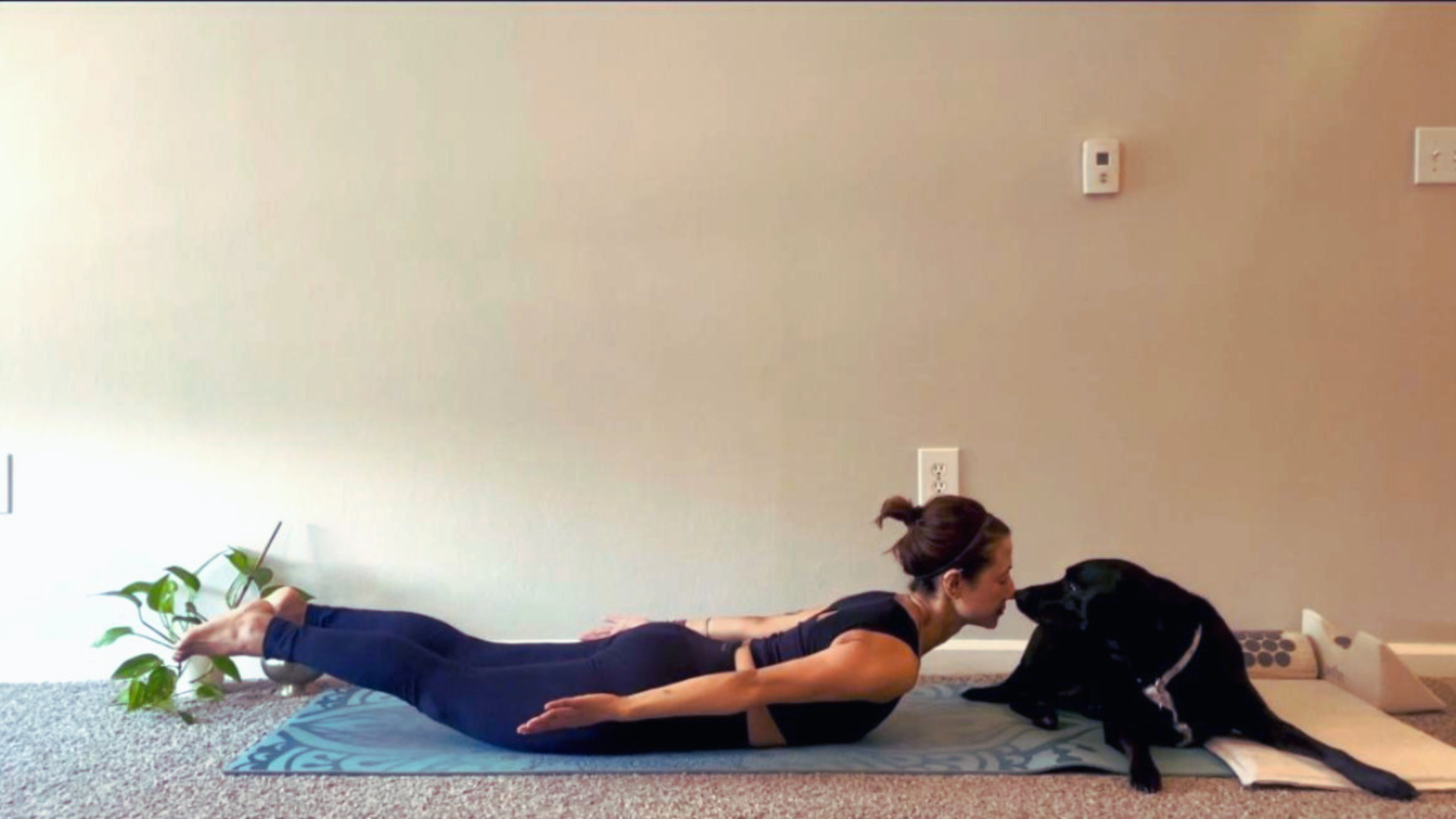
3. Locust Pose (Salabhasana)
 (Photo: Anjana Rajbhandary)
Lifting your upper body against gravity strengthens the spinal erectors, which are slender but critical muscles running along the vertebrae. Practicing this builds the strength and endurance needed to sit and stand tall in everyday life.
How to: Lie on your belly with your arms alongside your legs, palms facing up. On an inhale, lift your chest, arms, and legs off the mat. Reach through your toes and the crown of your head to create a feeling of maximum length rather than height. Stay in Locust Pose for 3–5 breaths. Then slowly lower. Repeat several times.
Focus on: Tune into the muscular contraction happening along your entire back body while keeping the back of your neck long and your breath steady.
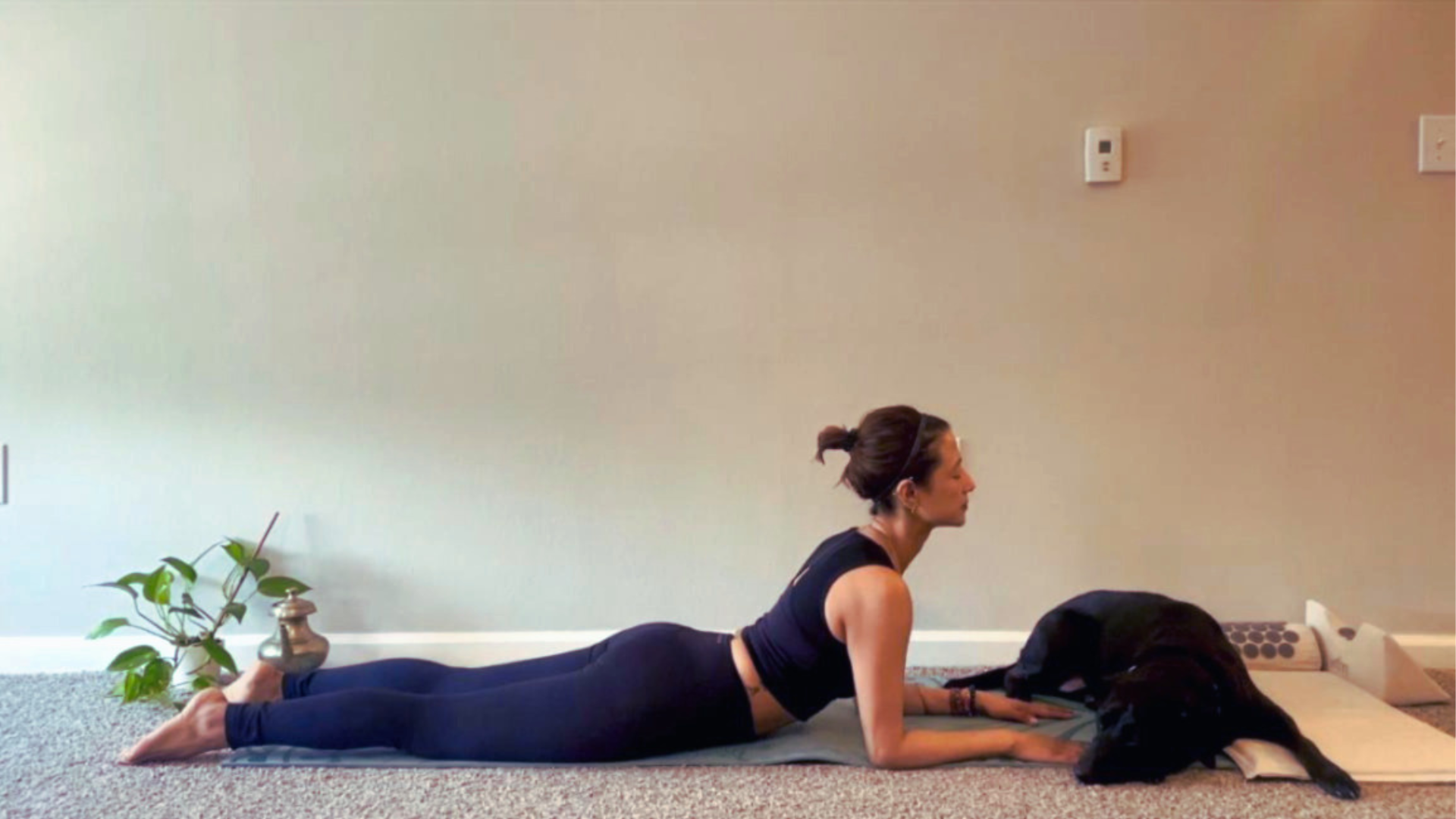
4. Sphinx Pose (Salamba Bhujangasana)
 (Photo: Anjana Rajbhandary)
Unlike most backbends, this one is passive. Your lower body is supported by the floor and your upper body is propped up by your arms. This lack of engagement trains your back muscles to safely stop bracing even as you explore a stretch across the front body.
How to: Lie on your belly and prop yourself on your forearms, with your elbows directly under or slightly in front of your shoulders in Sphinx Pose. Stay here for 5–10 breaths. Slowly release.
Focus on: Feel the sense of traction as you pull your chest slightly forward through your upper arms and notice the heavy, grounded sensation of your pubic bone pressing into the mat.
5. Squat or Garland Pose (Malasana)
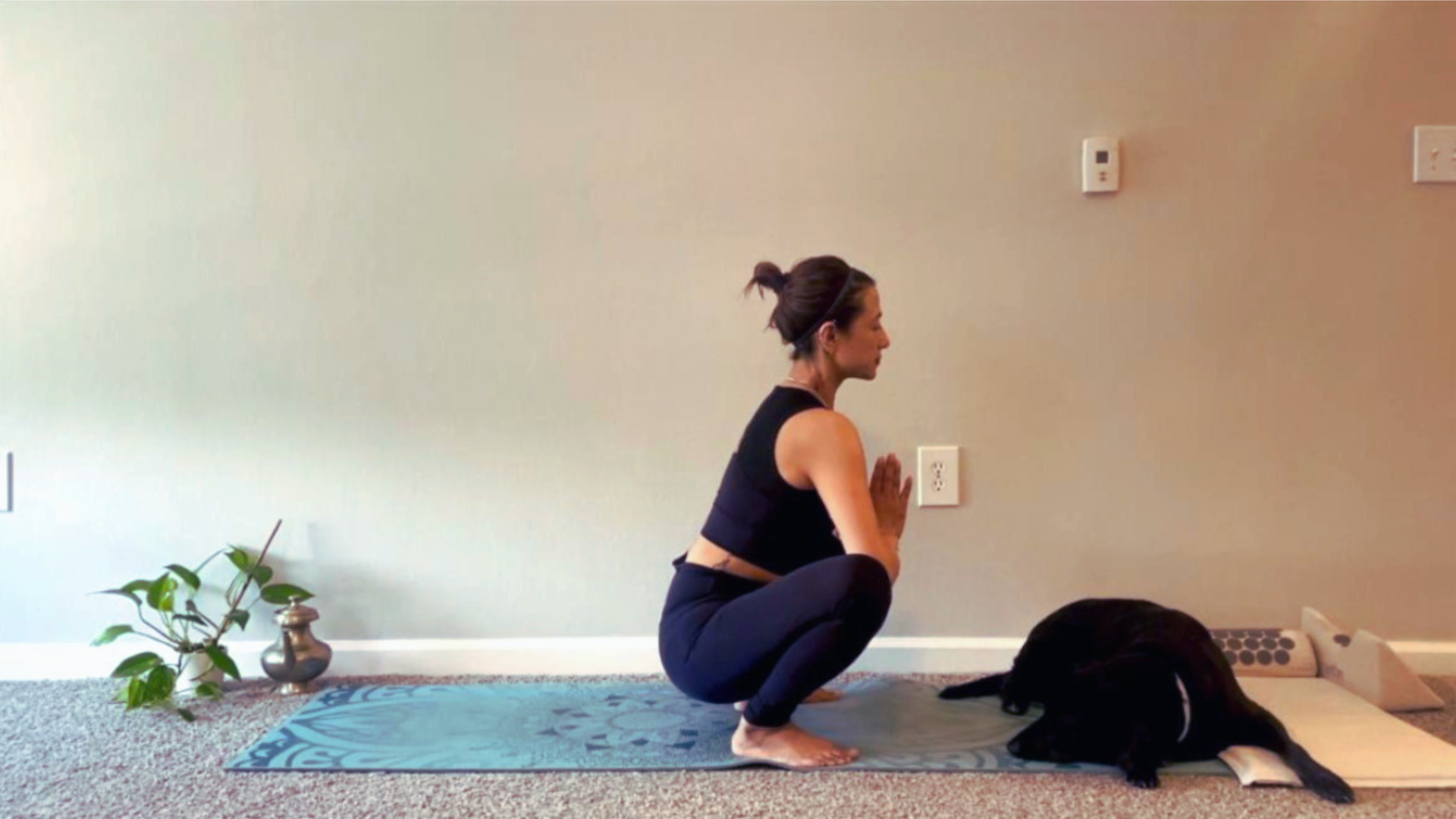 (Photo: Anjana Rajbhandary)
True spinal support requires a balance of strength and release because you cannot build a reliable foundation on muscles that are too tight to move. Taking the shape of a squat helps you do both. As you ground your energy, you release tension in the pelvic floor muscles.
How to: Take your feet wider than your hips, angle them slightly outward, and bend your knees as you sink into Garland Pose (also called yogi squat). If your heels lift off the floor or your back rounds, sit on a yoga block or rolled blanket for support. Stay here for 5-10 deep breaths.
Focus on: Let your tailbone sink toward the floor and direct your breath in that same direction, all the way into your hips. Feel tension release across your lower back.











 English (US) ·
  French (CA) ·