

 1 week ago
15
1 week ago
15
PROTECT YOUR DNA WITH QUANTUM TECHNOLOGY
Orgo-Life the new way to the future Advertising by Adpathway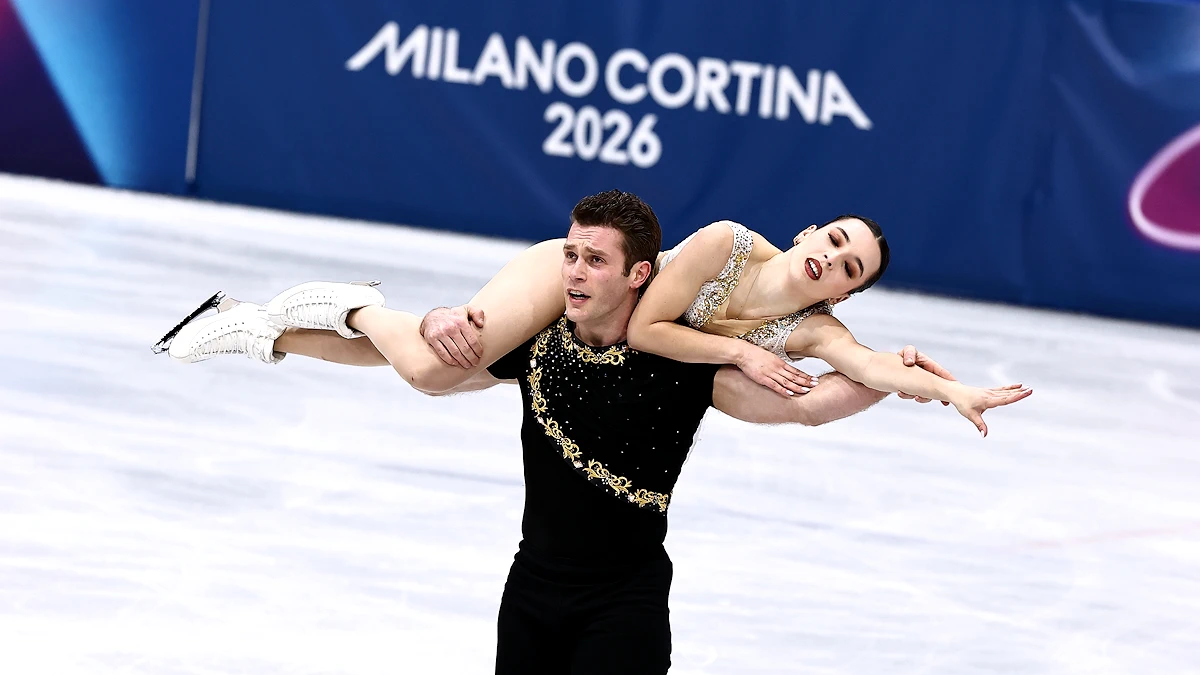
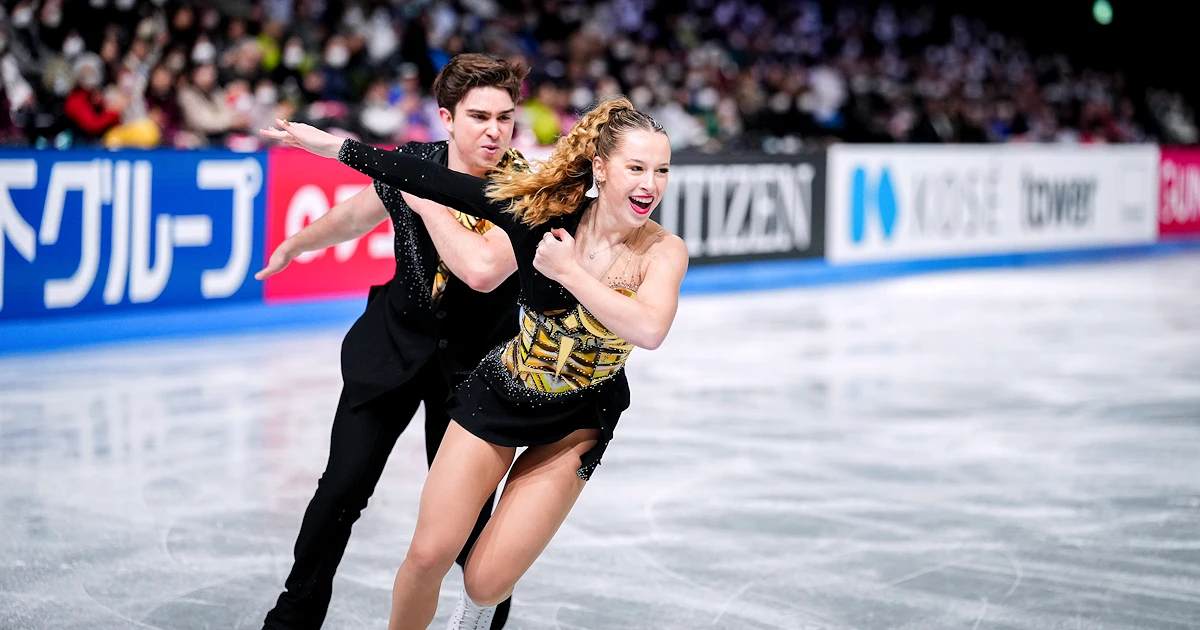
Lia Pereira and Trennt Michaud of Canada compete in the pairs free skate at the 2026 Olympic Winter Games.
Canada’s Lia Pereira and Trennt Michaud spent last season proving they belonged among the world’s elite. The Canadian pair captured their first national title, represented their country at the Olympic Winter Games, and capped the season with a breakthrough bronze medal at the World Championships.
Now, with those milestones behind them, the focus has shifted. Rather than chasing validation, Pereira and Michaud are concentrating on refinement—building consistency, deepening their artistry, and discovering just how high their ceiling can be. Looking back, both say the biggest takeaway wasn’t a medal, but the confidence that came from trusting their preparation.
“One thing we can really take away from this season is the confidence we gained,” Michaud said. “From Nationals to the Olympics to Worlds, we kept building on that confidence, and it showed in our skating, our competitions, and our practices. On top of that, we really had great training between the Olympics and Worlds. We’re finding a rhythm of how we want to prepare for events, and now it’s about continuing to build on that.”
Pereira agreed, explaining that the team’s breakthrough was rooted in lessons learned much earlier in the season.
“After Finlandia, we felt like we had a Grand Prix season we weren’t really proud of,” she said. “We realized something had to change—not just the work we were doing, but also our mindset. We learned a lot from those experiences and used them to prepare better for the second half of the season.”
Those adjustments paid off as the pair delivered their strongest performances when it mattered most.
Rather than viewing those achievements as the destination, however, Pereira sees them as confirmation that the team’s approach is working.
“There’s still so much more we can accomplish,” she said. “Now that we’ve seen what we’re capable of, it reassures our entire team that we’re on the right path. It’s comforting to know we can get there, and now it’s about continuing to refine the recipe and build on what has worked.”
Michaud shares that perspective. Despite accomplishing in less than four seasons together what many teams spend an entire career pursuing, he believes the partnership is only beginning to reach its potential.
“We just want to keep pushing ourselves,” he said. “Those are three incredible milestones to achieve in our first few years together, but we’re excited to see where we can go from here and continue developing—not just as skaters, but as artists.”
Training with Confidence
Although their accomplishments have brought greater confidence, Pereira and Michaud insist they haven’t dramatically changed the way they prepare.
“The only major difference this year might be the timing of our offseason,” Pereira said. “Stars on Ice pushed things a little later than usual, so our start has been slightly delayed. But our methods are still relatively the same.”
She admitted, however, that hearing their accomplishments announced before each performance during Stars on Ice was an unexpected confidence boost.
“They would introduce us as Canadian champions, Olympic team members, and World bronze medalists,” she said with a laugh. “I remember thinking, ‘Wow, I wish they did that before competitions.’ It definitely puts a little extra confidence in your back pocket.”
For Michaud, the key is continuing to trust the process while remaining open to improvement.
“Every year we learn something new,” he said. “We’ll take the things that worked for us last summer, adjust a few things, freshen it up, and keep learning. Our mindset is pretty much the same—we just have a little more confidence in our pockets now.”
That confidence hasn’t changed the team’s philosophy. If anything, it has reinforced the belief that steady improvement—not sweeping changes—is what carried them to the World podium and what they hope will continue to move them forward.
A Collaborative Training Environment
Pereira and Michaud continue to split their training between Brantford and Milton, Ontario, while making regular trips to London to work with the choreography team at I.AM.
During the season, they typically visit every two or three weeks for skating skills, performance work, and run-throughs. The trips become even more frequent during the choreographic process.
The pair collaborate with an accomplished coaching team that includes Alison Purkiss, Nancy Lemaire, Michael Marinaro, Paul Macintosh, Olympic champion Scott Moir, and choreographers Madison Hubbell and Adrian Diaz.
“We’ll go there for skating skills, performance work, run-throughs, and choreography,” Michaud said of I.AM. “It depends on our schedules and theirs, but we try to make it work regularly.”
Working alongside some of the sport’s most accomplished ice dancers has become a key part of the partnership’s development.
Pursuing Refinement
With another Olympic cycle beginning, Pereira and Michaud believe the biggest gains no longer come from adding more difficult elements. Instead, they’re chasing something far more subtle.
“We really worked on our triple twist last year to make sure it was consistent every time,” Pereira said. “Now it’s about increasing the effortlessness of everything we do.”
She pointed to the level of competition at the World Championships as proof that execution—not difficulty—is becoming the deciding factor.
“So many teams skated clean short programs,” she said. “What separates the very best teams isn’t just doing the elements—it’s the quality with which they’re done.”
That pursuit of refinement extends beyond jumps, throws, and lifts.
Michaud says the team is intentionally exploring new creative territory.
“We’re trying to push a different side of ourselves this season,” he said. “We want to continue developing as artists.”
Learning from Ice Dance
Much of that artistic growth has come through their work with Hubbell and Diaz, whose perspective as elite ice dancers has changed the way the pair approach every movement on the ice.
“Ice dancers look at things through a different lens,” Michaud said. “They’ve helped open our eyes to different patterns, movement qualities, and ways of performing. It’s also helped improve our skating skills.”
For Pereira, the influence has transformed the way she thinks about skating itself.
“When I was a singles skater, I was very jump-driven,” she said. “Now I’m much more invested in the performance side of skating.”
That attention to detail now extends far beyond the elements themselves.
“It’s not just about landing the elements anymore,” Pereira explained. “It’s about every position, every movement, every detail. Ice dancers are so detail-oriented, and we’ve really embraced that mindset. As we’ve matured as skaters, we’re finding that we connect more deeply and can truly tell a story.”
Adapting to New Rules
Like every pair team, Pereira and Michaud are also preparing for significant rule changes as the new Olympic cycle begins.
The introduction of the choreographic lift and choreographic spin presents fresh opportunities for creativity, but also plenty of uncertainty.
“We heard rumblings about these changes at Worlds, but we didn’t really know what they would entail,” Pereira said. “Now we’re trying to find inspiration and explore ideas.”
Michaud believes everyone is still learning exactly how the new elements will be evaluated.
“We’re trying to figure out the best approach and make sure we have options,” he said. “Once we know what’s being rewarded, we’ll have a better idea of how to maximize those elements.”
Rather than viewing the changes as an obstacle, the pair see them as another opportunity to experiment and adapt as the new Olympic cycle begins.
More Than Competitive Success
Michaud will celebrate his 30th birthday later this year, a milestone that has prompted reflection—but not concern.
“I don’t really feel 30,” he said with a laugh. “I’ve always admired athletes who took care of themselves early in their careers. As I get older, I’m still learning what works for me and finding new things I can add. I’m doing the things that make sure I don’t feel that way.”
The Canadian pair skater points to athletes such as soccer star Cristiano Ronaldo as examples of how proper training, recovery, and discipline can extend a career.
“I love the training aspect,” Michaud said. “I love the workouts and all the extra little things. Obviously, I want to be the best in my sport, but I also want to live a long, healthy, athletic lifestyle.”
Pereira believes advances in sports science have changed the way athletes prepare for both performance and longevity.
“Our physio and strength and conditioning coaches are always learning new things,” she said. “It’s really interesting to see how much more knowledge there is now about movement, recovery, and staying healthy long-term.”
Both skaters emphasized that many of the habits elite athletes develop can benefit anyone—not just Olympians.
“A lot of what we do as athletes can help people live longer, healthier, more active lives,” Michaud said. “Sometimes people think, ‘Well, they’re athletes, of course they do those things.’ But we’re athletes and humans. I want to be an athletic human for as long as possible.”
Pereira agrees that staying active doesn’t require expensive equipment or an elite training environment.
“You don’t need a gym to be healthy,” she said. “There are so many different ways to stay active—walking, yoga, playing sports, just getting outside and moving. Any excuse to get outside and stay active is a good one.”
Both believe that the athletic foundation they developed through multiple sports growing up has played an important role in their skating careers, while also reinforcing habits they hope to carry with them long after competition ends.
Keeping Their Programs Under Wraps
Fans hoping for an early reveal of the pair’s new programs will have to wait a little longer.
Although choreography is well underway, Pereira and Michaud say both programs are still evolving.
“We’re still working through that part,” Michaud said. “We’re getting the directions where we want them, but we’re still playing with things.”
The pair intentionally prefers to keep their music a surprise until they compete.
“We’ve always felt that people should experience the music and the performance at the same time,” Pereira explained. “Rather than hearing the music first and creating an idea of what it should look like, we’d rather they experience everything together.”
While they aren’t ready to reveal the music itself, Michaud offered one intriguing hint.
“We’re doing something we’ve never done before,” he said. “The programs are completely different from each other and will show more contrast in who we are as artists.”
Measuring Success Beyond Medals
After reaching the World podium, expectations naturally rise. Yet Pereira and Michaud say their own definition of success has evolved beyond placements alone.
Michaud believes success will be determined by how consistently they apply everything they’ve learned over the past season.
“We’ve learned so much about training, preparation, recovery, and what works for us,” he said. “If we can look back and say we managed all of those things well throughout the season, that would be a success.”
Pereira says one of the team’s biggest breakthroughs came when they stopped allowing scores to define how they felt about a performance.
“We really focused on how we felt when we finished skating,” she said. “Previously, we’d feel good about a skate, then we’d get the score and let that dictate our emotions. We realized that’s the part we can’t control.”
Instead, the pair now judge success by the quality of their own performance before ever seeing the marks.
“Whether we were first, third, or sixth, we wanted to be proud of how we skated,” Pereira said. “That’s something we can control.”
That mindset became one of the defining lessons of their breakthrough season—and one they hope will continue carrying them forward.
An Unfinished Story
Ask Pereira and Michaud where their ceiling as a team lies, and neither hesitates.
“I don’t think we’ve found it yet,” Pereira said.
Michaud feels the same.
“I still think there’s a lot of room for growth,” he said. “It feels like we’re just getting started when it comes to refining who we are.”
For Pereira, one word has come to define the next stage of their partnership: effortlessness.
“At the highest level, everyone is doing similar technical content,” she said. “The difference is execution and effortlessness. That’s something we’ll continue chasing this season.”
It’s a fitting mindset for a team that has already achieved so much in such a short time together but believes its greatest performances still lie ahead.
Inspiring the Next Generation
As their results have improved, so has their influence.
Following the Olympic Winter Games and the World Championships, Pereira and Michaud found themselves approached by young skaters and fans eager to share how much their performances had meant.
“That’s really what we want to continue doing,” Michaud said. “We want to inspire people.”
He still remembers the programs that shaped his own skating journey and hopes today’s young athletes will find similar inspiration in what he and Pereira bring to the ice.
“When I look back at some of those iconic performances, they still stay with me,” he said. “There’s all this athleticism in pairs skating, but there’s also an artistic side that makes it beautiful. If we can inspire people through that, that’s really special.”
For Pereira, the realization that children now recognize them as Olympians still feels surreal.
“We’re seeing kids at the rink who tell us they chose us for a school project or an Olympic trading card assignment,” she said with a smile. “That’s a really cool experience.”
Having grown up inspired by skaters of previous generations, both now recognize they’re helping shape the next one.
Looking Ahead
Pereira and Michaud will return to both Skate Canada International and Finlandia Trophy this fall, revisiting the same Grand Prix events they competed in last season.
The trip back to Finland carries particular significance. Michaud competed there while battling shingles—an experience the pair now look back on with equal parts disbelief and relief.
“It’ll be nice to go back without having shingles,” Michaud said with a laugh.
As for the bigger picture, both remain careful not to look too far ahead, even with another Olympic cycle underway.
“We’re taking it a year at a time,” Michaud said. “But yes, 2030 is definitely a goal.”
For now, though, their attention remains on continuing the progress they made during their breakthrough season.
They believe there is still room to grow—technically, artistically, and competitively—and that’s precisely what excites them most.
If last season proved Pereira and Michaud belong among the world’s best, this season will be about discovering just how much better they can become.
Related Info:










 English (US) ·
  French (CA) ·