

 11 hours ago
1
11 hours ago
1
PROTECT YOUR DNA WITH QUANTUM TECHNOLOGY
Orgo-Life the new way to the future Advertising by Adpathway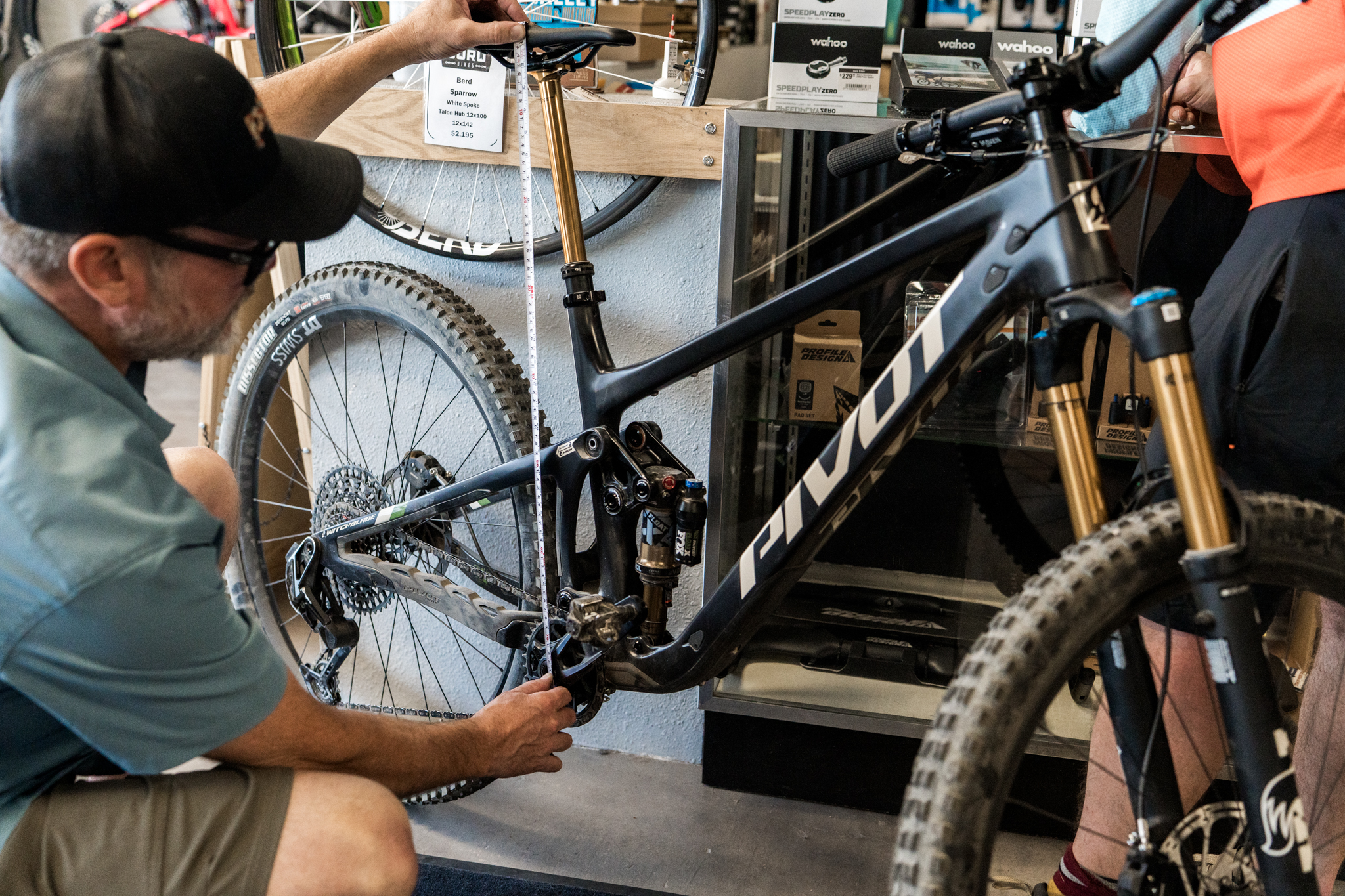 Photos by Eric Arce @pedalhomie
It’s fun to mock roadies, right? The obsession with bike looks, the weight debates, the ever-more-ludicrous clothes. That’s how I felt about bike fits — an overpriced affectation for middle-aged men with high-end road bikes and too much money.
Pay to stand around in my chamois while a hipster points lasers at my butt? No sale. I’ll do my saddle height with my toes and the ground, my air pressure with a hand-squeeze and think no more about it.
But I’ve been nursing a nagging feeling about bike fits for a while, along with several nagging aches in my lower back, wrists, and arms. Can a bike fit do anything about that?
Set and forget
I’m not the most technical kid in the cave. I’ll put my saddle up as high as I can get away with and still balance on my toes when stationary, stick it as far back on its rails as possible, and live with it. Same with cleat position, stack height, reach — if it feels close enough, I figure I’ll get used to the differences.
But maybe that’s why my lower back crackles like popcorn when I put my shoes on…
If every pedal stroke, bunny hop, and manual makes my body work harder than it needs to, I want to fix that. I want to be out on the trails for as long as I possibly can. So maybe it’s time to get serious.
Assume the position
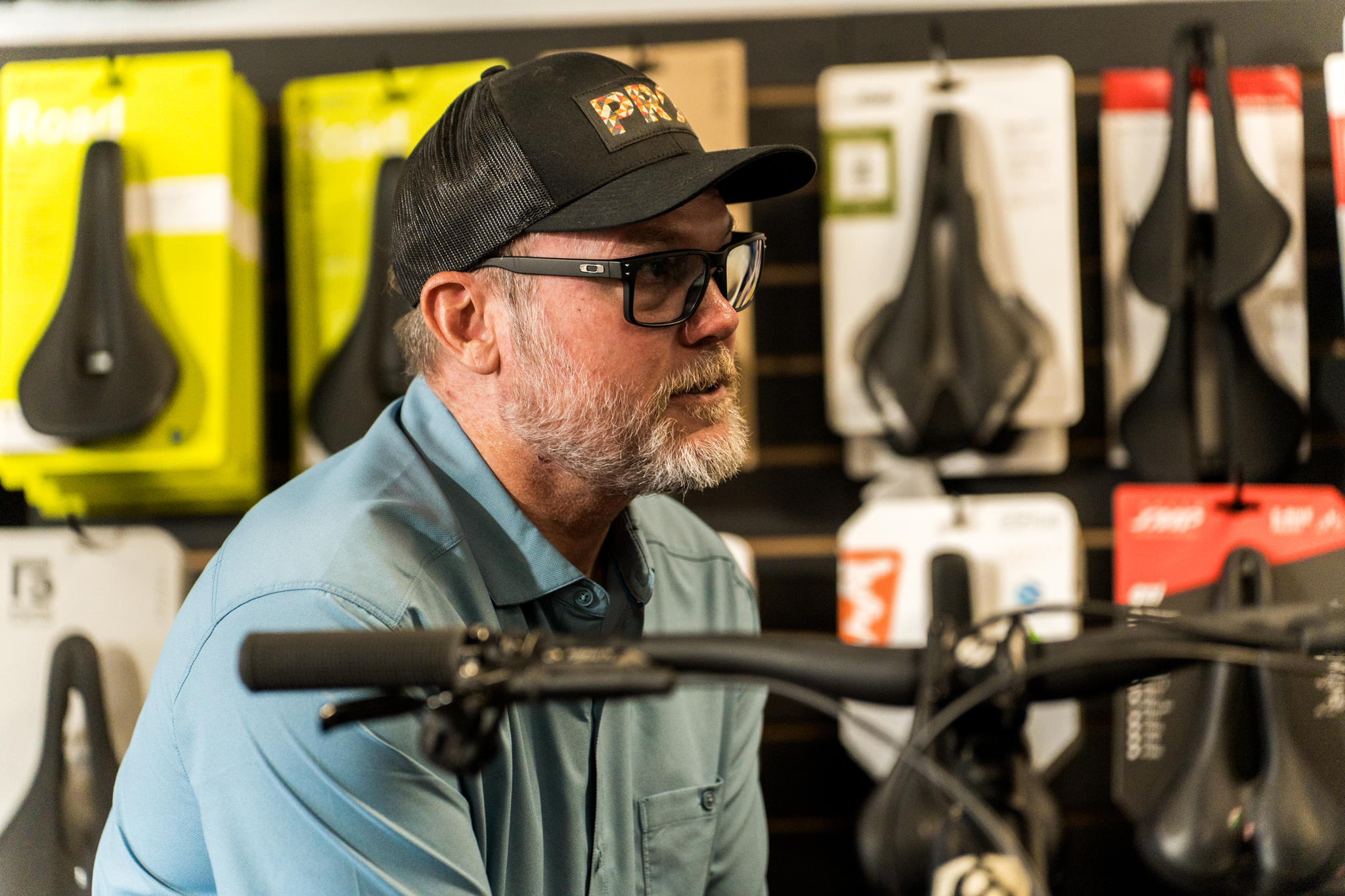
Enter Tyler Vandruff, co-owner of Guru Bikes in Tucson, AZ, proprietor of Vandruff Fit Solutions, and expert bike fitter. And he’s very serious indeed.
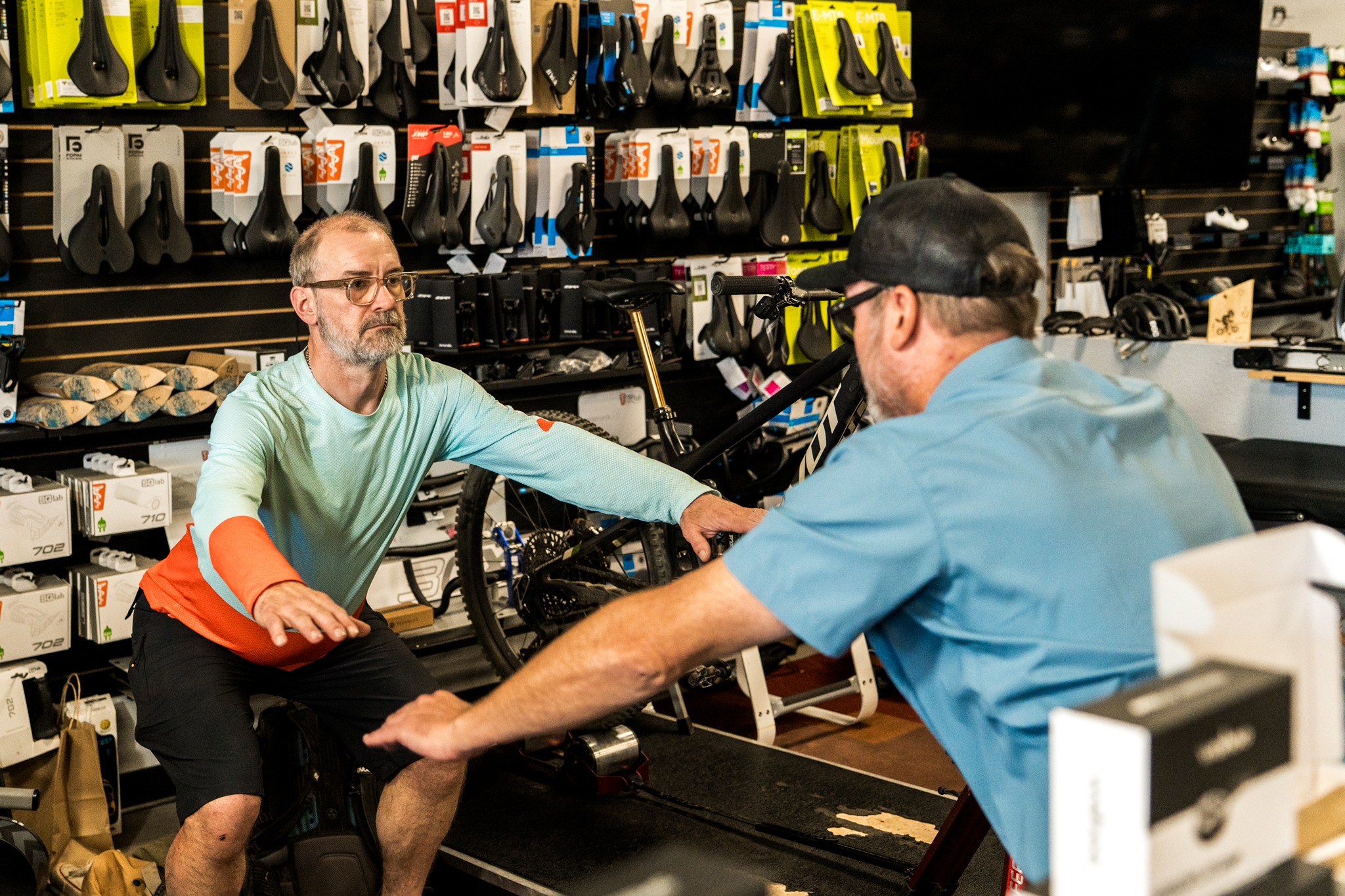
My Pivot Switchblade is mounted to a roller on a raised platform by its forks so he can assess my riding position and bike setup in detail. Then I remove my shoes and do some bending and stretching, so Tyler can see how well I move my upper body, how tight my hamstrings are, and get an idea of what he needs to do.
He watches me ride, stand and shift my weight around on the fixed bike, then puts me on a physio table, bends my legs, measures them, rotates my ankles and generally pushes me about like a rag doll for a few minutes. If he finds my inflexibility laughable, he’s polite enough not to mention it.
Let the judgment begin
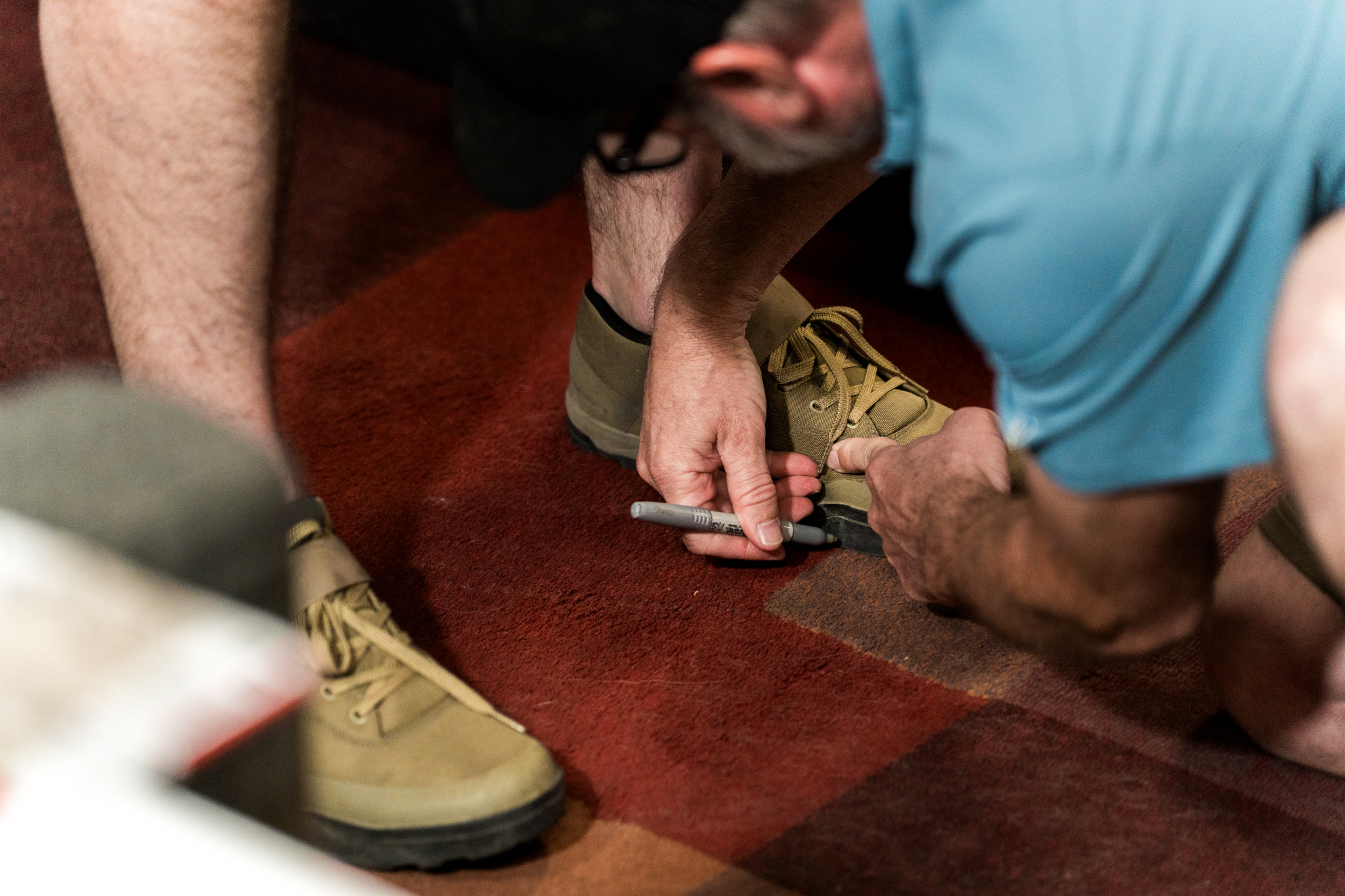
Remember those metal measuring pads from shoe stores with a foot drawn on them and a slider that touched your toes? Tyler measures both feet with one, then makes small marks on either side of my Shimano GE5s,with the outside mark slightly farther toward the toe. Then he draws a straight line between them across the sole, and positions each cleat precisely across that line. Mine, it seems, were way too far forward.
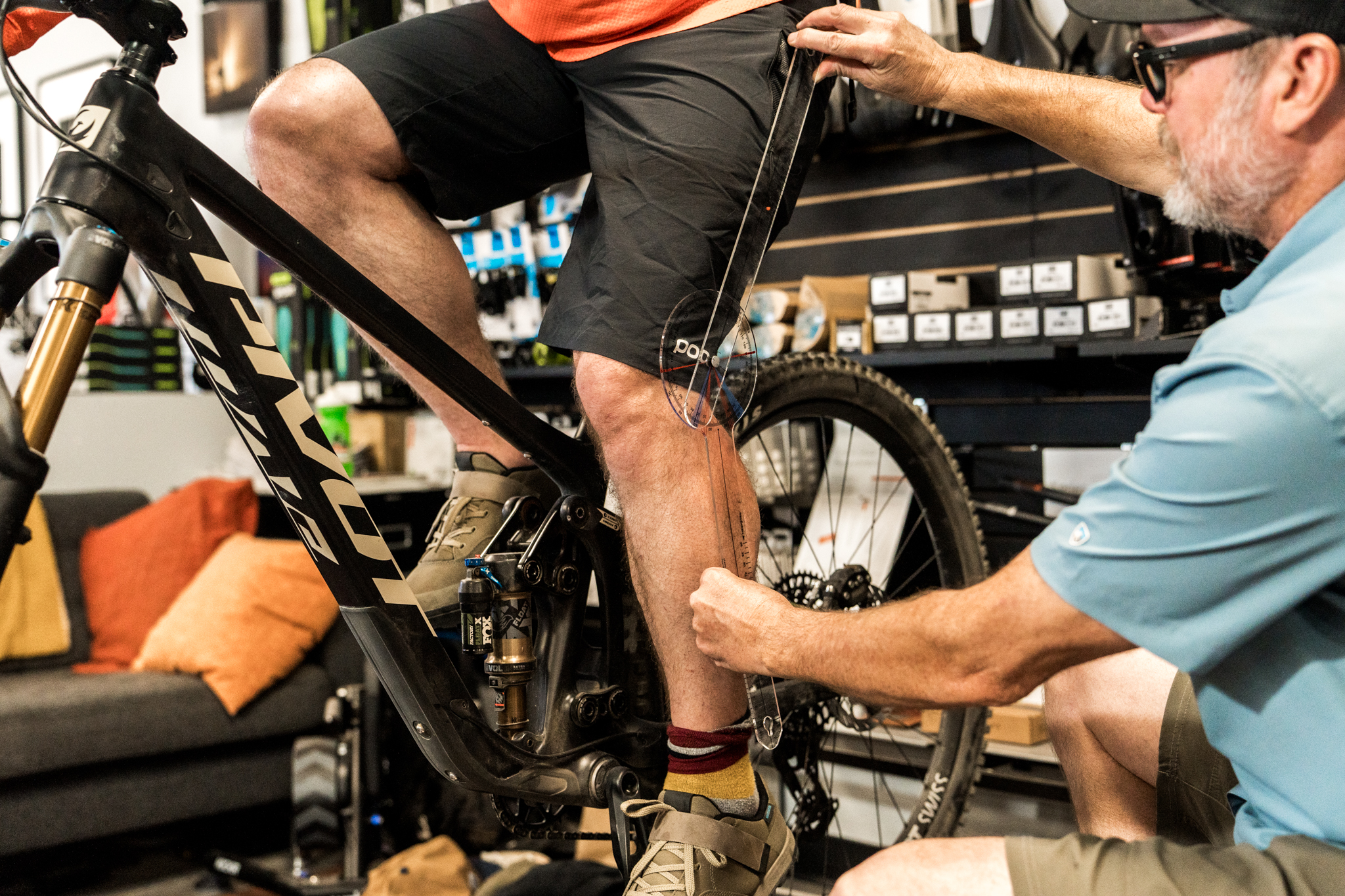
Then he uses a large, two-armed protractor-looking thing called a goniometer, placing its circular center on the side of my knee and using its arms along my thigh and calf. It measures how bent my leg should be when I’m at the bottom of my pedal stroke, and like most people, I’ve got my saddle too high up and my leg’s too extended.
Bar fight
I’ve always lazily assumed wider is better when it comes to bars, but apparently not.
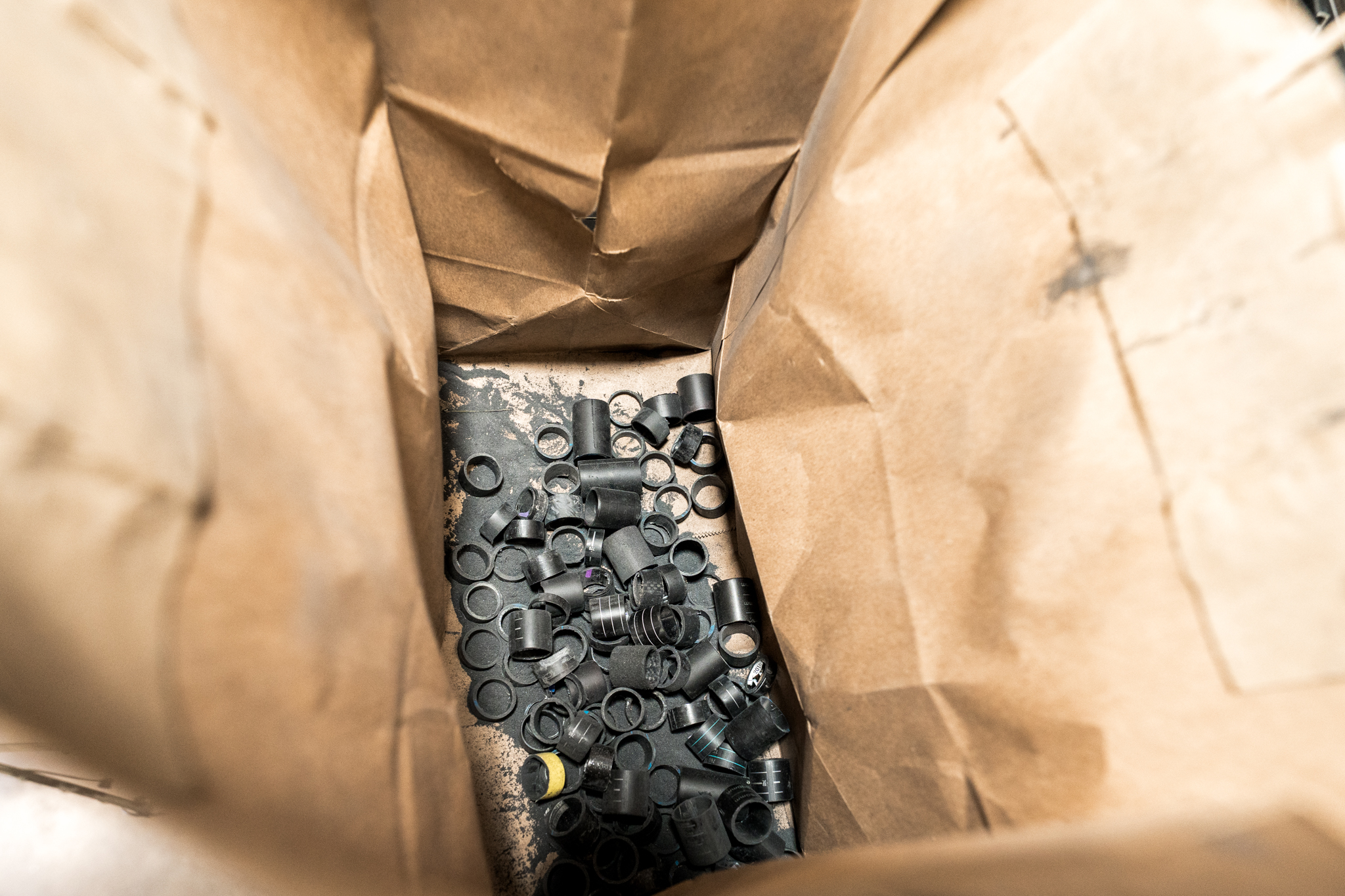
With my hands on the bars, Tyler explains that mine are too wide, meaning my wrists are angled inward when I ride. Wrists turned inward are working harder than they should, and are more likely to get strained or injured. I’m advised to lose around 40mm from mine when I get home and move my brake levers and shifter/saddle controls as far out as I can, to maximize grip and maintain a solid body position. Then it’s time for the ass end.
Tyler thinks that around 80% of riders are sitting on the wrong saddle, have it set too far forward or back, and tilted at the wrong angle. I’m skeptical about this angle part in particular, but he adjusts my saddle until the nose is in more direct contact with my, er, taint, and it really does feel more comfortable and stable to sit on.
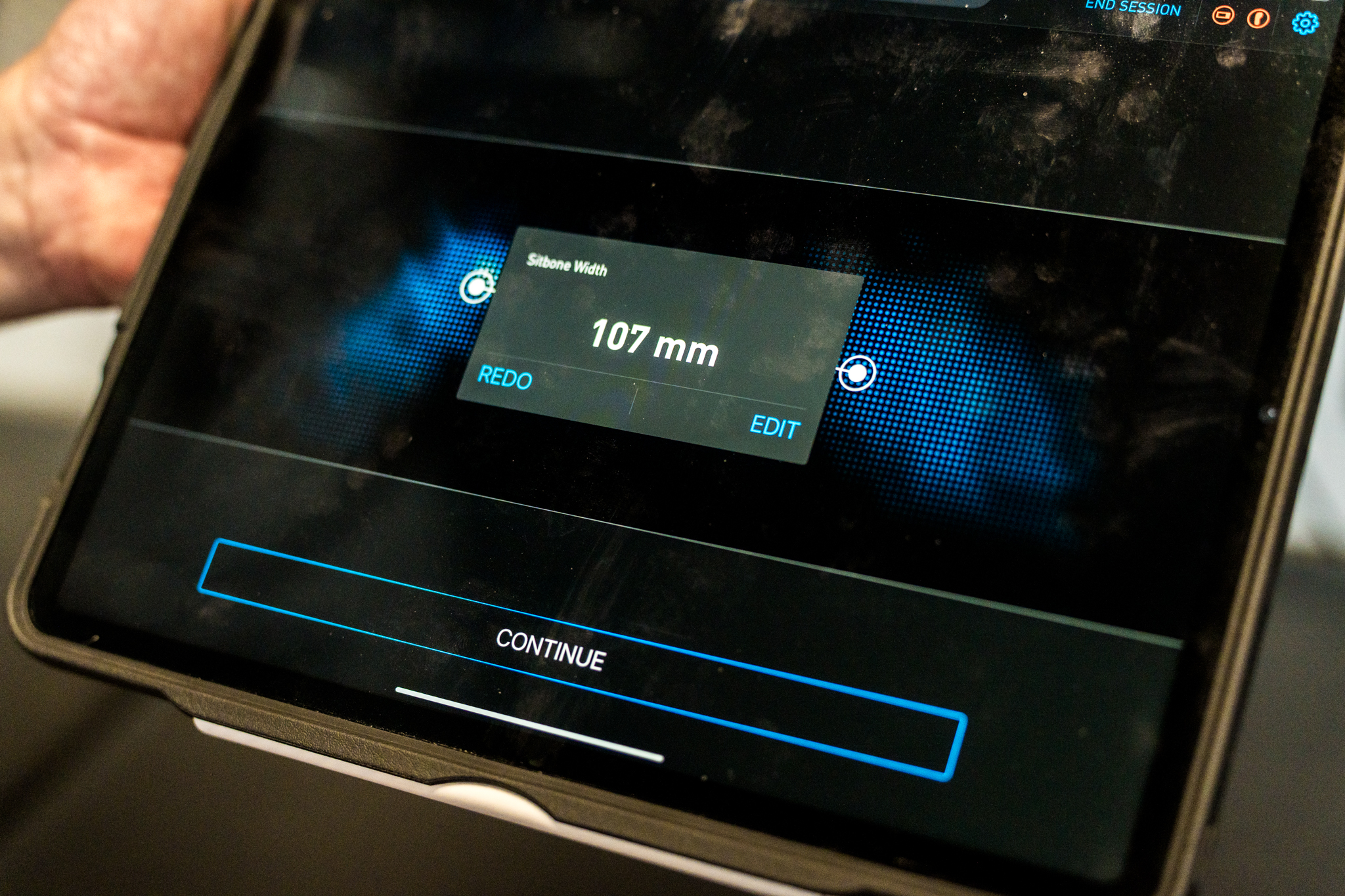
Then Tyler has me sit on a wide electronic pad so he can measure my butt. Specifically, where my ischial tuberosities make contact. Mine are visibly misaligned, with one further forward on the pad than the other. His suggested upgrade to a SQLab 60X Ergowave saddle, specifically designed for MTB, is fitted to the bike at the right angle and length from the stem, and instantly feels better.
Lastly, he recommends a longer stem, with about 25mm more reach, and fits one so I can feel the difference.
Instant upgrade
Tyler is good at this — friendly, knowledgeable and considerate — and shows me where I’ve been going wrong without making me feel stupid. When we’re done, I take the Pivot for a quick spin around the back of Guru Bikes and it instantly feels much better to ride. I’m not on it, I’m in it, with the new stem and saddle combo easing my overstretched torso and soothing tension in my lower back. It’s not a huge change, more like putting on clothes that are exactly the right size — a subtle but very welcome improvement. The bike’s easier to move, easier to read and easier to predict.
Fresh, comfortable and longer-lasting
Two days later, I tested my new bike fit out on the Hardline trail in Sedona, and I felt planted, secure, and totally in control, even though it was the scariest trail I’ve ever ridden.
So whether you’re a geometry freak or set-and-forget, a professional bike fit will almost certainly show you something you didn’t know, and help you make some changes that could keep you in the saddle for as long as you’re capable. I’m a fan.
Thanks to Ford Trucks, Pivot Cycles, Visit Tucson and Vandruff Fit Solutions for their help with this article.
Keep up with the latest mountain bike news by adding Singletracks as a preferred source on Google.











 English (US) ·
  French (CA) ·