

 4 weeks ago
31
4 weeks ago
31
PROTECT YOUR DNA WITH QUANTUM TECHNOLOGY
Orgo-Life the new way to the future Advertising by Adpathway Dennis Lee-Imagn Images
Welcome to the second Five Things of the week. After a bonus recap of Saberseminar, it’s time to get back to what this column is all about: bunts. OK, fine, that’s not entirely true, but trying to bunt for a hit leads to some of the best on-field action, and by the time we hit September, I’m eager for some exciting fielding adventures, whether they end in an out or not. In fact, exciting adventures are pretty much all I’m looking for at the moment. Whether it’s playoff previews, low-stakes barnburners, or maniacally aggressive baserunners, I’m looking for chaos, tension, the thrill of victory and the agony of defeat combined in a single play or single game. The past two weeks haven’t disappointed – just so long as you’re willing to extend your definition of action past the usual homers and strikeouts. So buckle up for another five things – after thanking patron saint Zach Lowe of The Ringer for his delightful column idea, which I’ve been faithfully ripping off for four years now.
1. Seeding Clashes
Five Things is generally the domain of silly baseball. The best plays don’t only happen in games between the best teams – really, there are more mid-level teams than great ones, so if anything, this is more of an underdogs column. But while the past few weeks have plenty of that, there have also been some downright amazing battles between teams fighting for the same playoff spot, and I find myself tuning into those games more frequently than anything else recently.
The impetus for this item actually started several weeks ago, when the Dodgers played seven games against the Brewers and Cubs in a two-week span. I was interested in seeing the best teams in the NL measure themselves against each other – and luckily, the league cooperated. The Brewers and Braves themselves squared off in a three-game set just before the Dodgers traveled to Atlanta. That set up a round robin of sorts between the NL’s best – the Brewers went 5-2, the Dodgers went 1-6, and the Braves were 4-2.
“But Ben,” I can hear you saying. “The name of this column has ‘this week’ right in it. Those games were in August!” Good point. Two counterpoints. First, I haven’t written a Five Things since August. Second, those were just appetizers. The September slate has continued the trend of intriguing matchups in short succession.
The Braves took a four-game lead over the Phillies into a late-season gauntlet: four games in Philadelphia, a palette cleanser against the AL-best Rays, and then three more against Philly, this time at home. The first four resulted in a 2-2 standoff; the next three are happening this coming weekend. And if the Braves don’t win the East, they’ll be jockeying for Wild Card positioning with the Cubs – whom they play early next week.
The Phillies get year-ending series with the Brewers and Rays, high-caliber opponents who will both be chasing the top overall seed in their leagues. The Guardians just got done playing their closest Wild Card competitors, the Blue Jays, and they have an upcoming series with the division-leading White Sox, whom they’re narrowly trailing. Nine of the Blue Jays’ next 12 games are against teams within two games of them in the standings.
You Aren't a FanGraphs Member
It looks like you aren't yet a FanGraphs Member (or aren't logged in). We aren't mad, just disappointed.
We get it. You want to read this article. But before we let you get back to it, we'd like to point out a few of the good reasons why you should become a Member.
1. Ad Free viewing! We won't bug you with this ad, or any other.
2. Unlimited articles! Non-Members only get to read 10 free articles a month. Members never get cut off.
3. Dark mode and Classic mode!
4. Custom player page dashboards! Choose the player cards you want, in the order you want them.
5. One-click data exports! Export our projections and leaderboards for your personal projects.
6. Remove the photos on the home page! (Honestly, this doesn't sound so great to us, but some people wanted it, and we like to give our Members what they want.)
7. Even more Steamer projections! We have handedness, percentile, and context neutral projections available for Members only.
8. Get FanGraphs Walk-Off, a customized year end review! Find out exactly how you used FanGraphs this year, and how that compares to other Members. Don't be a victim of FOMO.
9. A weekly mailbag column, exclusively for Members.
10. Help support FanGraphs and our entire staff! Our Members provide us with critical resources to improve the site and deliver new features!
We hope you'll consider a Membership today, for yourself or as a gift! And we realize this has been an awfully long sales pitch, so we've also removed all the other ads in this article. We didn't want to overdo it.
Just about the only thing we’re missing is a Texas showdown between the Rangers and Astros with the division on the line. But for the most part, MLB’s schedule makers have done their job this year. High-stakes games dot the calendar as we approach the playoffs, and the ones we’ve seen so far have lived up to the billing.
2. Unnecessary Roughness
Wednesday marked the first game of the NFL season, and it’s no secret that plenty of baseball players are big football fans in their spare time. But guys, keep that off the field. Practicing football moves on the baseball diamond is a bad plan.
Blade Tidwell was no doubt looking forward to a Super Bowl rematch when he started for San Francisco two afternoons ago. When he caught Iván Herrera daydreaming between first and second base, he couldn’t believe his luck. He kept his composure, made a good fundamental play by charging directly at the runner, and then decided to practice his swim move:
Baseball is mostly a non-contact sport. There are rules about making unnecessary contact. Tidwell’s mad dash was textbook obstruction: “an act by a fielder, who is not in possession of the ball or in the process of fielding it, that impedes the baserunner’s progress.” Uh, yep:
Now, did Herrera turn into Tidwell on purpose? I’m almost positive he did. Catchers don’t get out of rundowns very often, and this presented a rare opportunity. That’s why Herrera turned to the umpire and made sure to plead his case instead of trying to escape the pickle:
What can I say, though? He was right. There’s no intent written into that rule. It’s not about whether you meant to obstruct the runner, just whether you did. And that makes me think that Tidwell’s good fundamental play wasn’t so good after all. Yes, it’s smart to carry the ball toward the runner instead of making a long throw to one of your infielders. But by the time Tidwell got close to Herrera, he had painted himself into a corner. His momentum was heading directly at Herrera – he was chasing him, after all. He had to make a throw to Christian Koss at second, and Herrera would surely reverse course when he saw the throw.
How was Tidwell supposed to get out of the way after making his throw? He’s built like a tight end, 6-foot-3 and 244 pounds. That’s a lot of momentum to stop on a dime, and the alternative was lumbering right into the basepath, easy pickings for any runner with common sense. Welcome back, football. Just keep your sport out of my infield, please.
3. Garbage Time
That play happened in the third inning of a fairly meaningless contest. The Cardinals began that day with a 0.1% chance of making the playoffs, according to our odds, and the Giants had already been mathematically eliminated. To give you an idea of the game, 14 Giants appeared, only two of whom were on the Opening Day roster. Both teams used the bottom of their bullpens extensively. Oh, it was a major league baseball game, no doubt, but it wasn’t one contested at the highest possible intensity.
The Cardinals carved out a 6-1 lead by hanging five on Tidwell in the first four innings. (Yes, Herrera scored after the obstruction call.) But rather than lean on their high-leverage arms, the Cards kept things sporting. Cade Winquest, a nominative determinism All-Star after securing his first big league W last Friday, came in to start the eighth inning and struggled with the bottom of the San Francisco lineup. Drew Cavanaugh singled. Brett Harris was hit by a pitch. Turner Hill walked. I promise you that all three of those are honest-to-goodness professional baseball players, not just create-a-players added to fill out a thin Giants roster.
When Winquest wasn’t getting the job done, it was time for George Soriano. But he’s of a piece with Winquest, below replacement level even in the best year of his big league career. He got pasted – three scalded hits surrounded an infield single. Everybody scored. Suddenly it was 7-6 Giants, and they held on, even getting my guy Trent Harris a save in the process.
Games can get loopy like that when teams let the low-leverage pitchers work without a net. This wasn’t even the best garbage time game of the day. Three time zones away, the Mets and Marlins also faced nonexistent playoff odds when they matched up for a final time this year. The Mets thought they’d put this one away early, ambushing Janson Junk for eight runs in three innings. But Miami wasn’t done. The Fish chased starter Robert Stock after four innings, and then they poured it on against Chris Devenski, tying the game at eight.
Meanwhile, the Marlins were struggling to find enough arms to finish the game. They started the seventh with Josh Ekness, their fifth pitcher of the game. He made it three batters (hit-by-pitch, walk, walk) before giving way to Tyler Zuber, who’s working on a remarkable streak: five different major league seasons, negative WAR in each one. Zuber gave up a 360-foot sacrifice fly, two singles, and a 351-foot home run to Francisco Lindor. Just like that, it was 14-8 Mets.
But the Mets didn’t have many relievers left either. They gave up a run in the seventh and two more in the eighth, and suddenly it was 15-11 heading into the bottom of the ninth. New York brought in my other recent reliever crush, Nate Lavender, and he caught a whole lot of regression to the mean at once: five batters, three extra-base hits, and one laser-beam out. The last batter he faced, Jakob Marsee, stroked a single that made it 15-14 with only one out.
Tobias Myers, still in reserve, came into the game looking like Troy returning with pizza. He gave up a single to the first batter he faced. But the Marlins couldn’t scrape together the last 180 feet they needed to tie things up – a strikeout and a popup ended things.
Yes, it’s fun to see playoff teams grind it out with their whole squad operating at maximum efficiency. We like that so much that the playoffs never stop expanding, in fact. But garbage time is fun, too. Huge crooked-number innings against Quad-A relievers are amazing, especially if you don’t mind too much if it happens to your own team, what with them being eliminated from the playoffs already and all. What better time for that than September?
4. Bunt Marginalia
For my next item, I’m going back to late August again, and sprinkling in a little bit of research too. I’m a huge fan of bunts, and I thought this one by Jonah Cox was a beauty:
Cox saw that the infield was back and thought bunt all the way. He dropped it down perfectly and was safe by multiple steps. For a 25-year-old rookie striking out 40% of the time in his first big league action, bunting feels like a completely defensible way to add a little bit of OBP, particularly for a speedy outfielder. That one went so well that he decided to attempt another in the next series:
Yeah, don’t try that one at home. With two outs, squeeze plays aren’t a thing, and the best way to bunt for a hit is to aim away from the elite defensive first baseman, not toward him. It happened to work out that time, but if you try 10 bunts like that, nine will probably turn into outs. Naturally, Cox has bunted four times since then and hasn’t reached safely – two regular outs and two sacrifices.
So I think it’s fair to say that Jonah Cox is not an elite bunter, at least not yet. But one thing you can say about him: He picks his targets well. Bryce Elder, the Braves pitcher Cox reached against, has allowed five bunt hits this year. That’s tied for third in the big leagues. Jose Cabrera, the Diamondbacks reliever who was victimized in the first clip? He’s allowed six bunt hits this year, tied for first.
That sounds a little weird. Cabrera has only thrown 27 innings this year. Shane McClanahan, the other player to allow six bunt hits, gave his up over 118 innings, more than four times as many. No one else in the top 10 for bunt hits allowed has thrown fewer than 1,839 pitches this year; Cabrera has thrown a measly 424.
A few things are working against Cabrera. He doesn’t appear to get off the mound all that quickly; his followthrough takes him out of fielding position, which slows his reaction time against soft grounders. He’s a big guy, too, 6-foot-3 and 225 pounds, which makes getting low to scoop bunts tougher. He throws a ton of fastballs in the low 90s, great pitches to bunt against. He also had the misfortune of facing the Rays, who hung three bunt singles on him in a single game in June. Take those out, and he’d still look like a good target for bunting, but not such an outlier.
I’m always on the lookout for fun subplots in the last month of the season. But I have bad news for this particular one. The Diamondbacks, locked in a tight playoff race, optioned Cabrera back to Triple-A on Tuesday. Their pitching staff is getting healthy down the stretch, and that means demotions for the bevy of reserves who chipped in while the stars were out hurt. But I’m rooting for Cabrera to get another chance. And even if he doesn’t, I have one last piece of good news. In his last appearance before getting sent down, Cabrera faced bunt enthusiast Kyle Isbel, and while his own fielding didn’t come into play, Cabrera got the last laugh:
5. Lightning Bolte
The A’s have been a tough watch this year. Their pitching staff has imploded, and that’s led to a ton of uncompetitive games in front of small crowds, often in the blazing heat. They’ve shut down five of their best hitters (Nick Kurtz, Tyler Soderstrom, Shea Langeliers, Brent Rooker, and Jacob Wilson) for the season. They’re giving minor leaguers seasoning and playing for 2027. But even if you don’t want to watch the whole game, do yourself a favor and tune in to see some Henry Bolte at-bats. And then stick around and watch him strike the fear of god into opposing pitchers after reaching base.
In another win for nominative determinism, Bolte is the fastest runner in the majors this year. He puts that footspeed to good use in center field, where he’s comfortably above average. That’s a big deal for a Sacramento team that was hoping to play Denzel Clarke in center for defensive value – Clarke just hasn’t hit enough to make it work yet. But if Bolte keeps playing offense like he has been, the job is his to keep.
Bolte doesn’t hit for much power despite enviable bat speed. He doesn’t make a ton of contact, and doesn’t get the ball in the air when he does. But by smashing hard-hit grounders (he’s tied with Rafael Devers for the 15th-highest groundball exit velocity in baseball) and tearing out of the box, he racks up a ton of singles. And even though he swings and misses a lot, he has a scary-fast swing and a decent idea of the strike zone, which means he also takes his fair share of walks. At the moment, that’s supporting a .358 OBP that I think is unsustainably high. But the attraction here isn’t how often Bolte reaches base; it’s what happens after he’s on.
The Blue Jays got a rude awakening against Bolte and the A’s this Monday. He walked to lead off the bottom of the first, and two pitches later, he was standing on second:
If you can’t tell from that clip, he stole that base ludicrously easily; by the time the throw reached second, he’d already slid completely across the bag and then caught it with his trailing foot. Leading off the bottom of the third, Bolte worked a four-pitch walk as Dylan Cease struggled with command. This time, Cease threw over to first base immediately, hoping to throw Bolte’s timing off. It didn’t matter:
Cease’s leg kick was truncated this time; Bolte’s speed made the pitcher cognizant of going to the plate quickly. But there’s only so much you can do against a guy this fast if he gets a reasonable jump. Alejandro Kirk is a good thrower, but Cease isn’t great at holding guys on. The outcome was hardly in doubt.
Bolte wasn’t satisfied with his second bag of the day, though. After an infield popout, he decided he might as well steal third, too:
And of course, speed is good for stolen bases, but it’s also good for baserunning in general:
Bolte still has some work to do on the stolen base front. He’s very fast, but he’s been caught eight times this year, and he actually has negative stolen base value as a result. Maybe he’ll never be a true difference maker there; basestealing is about more than just speed. But as a disruptive, opportunistic baserunner, he’s one of the best in the league at the moment, and he’s on quite the hot streak right now too. There aren’t a lot of reasons to watch the cellar-dwelling A’s this month, but their leadoff hitter is absolutely a draw.



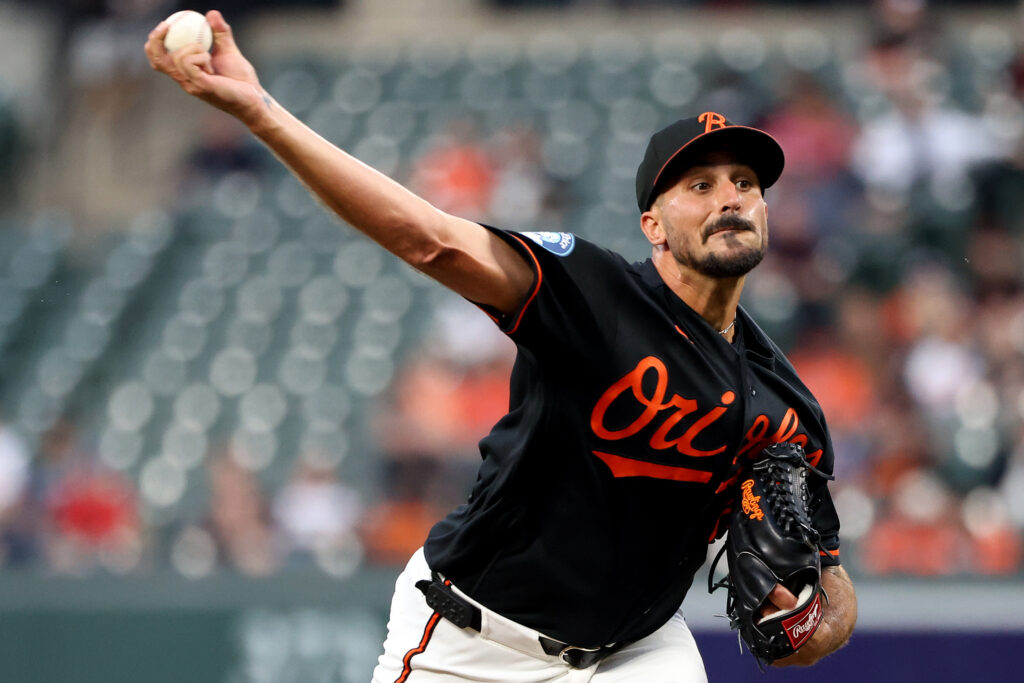
![[Highlight] Seven years ago today, the Cardinals scored TEN in the first inning of game 5 of the NLDS in Atlanta.](https://external-preview.redd.it/5NGDQW5KTKdZx4rWoHMbFUAFgVg1oJKFutQ5mHydXtA.jpeg?width=320&crop=smart&auto=webp&s=c59fdcd9d803ac4a12269eb6b78ac78fa2af7119)
![[Highlight] Seven years ago today, Howie Kendrick hit a top of the 10th grand slam in Game 5 of the NLDS to send the Nationals to the NLCS and help win their first ever postseason series.](https://external-preview.redd.it/eHE2Y3NjNmIya3VoMbXgPqcT4Td3WpRAPqgDyppod9nePOxElZuWnbkjen0S.png?width=640&crop=smart&auto=webp&s=2ff1e8cf1231d671beac31f1122627d9330494db)






 English (US) ·
  French (CA) ·