

PROTECT YOUR DNA WITH QUANTUM TECHNOLOGY
Orgo-Life the new way to the future Advertising by AdpathwayAlthough he’s still relatively new to mountain biking, Nic has come a long way since his first days on the trail. After two years of pushing limits and discovering new ones in the rough-and-tumble terrain of Western North Carolina, he took on the Fairlight Holt 2.0 to see how it fit into a growing hardtail habit…
Riding shots by Luis Espel and Joe Redbeard
A little over two years ago, I went on my first ride with Logan. I’d just joined the team, and he took me on a loop that felt like some of the wildest terrain I’d ever ridden. I frequent that loop now and don’t find it anywhere near as harrowing. But at the time, I thought, “This man just hired me, and I’m going to seriously injure myself just trying, and failing, to keep his wheel.”

With a lot more experience under my belt, I feel far more comfortable in the mountains. As a result, my taste in bikes and what works has evolved. Moving away from steep head tube angles and low bottom brackets, I find myself reaching for bikes I never would’ve given a second look at just a few short years ago. Though I’m still not an experienced mountain biker, I’ve tackled much of Pisgah’s most challenging terrain since moving here. I’m still learning my trade and figuring out where and how to place my weight, shift my body, ride the roots and leaves, and descend with confidence. Over the last few months, I spent time with my second hardtail, the Fairlight Holt 2.0, to see how it fared as a stepping stone on my journey toward ever more aggressive terrain.
The Gravel to Hardtail Pipeline
The first mountain bike I reviewed was my much-loved Ritchey P-29er. When I discussed the Ritchey with Logan some time ago, he said it felt like a true gravel biker’s mountain bike. I didn’t really understand what he meant then. It felt quite different from all the other bikes I’d ridden, and it made a world of difference on the trails I was just starting to venture onto. Looking back with a lot more experience, I get it now.

The P-29er has steep angles, limited tire clearance, and prioritizes weight and a racing position over what might make more sense for aggressive trails. You can make do, but it’s more of a weapon than a tool. In the right hands, the P-29er is an entirely capable bike that can summit most of what’s on offer in Western North Carolina. But when I’ve taken a break from trying my hand at technical terrain, or when fallen leaves and wet, muddy slop dot the trails and make them even more challenging, the P-29er punished my lack of experience. It’s fast and aggressive and demands the rider be the same.
At first, that aggression and lightness felt good for someone coming from a more gravel-y background. It handled somewhat like the bikes I was used to but with enough differences to make me more comfortable and capable on rough singletrack. Although the P-29er isn’t the ideal starter hardtail, it made sense for me, given my penchant for low, aggressive bikes. In Pisgah, it made the long, hard days I yearned for easier, and gave me an excuse to venture onto terrain I would’ve walked if on a gravel bike.
Getting on the Holt felt like a step up from the P-29er. Although they’re similar in fit and riding position, a few key elements make the Holt 2.0 a better overall experience. The entire bike has a longer wheelbase at the same size (1,110mm versus 1,172mm), but most of that length is up front. Both bikes have middle-of-the-road chainstays at 440mm for the Ritchey and 435mm for the Holt, but Fairlight takes a much longer, slacker approach by comparison. It has a 66-degree head tube angle, substantially larger tire clearance at 29 x 2.6” wide, and more stack height. While that lack of aggression makes the Holt feel slightly slower on gravel roads and connections between singletrack, the comfort and capability you get on the rough stuff is hard to argue with.
Fairlight Holt 2.0 Geometry
| Seat Tube (BB to top ST) | 385 | 385 | 425 | 425 | 465 | 465 | 510 | 510 |
| Effective Top Tube | 590.9 | 594.2 | 615.8 | 619.2 | 638.4 | 641.9 | 668.6 | 672.1 |
| Seat Tube Angle | 74.3 | 73.2 | 74.3 | 73.2 | 74.3 | 73.2 | 74.3 | 73.3 |
| Head Tube Angle | 67.0 | 65.9 | 67.0 | 65.9 | 67.0 | 65.9 | 67.0 | 66.0 |
| Chainstay Length | 435 | 435 | 435 | 435 | 435 | 435 | 435 | 435 |
| Fork Offset | 44 | 44 | 44 | 44 | 44 | 44 | 44 | 44 |
| Wheelbase | 1138 | 1148 | 1163 | 1172 | 1187 | 1196 | 1220 | 1229 |
| Bottom Bracket Drop | 63 | 54.7 | 63 | 54.88 | 63 | 55.04 | 63 | 55.25 |
| Head Tube Length | 100 | 100 | 100 | 100 | 110 | 110 | 130 | 130 |
| Stack | 616 | 624 | 616 | 624 | 625 | 634 | 643 | 652 |
| Reach | 425 | 413 | 450 | 438 | 470 | 458 | 495 | 483 |
| Axle to Crown | 507 | 531 | 507 | 531 | 507 | 531 | 507 | 531 |
| Recommended stem length | 30–50mm | 40–70mm | 50–70mm | 50–80mm | ||||
| Size guide – cm | 160–172cm | 170–180cm | 178–188cm | 186–195cm | ||||
| Size guide – feet and inches | 5ft 3in – 5ft 8in | 5ft 7in – 5ft 11in | 5ft 10in – 6ft 2in | 6ft 1in – 6ft 5in | ||||
Sag specified at 20%
That said, the Holt still feels great on the surfaces in between trails. I’ll get into the tubing selection and weight later, but the Holt’s lightning-fast feel and ease on gravel are impressive. It feels only marginally slower than the P-29er and is a joy to pedal anywhere, which isn’t a surprise given its design inspiration. The changes from the first iteration—which include minor geometry tweaks and some standard changes to better suit mountain bike component choices—come from experienced race winners like Alex McCormack. Alex lit up the ultra-endurance bikepacking world by setting records and winning races on both the 1.0 and 2.0, and heavily influenced the design of the latter.

All this to say, while the P-29er made sense for my initial forays into mountain biking, the step up to a bike designed to be more forgiving tracked with my slow but assured move away from pure gravel riding. Sure, I still love a long, less-technical day out, and the Holt suits that kind of riding well. But it also makes time on the trail a heck of a lot more fun.
Unquestioned Quality
This isn’t my first experience with the British brand’s bikes. My time with the Fairlight Secan 3.0 last year left a lasting impression. I found the tales of Fairlight’s exceptional attention to detail to be true, and I left with the same feeling after my time with the Holt 2.0. Their lookbooks are more than just marketing and some nice images. Dom Thomas and the team at Fairlight consider every aspect of their bikes and deliver an exceptionally polished product. From cable guides to geometry considerations and base component choices, few companies do better work than Fairlight.
That attention to detail is most evident, however, in their tubing choices. Aside from speccing extremely high-fidelity Reynolds 853 tubing, which is custom-butted specifically for the brand’s needs, a ton of consideration and testing goes into each and every tube. With the latest iteration of their XC bike, the head tube, bottom bracket, top tube, and down tube are the same as the Holt 1.0, whereas the seat tube, rear triangle, and dropouts are new. Dom goes into great detail about the tubing selection in the Holt 2.0 lookbook, but a good example of how much thought goes into these frames can be found in the decision to include a down tube gusset.


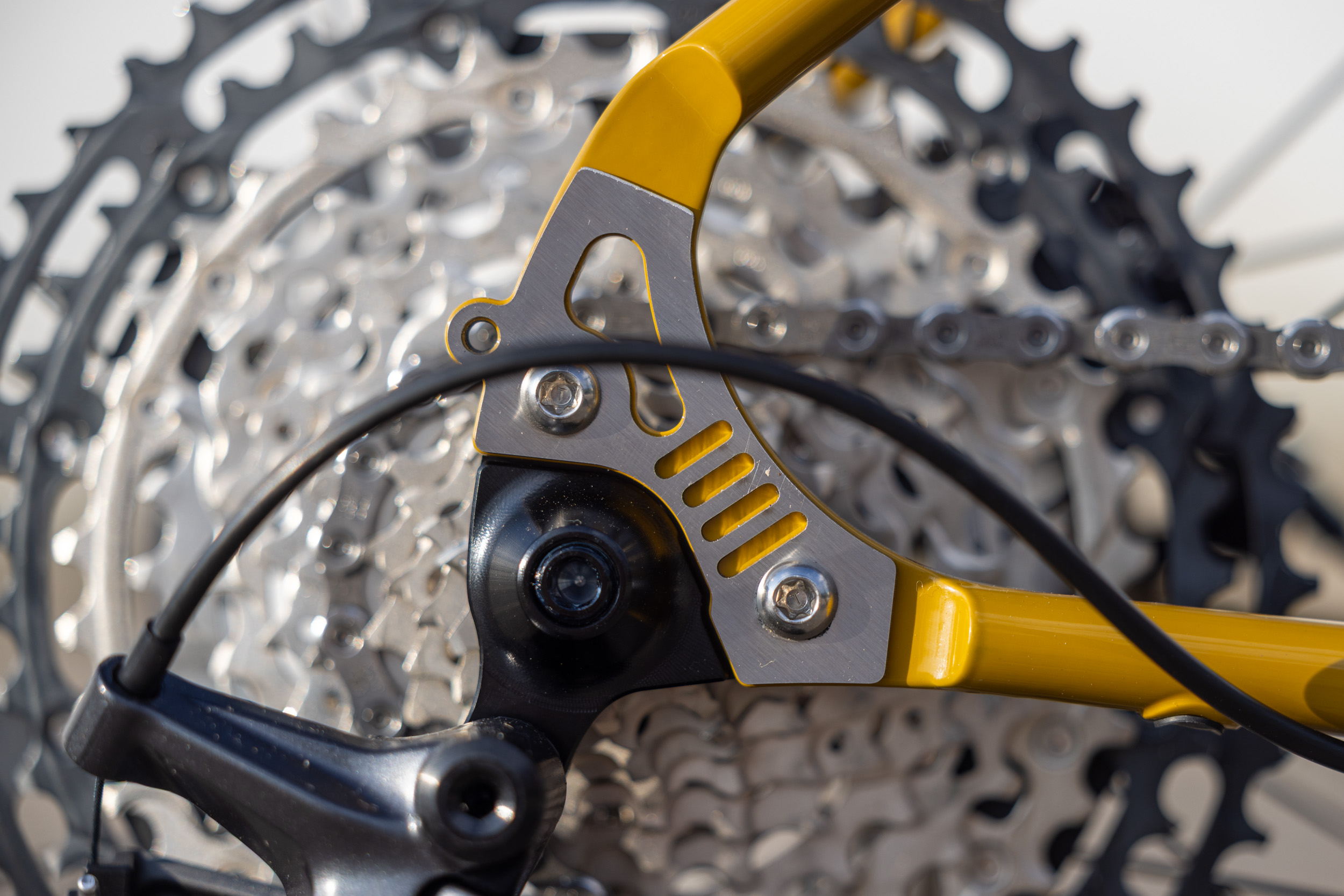


Some might question the presence of a down tube gusset given the look or the commonly held belief that it introduces a stress riser elsewhere on the tube (in addition to a little extra weight). However, they arrived at this decision through extensive testing on a variety of distinct iterations. Although the bike doesn’t technically need it, each steel production bike is unique. Through their research, they found that adding a raised gusset gave them a final production bike that would hold up in real-world use while still achieving their construction-oriented goals. Various Fairlight athletes, including Dom, have ridden prototypes with other versions of the gusset, as well as without. Pretty much all of them have been ISO tested, which is time-consuming and expensive. But it’s all part of what makes these frames so good.
Other intricacies include an offset seat tube to accommodate a bigger tire, ovalized tubes on the main triangle to balance weight and feel with strength, and custom chainstays that look and feel spectacular. Every tube is considered for how it fits into the overall picture, and these choices add up to more than a brand name on a seat tube. Specs-wise, the Fairlight is consistent with many other bikes in the category. It’s suspension-corrected for a 120mm fork, uses Boost spacing, and comes standard with a T47 73mm threaded bottom bracket, a 30.9mm seatpost, and a ZS44/EC44 headset. It clears a 32T chainring with a 52mm chainline, and a 38T with a 55mm chainline. It also has a post-mount brake standard that can natively clear a 160mm rotor.
Familiar Feeling
The tubing choices deliver an exceptional ride feel on the trail. Though I haven’t ridden many hardtails, I have tried my hand at some full-suspension bikes, as well as other trail-focused designs to expand my palate. Without a doubt, the Fairlight feels the nicest to ride. It has a springy lightness that makes pedaling up the steepest terrain feel effortless, but it’s solid enough when you’re blasting through rock gardens and fast, cross-country terrain.
That said, Pisgah has its share of trails with intimidating, treacherous rock slabs. The Fairlight made me feel comfortable taking on these sections, and it still delivered a great frame feel when I took a bad line or ventured into a rut I should’ve avoided. The head tube feels appropriately solid without being too harsh, and the rear end feels light, making the whole chassis feel natural to maneuver and quickly adjust even on challenging terrain. It reminded me of a conversation I had with Charles Thompson of Fine Bikes after MADE. He’s a talented mountain biker, and his exploits as one of the best framebuilders in the American Southeast are well-documented on the site.
During an impromptu visit, he spoke about tubing choice and how it affects the bike’s geometry. “You can have a 425mm chainstay that feels like a boat and a 445mm that feels like it’s right up against the seat tube. The tubing quality plays a role, but it’s a bigger part of the overall puzzle and how it all fits together.” Such is the case with the Holt 2.0. From the squashed chainstays and swooping seat stays to the carefully selected trifecta within the main triangle, it all adds up to a frame that feels impossibly dynamic.

Without trying to sound too complimentary, it takes a lot of what I loved about the Ritchey and puts it into a more capable design. Like Fairlight, Ritchey makes high-quality, lightweight steel frames. When riding the P-29er, I felt like I was pinging over sections, impressed by the frame’s ability to take the abuse I was throwing at it. While I’m at a different place in my riding with the Holt, its geometry and construction make you feel more “in” the bike. Much of that is down to the longer front end but also the tubing selection.
The only caveat I’d add is that, like most of Fairlight’s offerings, this is a racier bike. I can only speak to my experience as an athletic, small-to-medium-sized rider. Still, as I get more familiar with people’s preferences and how much they deviate from my own, I know not everyone will get on with the Holt. As comfortable as it is compared to the P-29er, it’s kind of like saying a small Porsche is more comfortable than an F1 car. It’s true, but it’s all relative. If you’re less flexible and desire greater stack heights, this likely isn’t the bike for you.
Build Kit and Rigid Restrictions
The supplied build kit I received matches what Fairlight offers, with one major exception. When I spoke to Dom about reviewing the Holt, I told him I wanted to see what the bike was like with a rigid fork, so I could isolate the frame feel. I have a 120mm FOX fork at home, similar to the Fox 34 SL and SID forks they spec on their completes. Switching it out when I had enough miles on the rigid version seemed simple enough. However, a cacophony of errors ensued when I tried to install it. I broke one of the essential axle parts, and when I finally sourced a replacement, I realized the steerer was cut too short for the bike anyway. As a result, I never spent time with a suspension fork installed. Though I think it would enhance the experience, I don’t believe it’s essential to the Holt.

The bike is plenty capable with a rigid fork, and I’d advocate adding it to their available build kits. Riding rigid isn’t for everyone, but it generally makes the bike more bikepacking-friendly, with mounts on the fork blades and easier ways to put more weight up front. The Deore XT mechanical build was flawless, too. The gearing felt entirely appropriate, the brakes worked well, and everything from the bar to the grips and the OneUp dropper felt right at home. The only thing I’d change is the saddle, as my butt just didn’t agree with the stock Fizik option. It would also be nice to see a wider tire selection. I enjoy the Mezcals, but the bike has pushed me onto even steeper terrain, where I found them a little too squirmy. I’d imagine that with a 120mm fork and a grippier 2.6″ tire, there would be a whole new dimension to the bike on rough trails, so seeing more tire options would be great. Something from Maxxis, or even a model like the Barzo or Syerra, would be welcome. Finally, the Hope Fortus 30W wheels are adequate, but it was hard not to imagine what this bike would be like with a high-quality carbon fiber wheelset.
Fairlight Holt 2.0 Build Kit
- Frame: Fairlight Holt 2.0, Medium
- Fork: ENVE Mountain
- Crankset: Shimano Deore XT, 165mm
- Derailleur: Shimano Deore XT 12-speed
- Shifter: Shimano Deore XT
- Cassette: Shimano CS-M8100
- Bottom Bracket: Token T47
- Wheels: HOPE Fortus 30W SC CL
- Front Tire: Vittoria Mezcal 29 x 2.4” Trail compound
- Headset: Chris King
- Handlebar: Truvativ Atmos Carbon
- Stem: Atmos 60mm
- Grips: Fizik Ridefeel Grips
- Saddle: Fizik Terra Argo
- Seatpost: OneUp 100mm
- Dropper Lever: OneUp
- Brake Levers: Shimano Deore XT
- Brake Calipers: Shimano Deore XT
- Rotors: 160mm Shimano ICE tech
At roughly $4,000 complete, the Holt 2.0 is competitive with other steel builds in the same vein, though it’s a bit more expensive for US customers once shipping is factored in. According to the brand, “as of 23rd July 2026, Fairlight bicycles and frames are subject to either a 10% or 11% flat-rate combined U.S. import duty and tariff.” It’s a bummer, but hardly something that should deter you from the brand. Another element of the Fairlight experience is that all completes arrive meticulously looked after and assembled. Currently, Fairlight offers framesets and full builds, and the team meticulously prepares each order. Per Dom, they get about an hour and a half of mechanic time before re-boxing, where they ream, face, and grease every bolt. This is usually an added cost you have to specify or pay for at a bike shop, but Fairlight ensures everyone, regardless of build kit, gets the same treatment.
Bikepacking on the Holt 2.0
With such fantastic ride quality unloaded, I worried about what I’d find when I loaded up the Holt. To my surprise, the Holt did not suffer with a load. Although a few bags mute the tubing’s ride quality, the bike is still fun and nimble on singletrack, maintaining most of the frame’s built-in agility. So much so that I felt comfortable taking on Pilot Rock fully loaded—a trail that has scared me in the past, given the technical slab I always tend to slip and feel less confident on. The Holt kept its line no matter how squemish I got. Even with an overnighter’s worth of gear strapped on, it was still manageable on terrain I had previously struggled with. I kept things relatively light, using my Mica Rat Tail rack in the back and my trusty Restrap Hiplok Panniers up front, and it all worked really well.

Although it’s obvious through the design inspiration and build, this isn’t a loaded tourer. It was built for events like those won by Alex McCormack, as well as fast, cross-country-style riding. It’s great that they included rear seatstay mounts to make mounting rear racks easier, and the triple bottle boss under the down tube adds another bottle position, but it’s not ideal for heavy touring. The bike feels far better without a heavy load, and anything more than what you’d pack for a few days would feel like you’re pushing the Holt well beyond its comfort zone. It’s a sport sedan with a peppy engine and great weight distribution, not an SUV.
- Model Tested: Fairlight Holt 2.0 Ochre, Medium
- Actual Weight: 26.4 pounds (11.97 kilograms)
- Place of Manufacture: Taiwan
- Price: $3,960
- Manufacturer’s Details: Fairlight
Pros
- Exceptional ride feel
- A decent number of mounts
- Considered complete package
- Good tire clearance
- Light and fast but still very capable
Cons
- It’s a race-inspired design that might not appeal to all
- Importing Fairlights for US customers has become more costly
Wrap Up
After a lengthy test period with the Fairlight Holt 2.0, I can confidently say it’s one of the best recent additions to the hardtail category. Although I haven’t ridden many hardtails, I have ridden over 30 steel bikes, and the Holt 2.0 is one of the finest. From its fantastic ride feel to its capable geometry and considered mounting points, few steel bikes in the same mold are better. Of course, that doesn’t mean it’s right for everyone. Fairlight, with its performance-oriented design, makes bikes for riders who want to push themselves. While their gravel and road models offer Regular and Tall sizing, the Holt is less specific, and it offers fewer options for those who don’t want a race-like fit. For me, the Holt 2.0 feels like an excellent learning tool. It has more than enough capability to tackle all kinds of terrain, but the geometry and tire clearance to ensure you feel comfortable enough to do so. It’s downright dangerous when under someone as quick as Alex McCormack, but it’s also a tool for someone still learning the ropes. If you’re after a light, fast hardtail that can carry a load and handle everything from rough gravel to technical singletrack, this is the ticket.
Already a member? Log in to hide this message.
WE NEED MORE REAL STORIES LIKE THIS ONE.
Tired of AI-generated slop, clickbait, and an internet that feels less human by the day? So are we. We still believe in the old internet. The one built by real people, sharing real stories from real trips and bringing our community together. However, we need your help now more than ever to keep the good stuff rolling...
Further Reading
Make sure to dig into these related articles for more info...
Please keep the conversation civil, constructive, and inclusive, or your comment will be removed.








 English (US) ·
 French (CA) ·