

 4 days ago
13
4 days ago
13
PROTECT YOUR DNA WITH QUANTUM TECHNOLOGY
Orgo-Life the new way to the future Advertising by Adpathway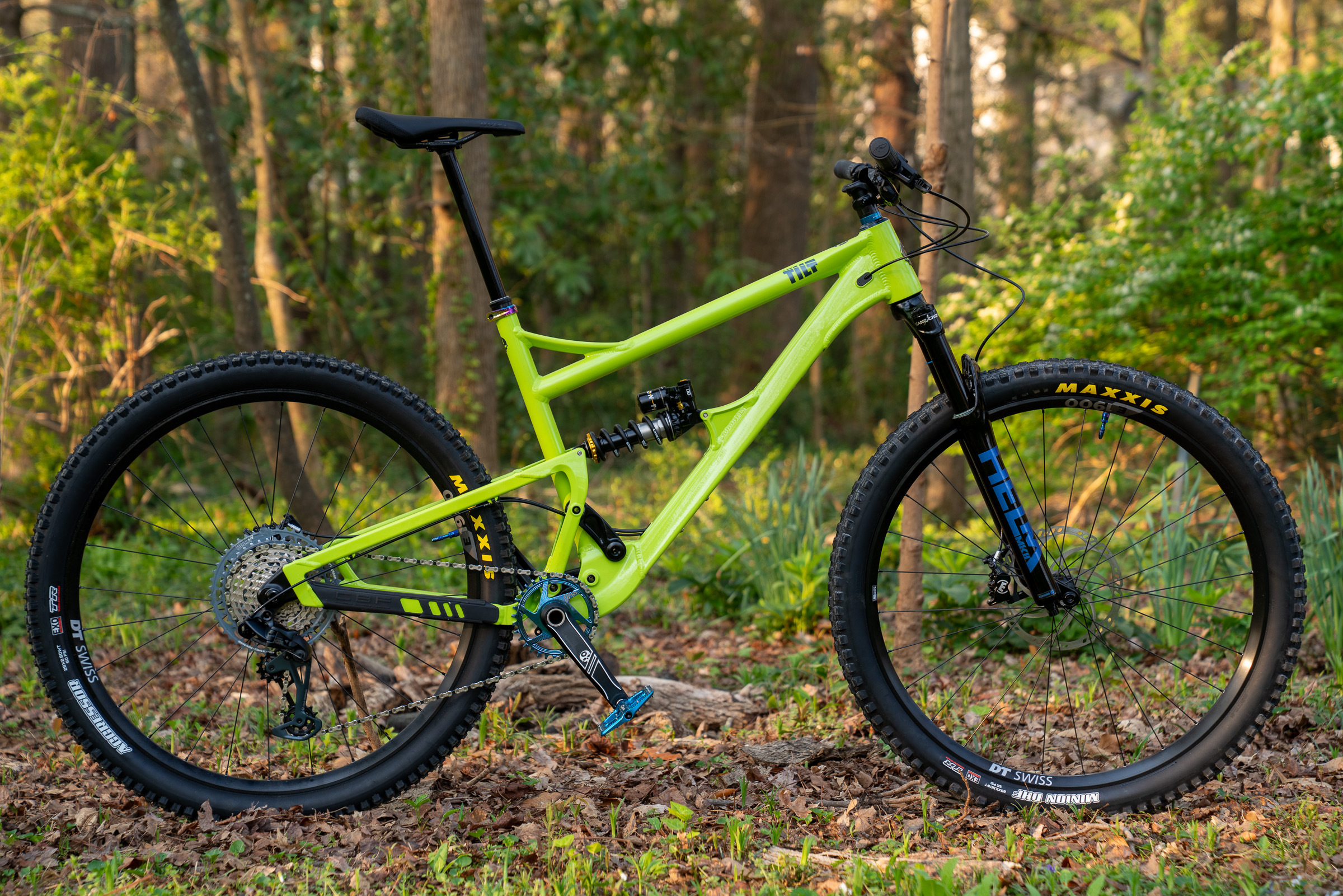
The Canfield Tilt is a heavy metal bike, both literally and figuratively. But don’t let that fool you. The third-generation Tilt is every bit as modern and capable as any trail bike, and it’s got a few tricks up its sleeve that will have buyers taking a serious look at the Colorado-based brand, perhaps for the first time.
Canfield Tilt key specs
- Travel: 140/143mm front/rear as tested. Compatible with forks 130-150mm. Rear suspension from 128mm to 143mm, depending on shock stroke.
- 29er or mixed wheel
- Adjustable chainstay length: 427mm or 435mm (27.5″ rear wheel) and 435mm or 442mm (29″ rear wheel)
- 65° HTA, 77.2° effective STA @ 140/141mm travel
- Price: $2,499.99 for a frame, builds start at $3,999.99
- Buy from Canfield Bikes
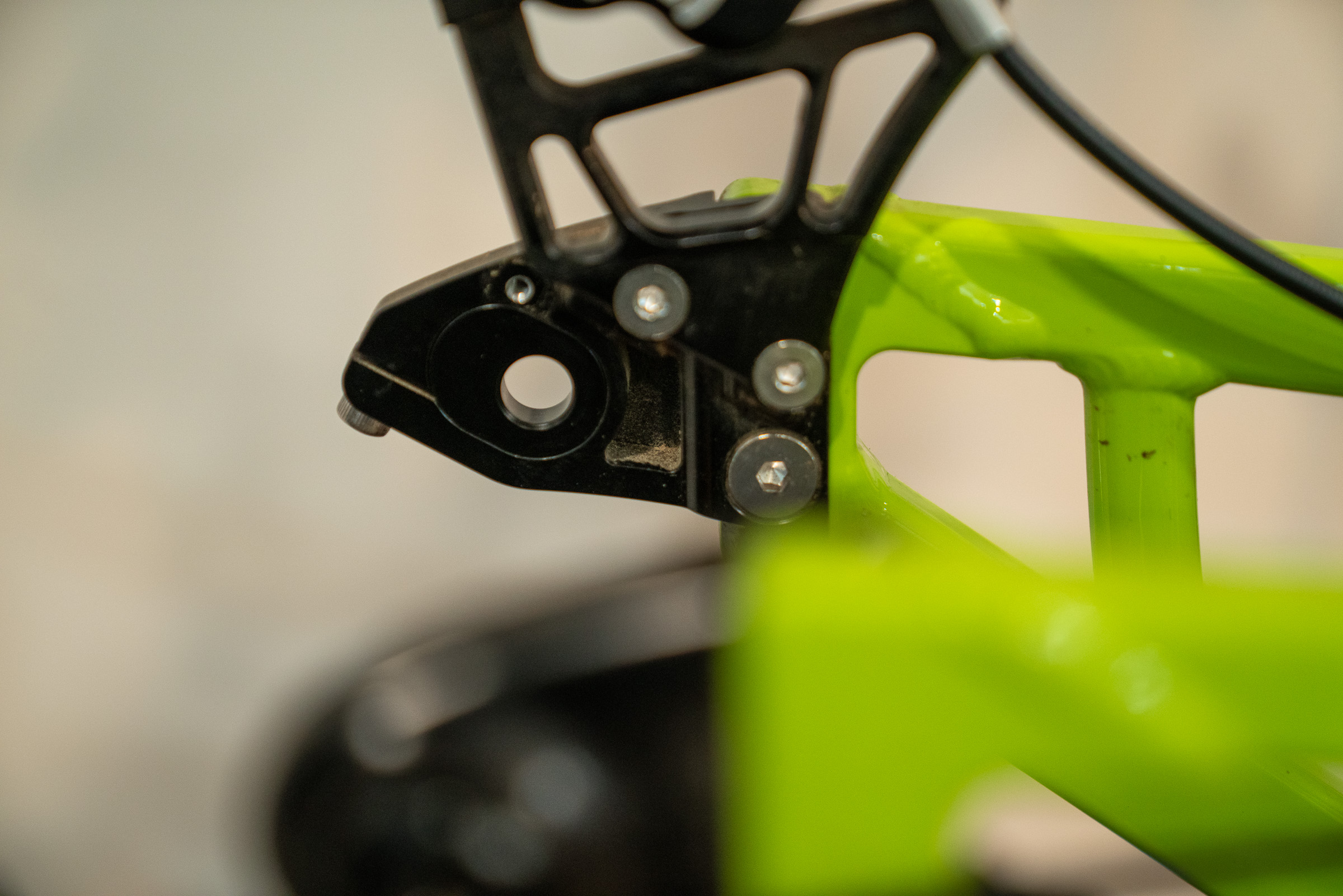
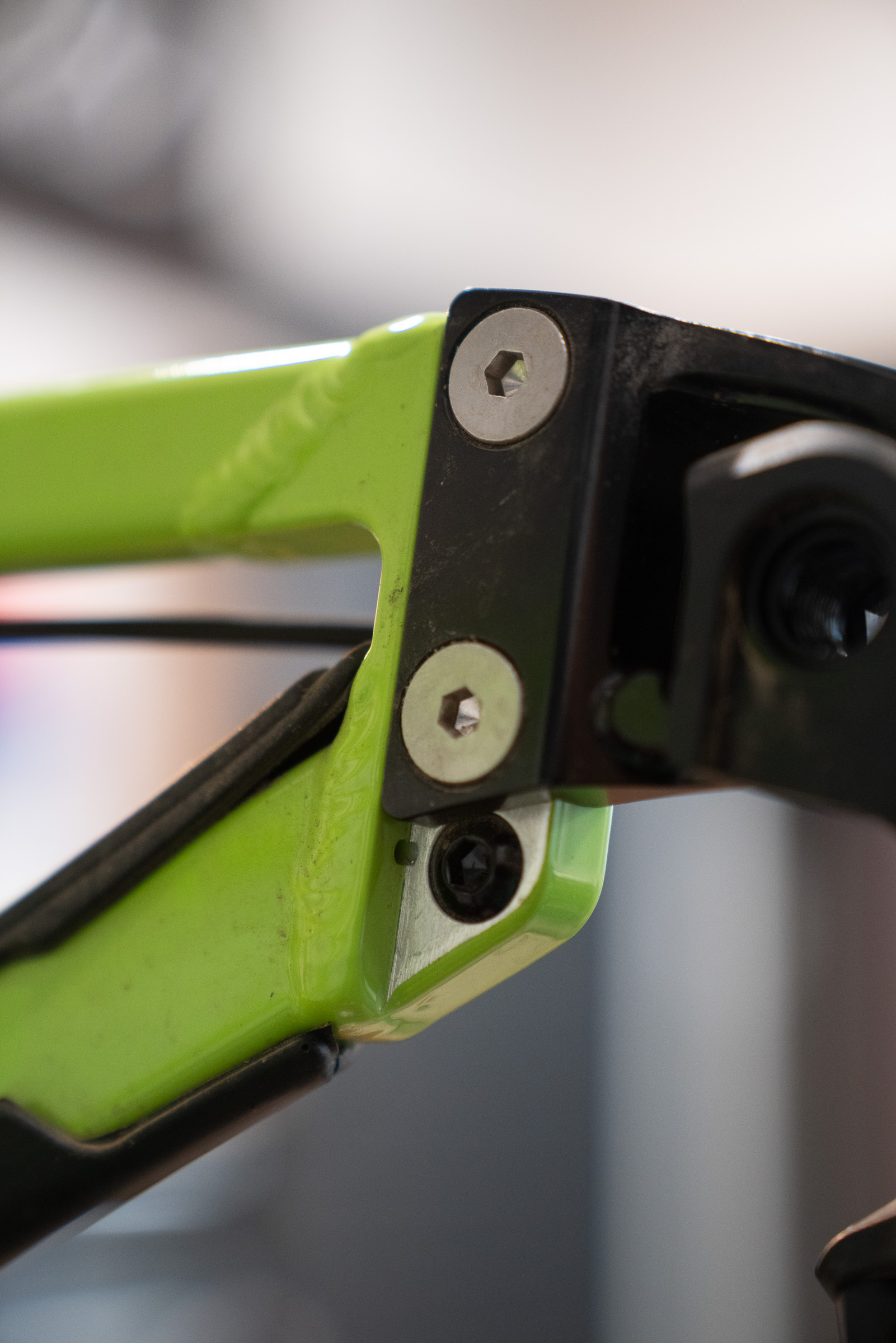
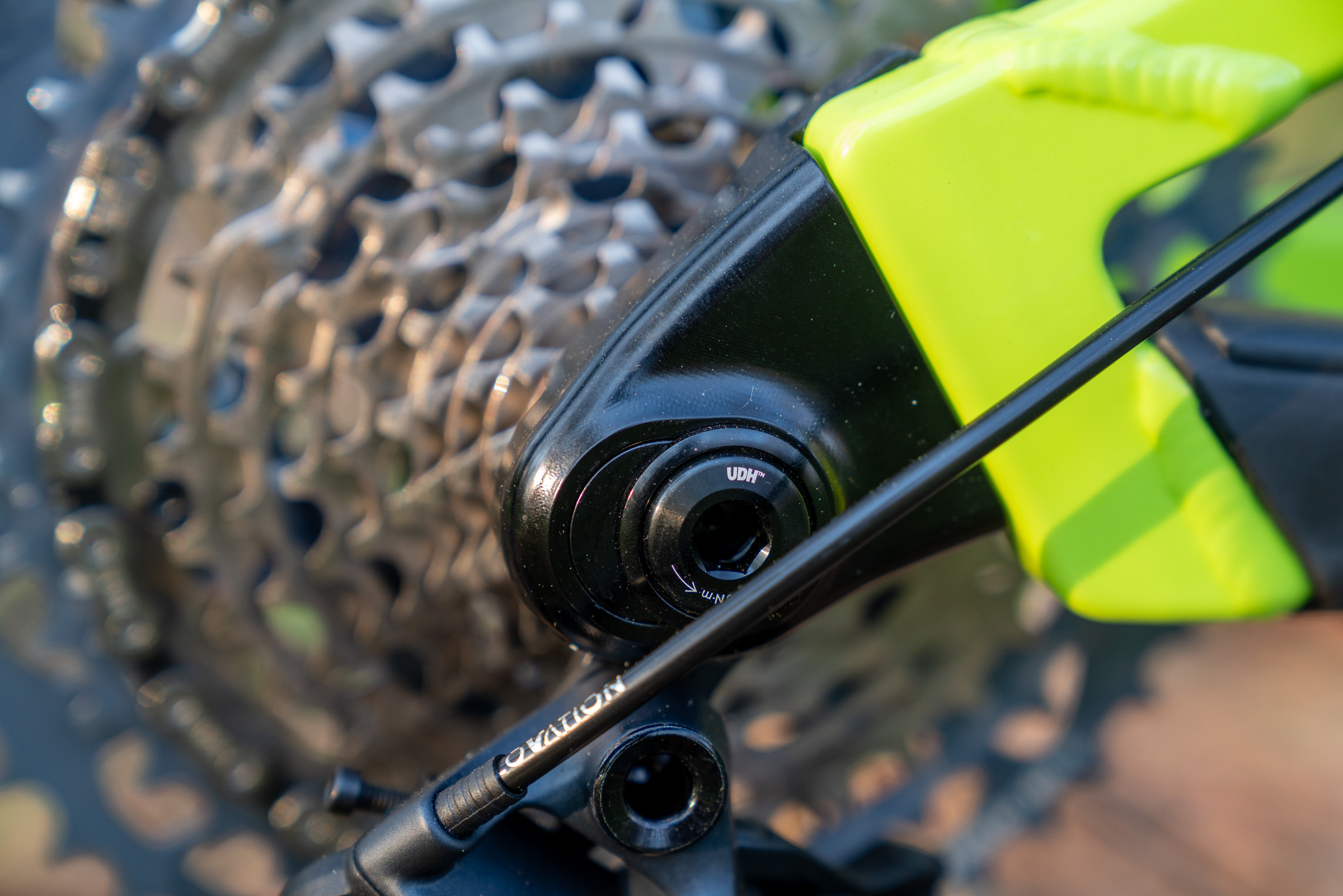
New UDH dropouts offer smart wheel size and chainstay length adjustment
The updated Canfield Tilt features the brand’s unique adjustable dropout system. The UDH-compatible design not only shifts up or down for 29″ and 27.5″ rear wheels, respectively, but it also gives riders two different chainstay lengths to choose from. It’s a surprisingly modern, modular solution for an aluminum-frame bike.
Shifting the dropouts up or down ensures that the bike’s head tube angle, seat tube angle, stack height, and bottom bracket height remain the same, whether you’re running matched 29er wheels or mixed wheel sizes.
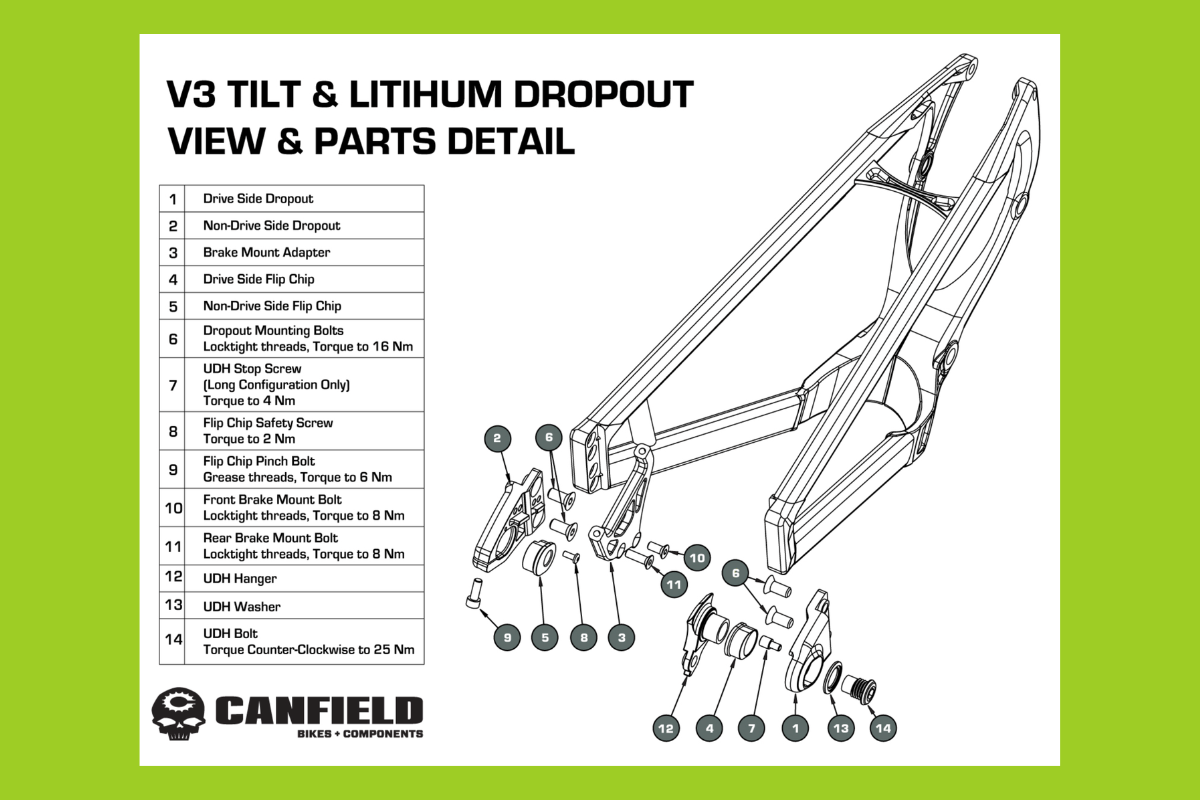
With 29er wheels, the Canfield Tilt offers either a 442mm or 435mm chainstay length. A shorter chainstay length generally gives a bike a more playful character, while a longer chainstay is associated with improved stability on descents. With mixed wheels, the Tilt switches between 427mm and 435mm chainstay lengths.
Though a 435mm chainstay length is incredibly common among trail bikes, it’s a big departure from the second-generation Tilt, which had short, 425mm chainstays. Short chainstays had been a bit of a calling card for Canfield bikes, and in my test of the Canfield Yelli Screamy hardtail last year, I noted how agile the bike felt thanks to the short rear end. At the same time, the pedal feel was a little draggy, and I kept bumping the rear derailleur with my heel. Today’s mountain bikes are seeing longer chainstays, and based on my tests, I think going longer on the Tilt was the right move.
CBF suspension paired with a robust aluminum alloy frame
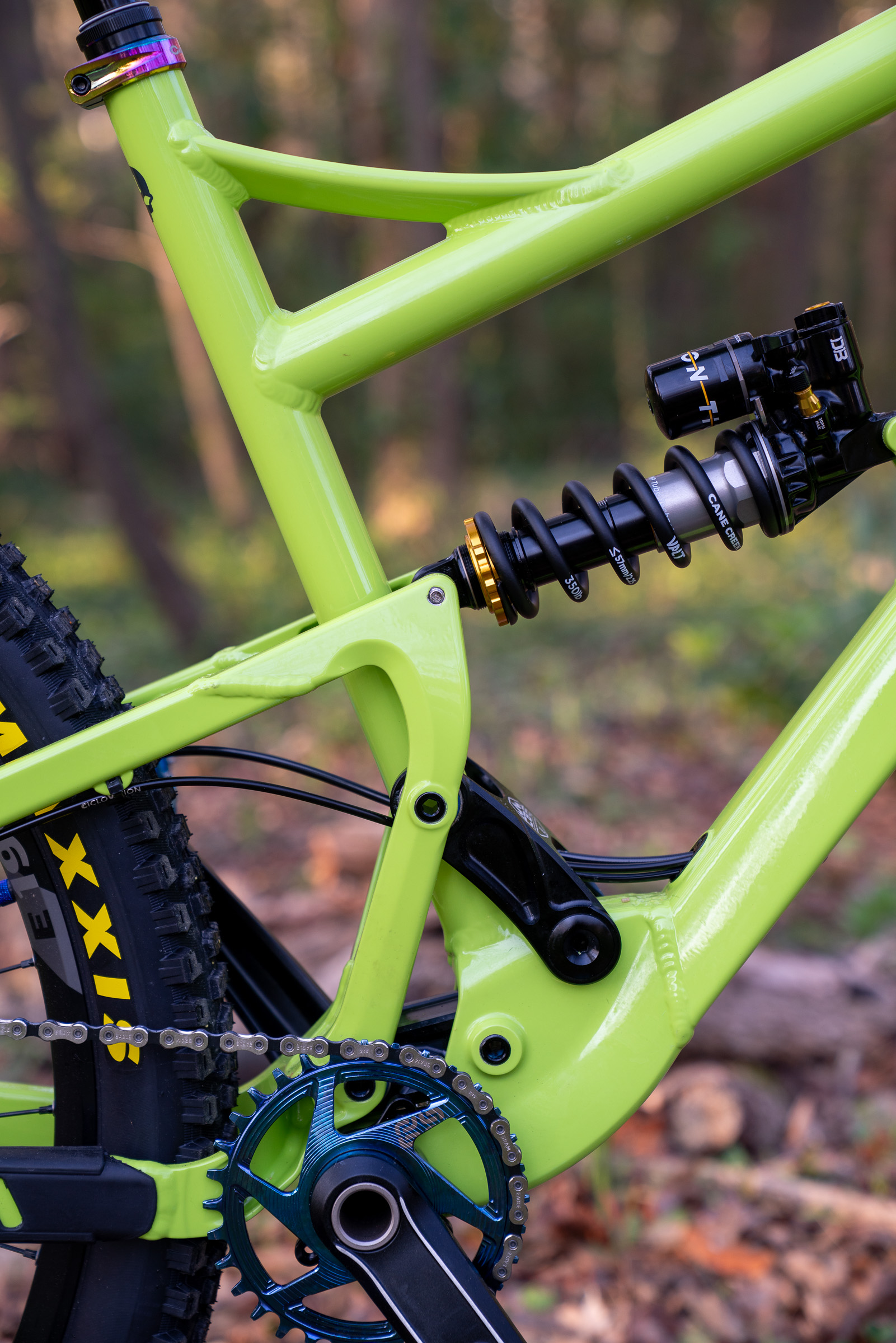
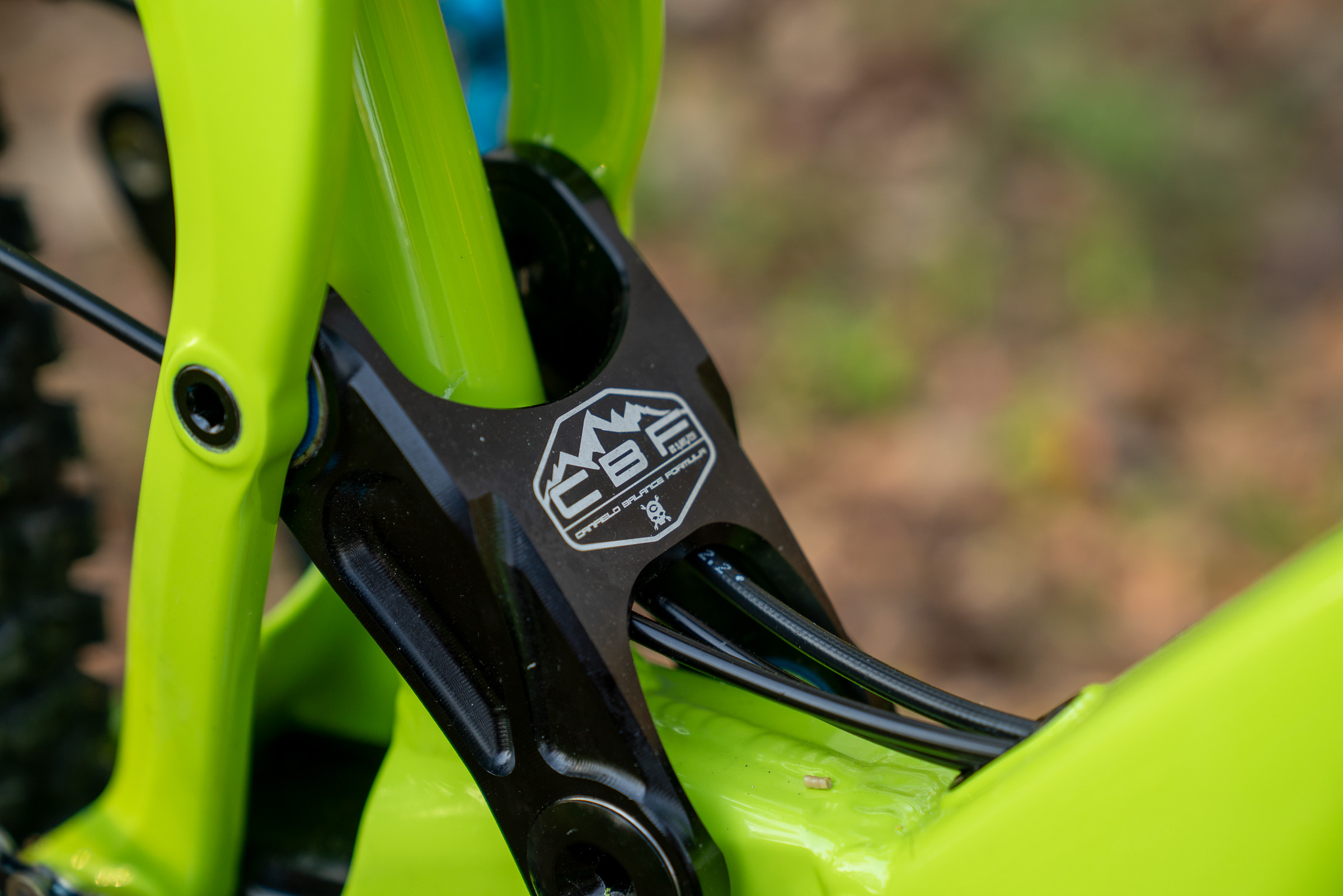
I decided to test the Canfield Tilt largely based on my incredibly positive experience with another CBF suspension bike, the Revel Rascal. CBF (Canfield Balance Formula) is a patented suspension design that’s said to provide “optimum anti-squat throughout the entire range of travel, resulting in the most efficient pedaling possible, regardless of factors like sag, and without sacrificing bump compliance or traction, and with no unwanted pedal feedback from braking or drivetrain forces.”
The Tilt is coil-shock compatible, and my test bike was set up with a hybrid air/coil Cane Creek Tigon shock. Depending on your shock stroke length, the Canfield Tilt offers 128, 135, or 141mm of rear suspension travel.
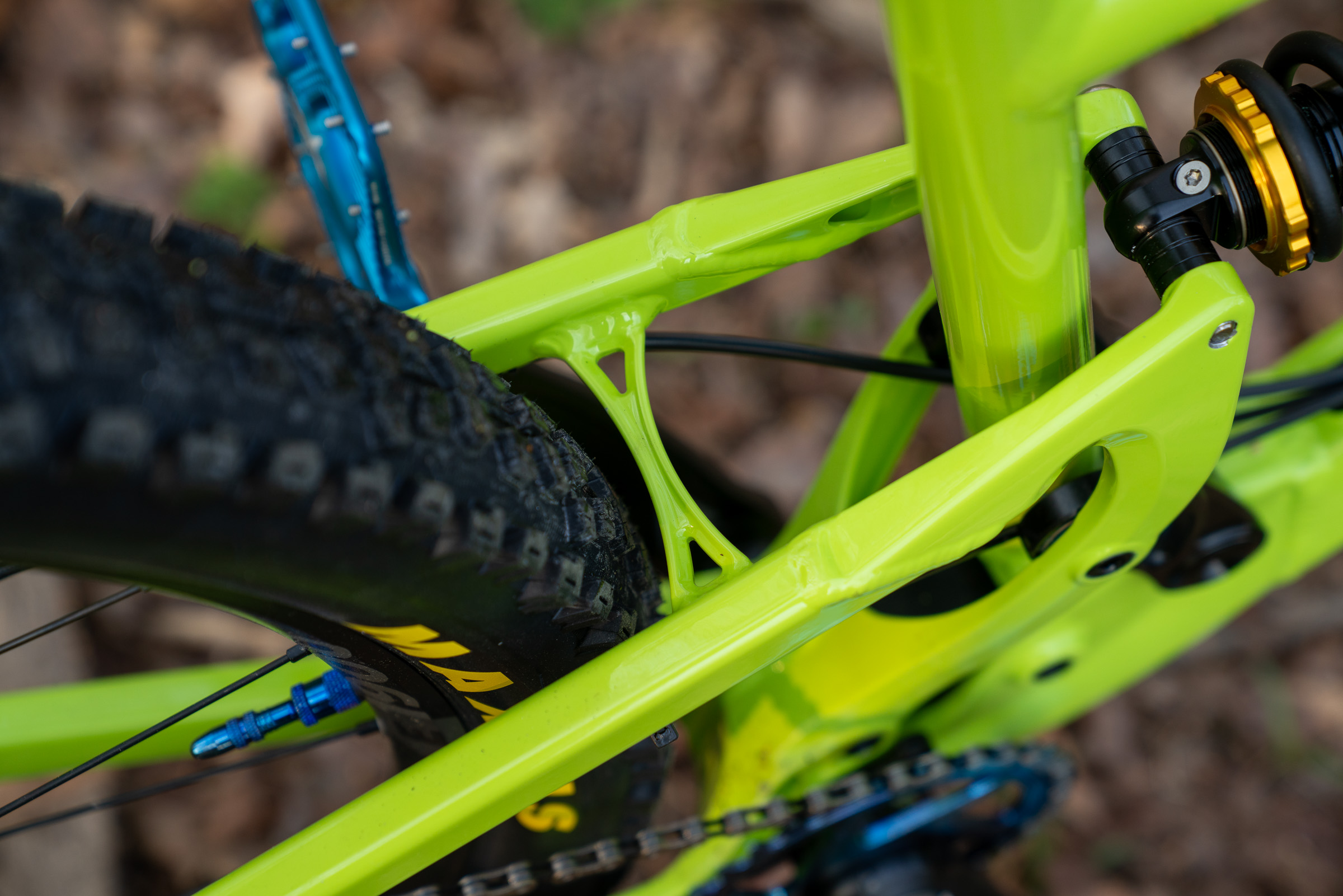
Unlike Revel, which mostly sells carbon bikes, Canfield CBF bikes are 100% metal. The Tilt frame features extensive bracing for an incredibly stiff platform. The linkage design is similarly robust and flex-free. And the bottom bracket area is particularly beefy thanks to its forged clamshell construction.
At one point during my testing, I noticed a strange clunk whenever I pedaled. Thinking the frame might be flexing under the uneven load, I mounted a camera in various locations on the bike to see what was happening. Watching the videos, I couldn’t see any side-to-side flex; not even a little bit. (Lance Canfield ultimately helped me determine that it was an incorrectly seated bottom bracket bearing that was causing the chainring to sit too close to the driveside chainstay.)
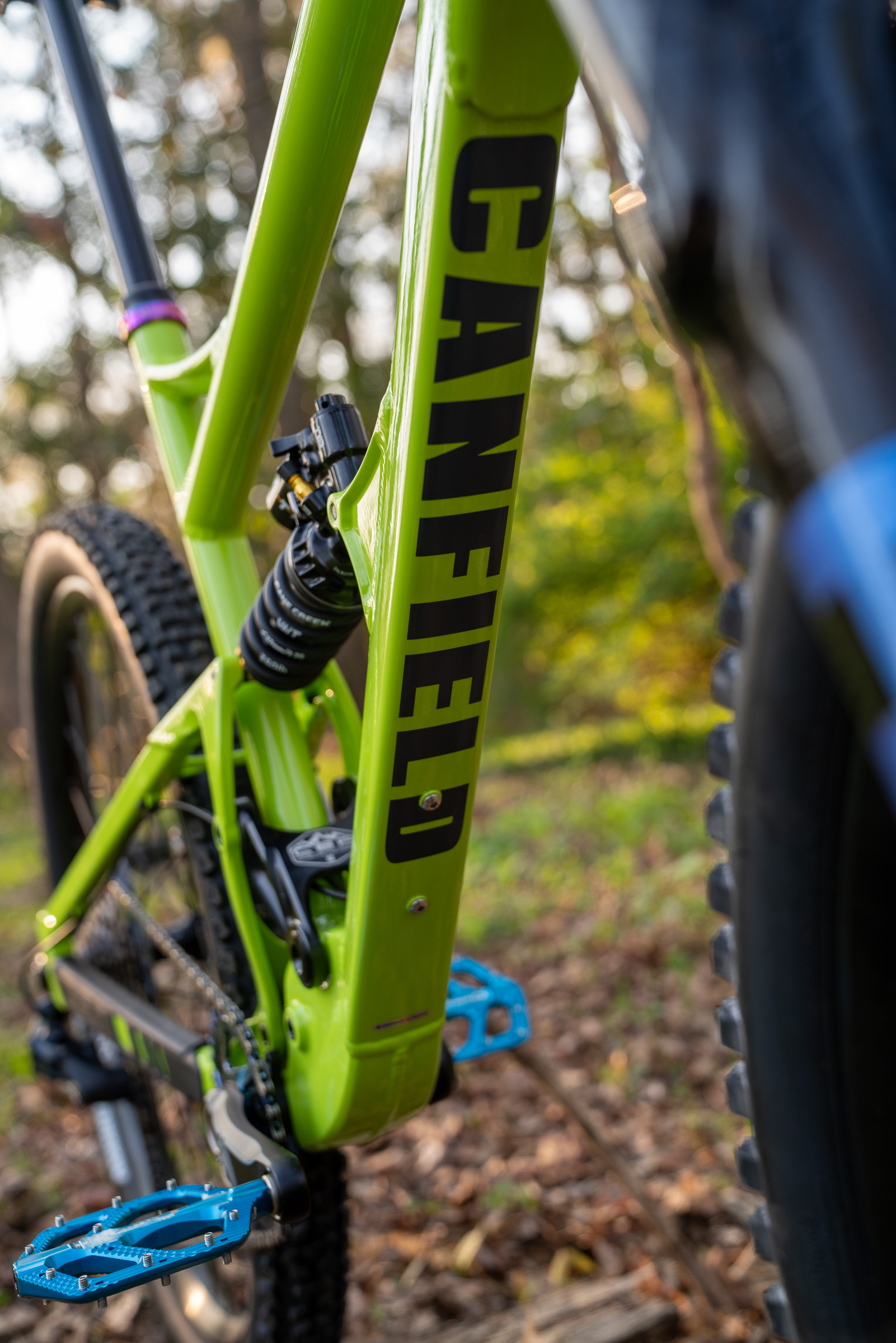
The Tilt’s CBF incarnation, unfortunately, leaves no room for a water bottle mount inside the front triangle. Actually, a small bottle (or two!) might fit in the extra-large frame I tested, but sadly, all sizes place a single set of mounts on the underside of the downtube. I smashed my bottle cage on so many log crossings that I finally gave up on trying to carry a bottle on the Tilt frame. This isn’t a great spot for a bottle mount to begin with, and the Tilt mounts are located particularly low on the downtube. No accessory/utility mounts are available on the Tilt frame.
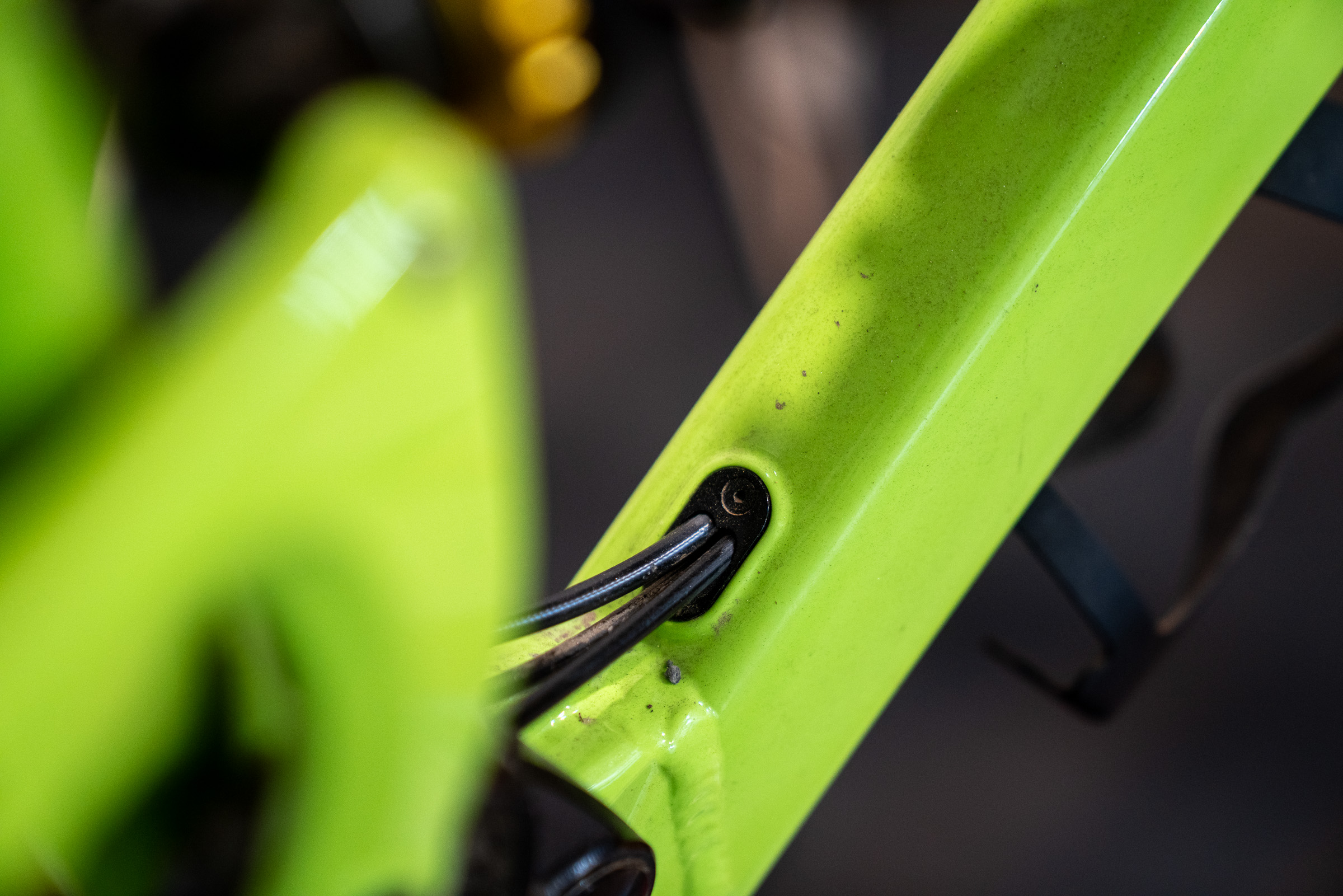
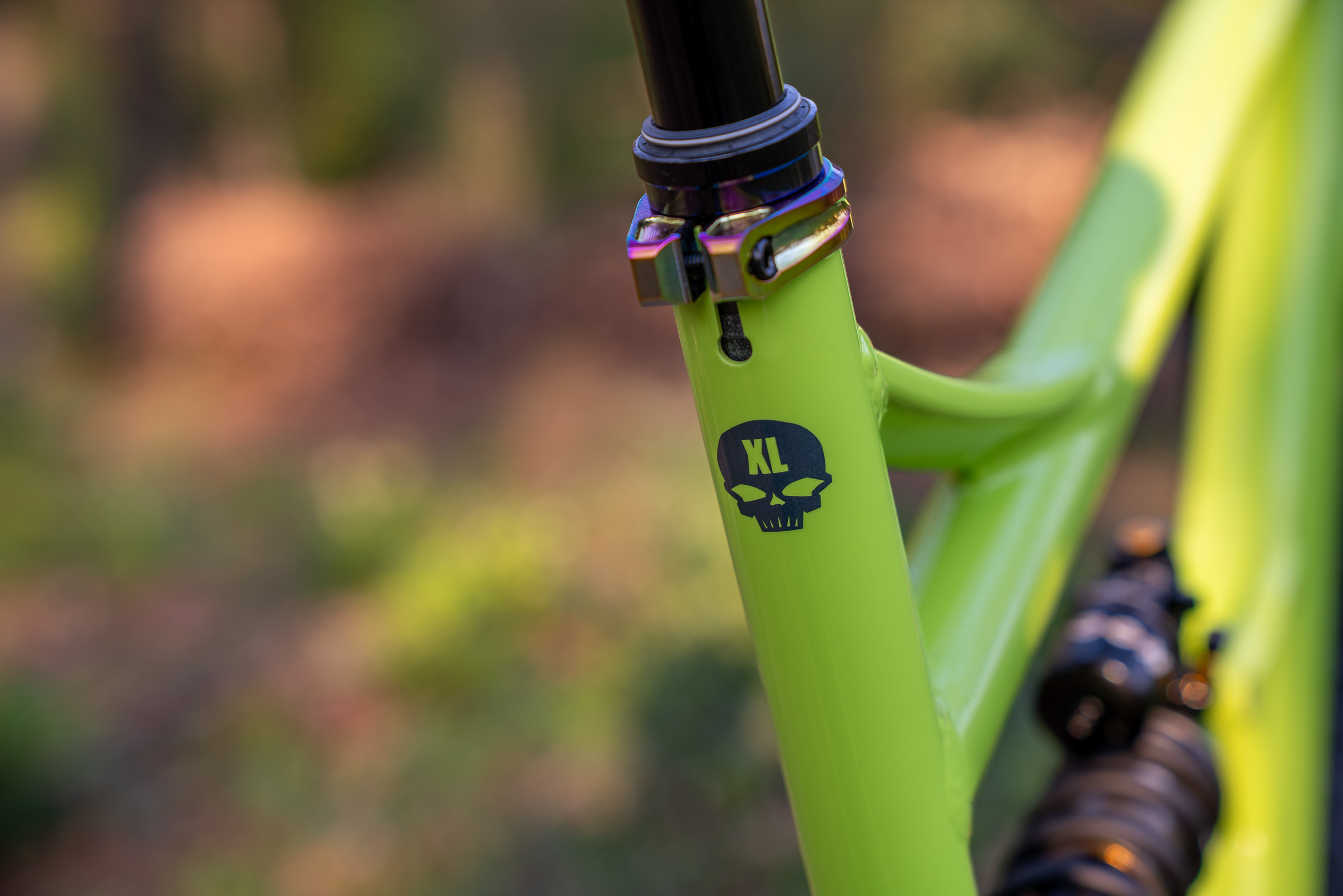
A mostly uninterrupted seat tube gives buyers more options when it comes to long-travel dropper posts. Cables are internally and externally routed, entering and exiting the frame at various points to make installation and maintenance (mostly) pain-free.
Friends who saw the bike immediately assumed the Tilt was a much bigger bike than it actually is. Though the rugged, industrial look projects enduro, the suspension numbers actually place it closer to the short-travel end of the trail bike spectrum.
Canfield Tilt geometry
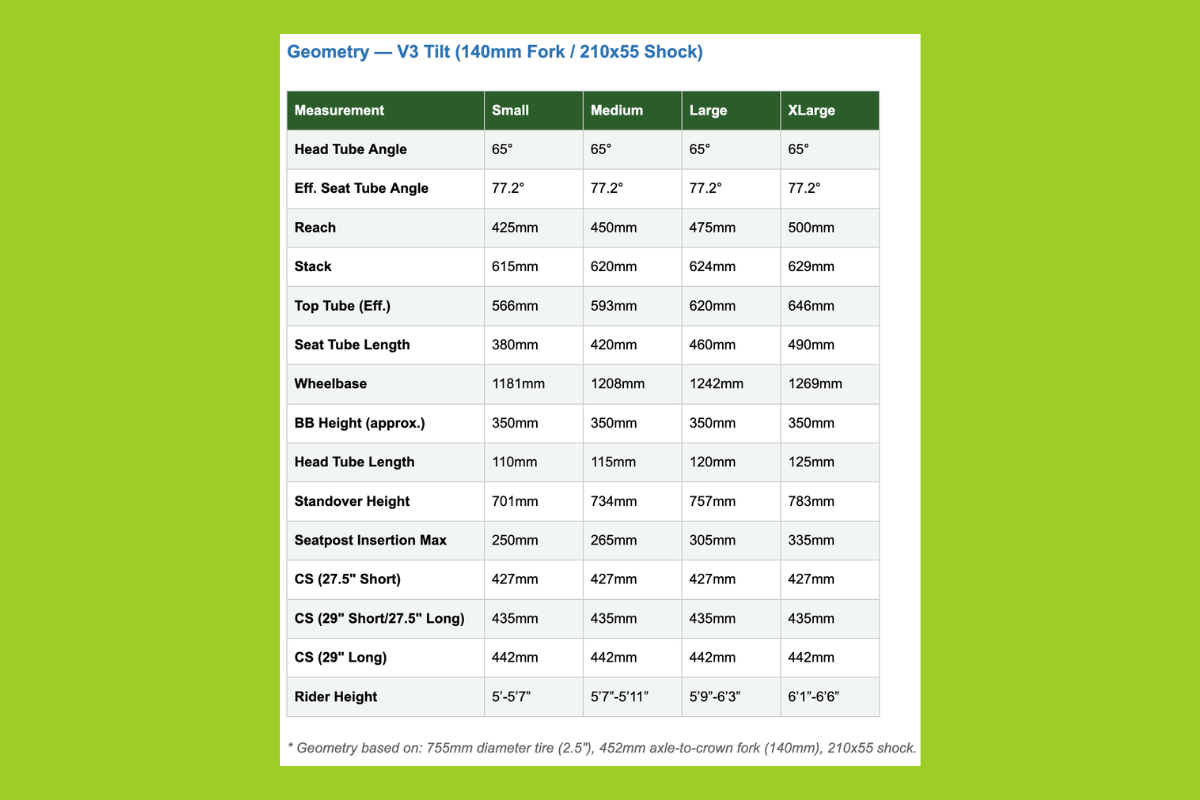
The Canfield Tilt sees modest geometry changes from V2 to V3. As noted, the chainstays grew by 10mm or more, depending on the setting, and consequently wheelbase lengths are longer across the board. The approximate bottom bracket height crept up by 7mm to 550mm, while standover heights generally decreased. Stack heights remain on the low side of average among trail bikes. Combined with the lower standover height and stack heights, shorter riders could potentially size up to get the reach they prefer, and this is reflected in the rider height range listed on the geometry chart above.
 Photo: Aaron Siegler.
On the trail
In March, I took the Canfield Tilt on a trip to Pisgah. It’s the perfect bike for this type of riding, capable of climbing (or being pushed) up steep, seemingly endless climbs, and incredibly capable on descents.
The CBF suspension design keeps the Tilt incredibly planted on the climbs, delivering magnet-like traction over rocks and roots. The Cane Creek Tigon hybrid coil shock deserves credit here as well, thanks to its responsiveness right off the top of the stroke.
Reviewer profile height: 190cm (6’3″) weight: 75kg (165lb) testing zone: Southeast, USA
The upshot is a stiff platform with zero discernible side-to-side flex that feels efficient, if heavy, when climbing uphill. My build weighed 16.4kg — over 36lb! — which definitely requires significantly more effort on the climbs than a lighter bike would.
The good news is that it’s incredibly capable when it’s time to descend. The Canfield Tilt feels more like a tightly-tuned enduro race bike than a short/medium-travel trail bike, especially compared to the Revel Rascal I tested in 2024.


In his review of an earlier version of the Tilt, Matt Miller said, “the Tilt is no monster truck. It’s a capable bike, but not a trail plow.” He went on to say he “needed to maintain an aggressive, forward posture on the descents and really put some oomph into the frame to get the most out of the Tilt on the descents, but given its short rear end, it’s an easy bike to whip around corners.”
With longer, 442mm chainstays as tested, I’d say Canfield has found the right balance. The bike feels quite stable on fast descents, and yet it’s still nimble enough to take on tight and twisty singletrack. I had the most fun with the Tilt on steep and chunky trails. It’s a fun bike to ride on manicured flow trails, too, though in more of an “overbiking” sort of way.
Right off the bat, I swapped out the bars that came with the Tilt for a set of 50mm riser bars. Honestly, I think an 80mm riser bar would have been even better given my height and the bike’s short stack height.
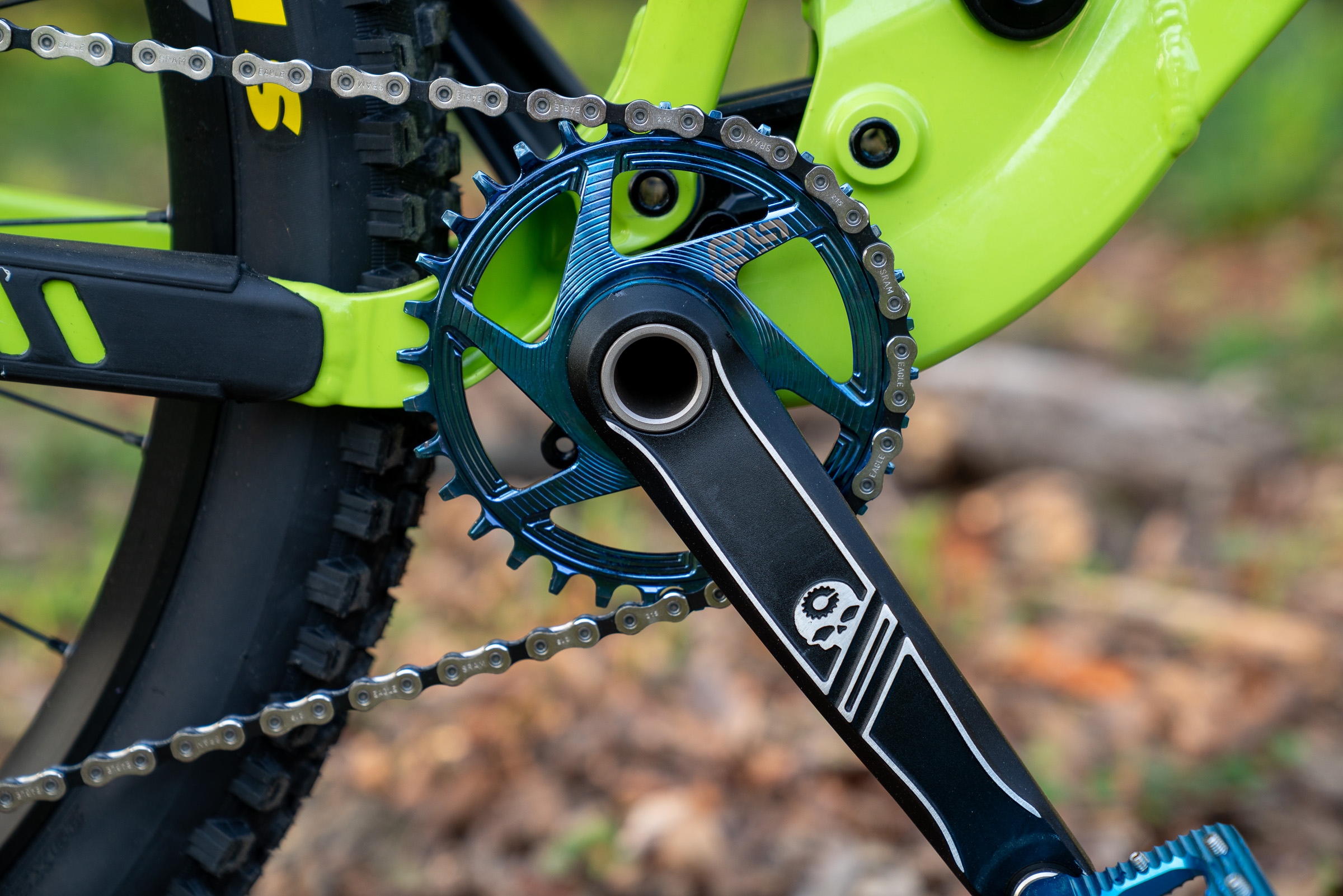
Canfield specs a number of their own parts, including a gorgeous, high-quality crankset, which is available in multiple lengths from 150-170mm. I tested a pair of Canfield Crampon Mountain Pedals with the Tilt, and they are on par with the top flat pedals I’ve used over the years.
The Tilt is available in six different builds, and the Canfield team is always willing to work with buyers on a custom parts spec.
Share your Canfield Tilt review
Tried it? Tell us what you think about it.
The third-generation Canfield Tilt is available in three colors: Kryptonite, Black Anodized, and Raw. I like the neon-green frame color, though if this were my bike, I’d swap the blue accent colors on the chainring, fork, and pedals for something more neutral.
The Tilt shares the same rear end with the longer-travel Canfield Lithium. Not only that, 2020-2025 Tilt owners can upgrade to the new rear triangle with UDH dropouts for $1,000.
Pros and cons of Canfield Tilt
Pros
- CBF suspension delivers excellent traction
- Highly adaptable and robust frame
- Internal/external cable routing and threaded bottom bracket promise simple maintenance
Cons
- Bottle mount is not in an ideal location
- Heavy
- Tall riders may prefer a taller stack height
Bottom line
The Canfield Tilt is a capable, confidence-inspiring trail bike that prioritizes traction and descending performance over weight, making it an excellent choice for riders who value adjustability and durability, especially for riding technical terrain.











 English (US) ·
  French (CA) ·