

PROTECT YOUR DNA WITH QUANTUM TECHNOLOGY
Orgo-Life the new way to the future Advertising by Adpathway 
What is the best backpacking tent or camping shelter for thru-hiking or section hiking all or some of the Appalachian Trail? Running over 2,000 miles from Georgia to Maine, the Appalachian Trail crosses heavily forested, mountainous terrain with widely varying temperatures, both hot and cold. Frequent rain, ferocious insect life, and competition for camping spots are all important factors to consider when choosing a tent or shelter for the trail.
Given the choice of single-wall and double-wall tents, a hammock, flat tarps, and shaped tarps, which one is the best to use? Can you just sleep in shelters and not carry a tent at all? What about early spring or winter hiking conditions? I've experienced all of these approaches while section hiking the Appalachian Trail, and the answer is…it depends:
- On nighttime temperatures
- On biting insects
- On the availability of good campsites
- On your wallet
- On your tolerance for carrying bulky gear and more gear weight
- On your need for personal comfort
Let's take a look at the different options and consider their advantages and disadvantages.
Single-Wall Tents
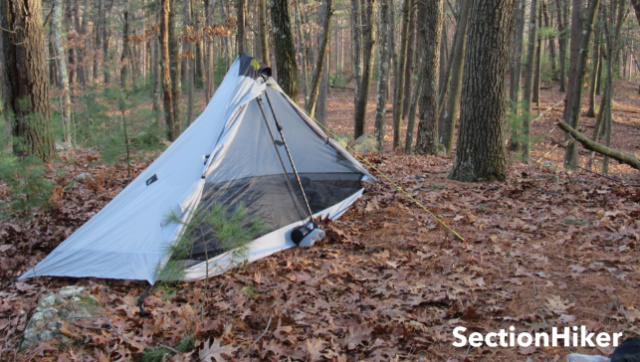 The Six Moon Designs Lunar Solo is a single-wall tent with plenty of ventilation
Most single-wall tents have walls that are part solid and part mesh. This improves airflow through the tent and helps to prevent internal condensation. Most single-wall tents have a fully integrated bathtub floor sewn to the walls, making it easy to keep the interior dry if you have to set up in pouring rain. Many also have an integrated front or side vestibule you can use to cover gear in bad weather. Popular models include the Zpacks Duplex, the Gossamer Gear “The One”, Six Moon Designs' Lunar Solo, and the Tartpent's Rainbow.
Advantages on the Appalachian Trail
- Easy and fast to set up
- Excellent airflow, which helps reduce internal condensation
- Lightweight and compact
- Set up with trekking poles, which helps eliminate some weight
- Bug-proof and slither-proof
Disadvantages on the Appalachian Trail
- Drafty and cold in cool weather.
- Requires good campsites with level ground and adequate space to set up
- Difficult to pitch on wooden platforms at designated campsites
Double Wall Tents
 A double-wall tent like the NEMO Hornet 2 has a separate inner tent and outer rainfly that prevent condensation from transferring to your clothing and gear.
Double-wall tents offer excellent weather protection, especially in cool, windy, and wet weather during the cooler spring and autumn shoulder season months on the Appalachian Trail. They have an inner tent with a bathtub floor, mesh walls. and a separate rain fly that covers the inner tent and collects any internal condensation that may occur at night.
There are two types of double-walled tents: tents where you have to set up the inner tent before you pitch the rain fly; and double-walled tents where you can pitch the rain fly and inner tent at the same time, or with the rain fly first and then hang the inner tent under them: the Durston X-Mid-1 and the Tarptent Notch don't require a “fast fly” footprint to set up, while the Big Agnes Copper Spur UL2 and the NEMO Hornet Elite OSMO 1 & 2 do.
Advantages on the AT
- Can be used in all three-season weather conditions, including colder weather
- Wind-proof with fully enclosed walls
- Bug-proof and slither-proof
- Usually have a vestibule for covered gear storage
- Inner tents have deep bathtub floors that can prevent flooding if water pools underneath
Disadvantages on the AT
- Can be hard to find campsites with sufficient space or level ground
- They tend to be heavier and bulkier than tarps and tarp tents, although weights have been coming down.
Hammock w/ Tarp
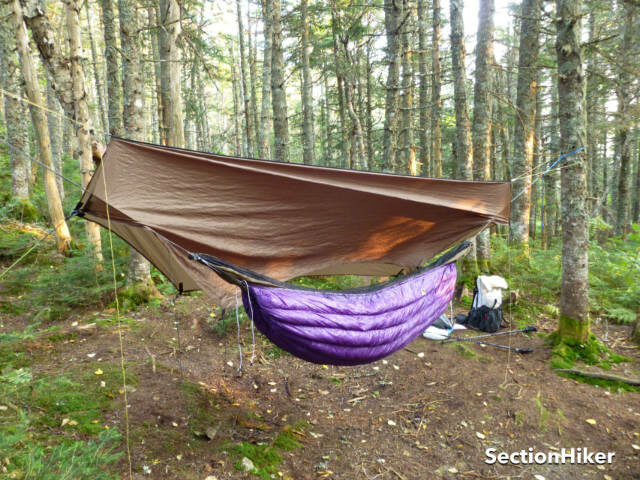 You can still use a hammock if the ground below is uneven.
Hammocks come in a wide range of shapes, lengths, and weights, ranging from tricked-out backpacking hammocks like a Hammock Gear Wanderlust or a Dutchware Compele Netted Hammock Package. The biggest advantage of using a hammock is that you can make camp wherever there are trees to hang your hammock from, which is just about everywhere on the Appalachian Trail (as long as regulations permit). That's a huge advantage, since there are many places on the AT where it's hard to find a decent place to camp: where there's no level ground, where campsites fill with water in the rain, or where crowded conditions require a stealth site.
Advantages on the Appalachian Trail
- Great for camping in forests, especially when good ground-level campsites are scarce
- Bug-proof and slither-proof, provided you add a bug net if your hammock doesn't come with one
- Never have to worry about rain flooding your shelter floor
- Provides coverage for your gear at night and a place to cook out of the rain
- Easy to pack and set up when used with snakeskins
- Great stealth camping option
Disadvantages on the Appalachian Trail
- Requires extra bottom insulation and wind protection layers under 60-70 degrees, which can be expensive if you want the best.
Flat Tarps
 Hyperlite Mountain Gear Flat Tarp set up in a flying diamond pitch
Flat square or rectangular tarps have square, 90-degree corners and are kind of old school now. They're worth mentioning, however, because they're inexpensive, lightweight, and highly adaptable since they can be set up in many different shapes and orientations. They also fit very well into narrow spaces between trees and can incorporate landscape features like fallen trees and large boulders.
Pitching them is a bit of an art form and requires a lot of creativity, but can also be a lot of fun. Still, good campsite selection matters because flat tarps don't have floors and need an inner bug bivy or bivy sacks for better bug and wind protection. Popular flat tarps include the Hyperlite Mountain Gear Flat Tarp and the Hammock Gear Trek Tarp.
Advantages on the AT
- Very lightweight and compact
- Low cost
- The most basic A-frame pitch is easy to master
- Can be pitched using trekking poles or tied to trees/shrubs
- Does not require a flat surface to pitch
- Can be configured in an infinite number of ways, including ones that incorporate landscape features such as fallen logs or boulders
- Can fit into narrow spaces between trees, unusable by other shelters
Disadvantages on the AT
- Does not provide as much cold, damp, or wind protection as a shelter with a floor that is fully enclosed on all sides
- Requires some form of bug protection such as a bug net or bug bivy
- Takes considerably more skill and practice to master setting up
- Requires that you carry more stakes and guy lines because you never know what “shape” you'll pitch in advance
Mids and Shaped Tarps
 Shaped Pyramid Tarp, the Mountain Laurel Designs Duomid on the Connecticut Appalachian Trail
Mids (short for pyramid) and shaped tarps differ from flat tarps in that they can only be pitched one way, as dictated by their shape. They're essentially floorless, single-wall tents without an inner tent, although most people on the AT use some kind of inner shelter for rain and bug protection. These inner shelters are like the inner tents in double-walled tents. Alternatively, you can use an ultralight bivy bag with a mesh face cover, often with a UL footprint. However, when you factor in the need for an inner tent, it almost makes more sense to buy an all-in-one single-walled shelter or tarp tent since they're the less expensive option.
Shaped tarps include pyramids, double-apex tarps, A-frames with front vestibules, catenary cut tarps, and so on. Popular models include the Hyperlite Mountain Gear Ultamid 2, the Mountain Lauren Designs Duomid, and the Zpacks Hexamid Pocket Tarp with Doors.
Advantages for the AT
- Lightweight and easily packable
- Bug- and slither-proof when used with an inner tent or bivy sack
- Walls can be raised for better ventilation or pitched flush with the ground to protect against rain
- Many set up with trekking poles, which helps eliminate some weight
Disadvantages on the AT
- Requires good campsites with level ground and adequate space to set up
- Difficult to pitch on wooden platforms at designated campsites
No Tent or Shelter: Just Use Appalachian Trail Lean-tos
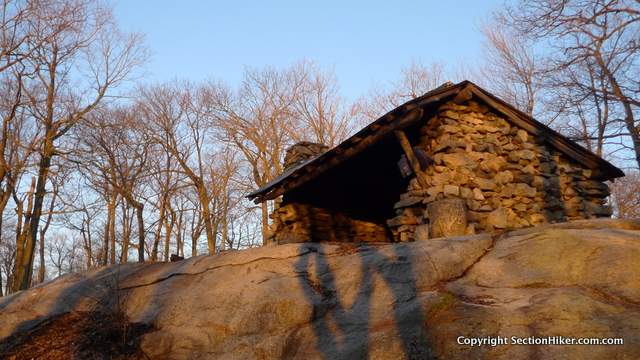 Possibly the worst lean-to on the AT – the Fingerboard Shelter in New York's Harriman State Park has two fireplaces inside and is filled with soot and debris from people who squat in it in winter.
One option is to hike the Appalachian Trail, or a section of it, and not take a shelter at all, intending to use only the designated lean-tos, which are spaced at 10-15 mile intervals. I'd advise against doing this because having a tent or shelter with you is an important piece of safety gear, if you have an accident and can't go on, weather conditions pin you down, you can't make it to a shelter each night, a shelter is already full when you arrive (first come, first serve) the shelter has resident Copperheads, Rattlers, or a wasp's nest inside, you don't want to share a shelter with the people already there, or it's so disgusting and decrepit that you'd never want to sleep in it.
Bring a lightweight tent or shelter, even if you only use it infrequently. You'll be glad you did.
Tents and Shelters for Winter Conditions
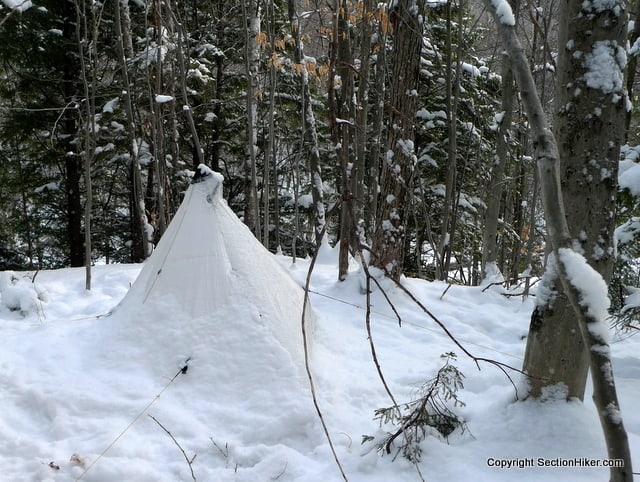 Mountain Laurel Designs Duomid in Snow – Crawford Notch, White Mountains near the AT
Hikers, especially thru-hikers, are increasingly taking to the Appalachian Trail in March to avoid trail crowding, even though winter conditions still prevail down south. Winter adds an entirely different dimension to shelter selection on the AT since it's nearly impossible to pound tent stakes into the frozen ground if your shelter requires them. Instead, pitching a non-freestanding tent on snow requires deadmen (stakes frozen in place), which takes longer to set up because they need to freeze while you wait, and 12-14 hour-long nights make shelter comfort and livability a higher priority.
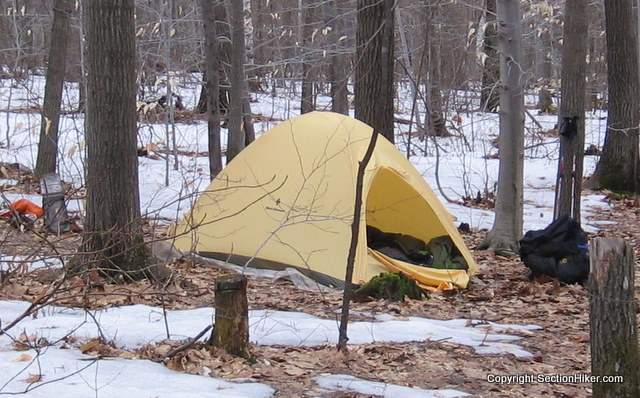 Freestanding on the Massachusetts Appalachian Trail
Unfortunately, none of the shelter types mentioned above is ideal for these conditions unless you can find a good free-standing single-wall or double-wall tent. Free-standing, lightweight tents are relatively rare but are great in cold weather because your body weight and your gear are enough to keep them from blowing away without staking in the relatively protected campsites you find on the AT. The Big Agnes Copper Spur UL 1 or 2 are good freestanding double-wall tents that balance comfort, ease of use, and lightweight.
If you were thinking about hiking the AT in March (or earlier) and using the lean-tos since they won't be full, I'd urge you to reconsider. Sleeping in a shelter with one open wall in freezing and windy weather where it's so cold that you need to spend every second of a 14-hour night in your sleeping bag is the pits. There's really no comparison between that and sleeping in a comfortable, windproof freestanding tent, even if it weighs a bit more to carry.
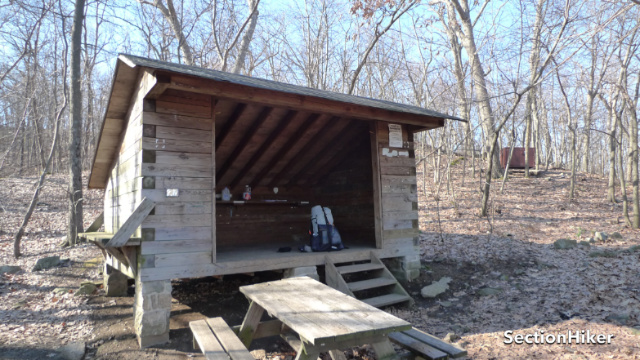 While the shelters are emptier in early spring, the nights can be quite cold.
Wrap Up
I've covered a lot of different tent and shelter options above, but how do you decide which one to bring? I think the most important factors depend on the weather you plan to hike in and your personal comfort needs.
- Hammock: After nighttime temperatures consistently rise above 40 degrees, I believe a hammock is the best option, as long as you augment it with bottom insulation like an underquilt. You need different amounts of insulation as temperatures rise, but the ease of finding campsites and the ability to set up a dry shelter in the rain are the chief selling points of hammock-based shelter systems. Many AT tenting areas are horrible – a hammock lets you rise above it all.
- Double Wall Tent: If you don't like sleeping in a hammock and you're willing to carry a few more ounces, I recommend a double-wall tent, especially one where you can pitch the rain fly before the inner tent so it stays dry in the rain. While single-wall tents are lighter, you'll be in such great shape after hiking the AT for a few weeks that you won't notice a few more ounces.
- Freestanding Tent: Freestanding tents are particularly useful in New England when you start to encounter wooden tent platforms, or in colder conditions when the ground is frozen, and you can't drive stakes into it
SectionHiker never accepts payment for gear reviews or editorial coverage. When you buy through affiliate links on our site, we may earn a small commission at no extra cost to you. Help us continue to test and write unsponsored and independent gear reviews, hiking and backpacking FAQs, and free hiking guides.











 English (US) ·
  French (CA) ·