

 6 days ago
5
6 days ago
5
PROTECT YOUR DNA WITH QUANTUM TECHNOLOGY
Orgo-Life the new way to the future Advertising by Adpathway Patrick Gorski-Imagn Images
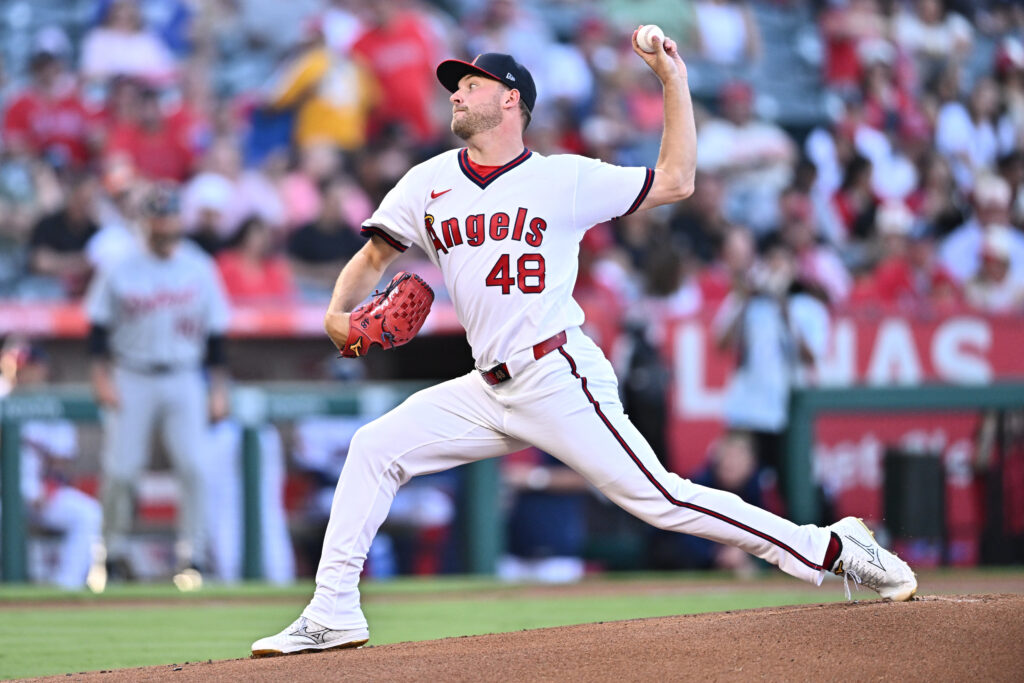
Gage Jump is no. 73 on The Board and no. 2 on our Athletics prospect rankings. Moreover, he is now a big leaguer. Called up from Triple-A Las Vegas in late May, the 23-year-old southpaw has since made nine starts and logged a 3.51 ERA, a 3.31 FIP, and a 23.5% strikeout rate over 48 2/3 innings. Selected in the second round of the 2024 draft out of LSU, he debuted professionally last season and played at both High-A Lansing and Double-A Midland.
His pitching knowledge stands out nearly as much as his plus raw stuff and what our lead prospect analyst Eric Longenhagen described back in April as a “super short arm action.” Jump is studious about his craft, and he has been since his days as a San Juan Capistrano prep player. Prior to joining the collegiate ranks, he was rated as the top left-handed pitcher in the state of California.
Jump discussed his data-influenced approach to pitching when the A’s played in Detroit this past week.
———
David Laurila: What have you learned about pitching — specifically about yourself as a pitcher — since coming to pro ball?
Gage Jump: “Interesting. That’s a tough question. I would say that I was very fortunate to go to a good private school, and that when I was young I was introduced to things like Plyo balls and Rapsodo. Our head coach at JSierra [Catholic High School] brought out Kyle Boddy [from Driveline]. I wasn’t a big kid and wasn’t throwing very hard, so I wanted to understand what everything meant and how to get the ball to move a certain way. Of course, just because I know certain things doesn’t mean I’m able to make them happen, which is why I think pitching is so much fun. You’re always trying to develop and get better, and while you could know the answers, it’s still super hard to put your hand in a certain position, know where your body is at, and get [the results] you want.
You Aren't a FanGraphs Member
It looks like you aren't yet a FanGraphs Member (or aren't logged in). We aren't mad, just disappointed.
We get it. You want to read this article. But before we let you get back to it, we'd like to point out a few of the good reasons why you should become a Member.
1. Ad Free viewing! We won't bug you with this ad, or any other.
2. Unlimited articles! Non-Members only get to read 10 free articles a month. Members never get cut off.
3. Dark mode and Classic mode!
4. Custom player page dashboards! Choose the player cards you want, in the order you want them.
5. One-click data exports! Export our projections and leaderboards for your personal projects.
6. Remove the photos on the home page! (Honestly, this doesn't sound so great to us, but some people wanted it, and we like to give our Members what they want.)
7. Even more Steamer projections! We have handedness, percentile, and context neutral projections available for Members only.
8. Get FanGraphs Walk-Off, a customized year end review! Find out exactly how you used FanGraphs this year, and how that compares to other Members. Don't be a victim of FOMO.
9. A weekly mailbag column, exclusively for Members.
10. Help support FanGraphs and our entire staff! Our Members provide us with critical resources to improve the site and deliver new features!
We hope you'll consider a Membership today, for yourself or as a gift! And we realize this has been an awfully long sales pitch, so we've also removed all the other ads in this article. We didn't want to overdo it.
“So, the biggest thing for me has been knowing when to think about that stuff and when not to. In bullpens throughout the week, if I need to work on something, now I know what to do. But more so, it’s the old-school mentality of when my stuff isn’t where it needs to be in a game, I still have to execute and dominate. That’s the mindset I’ve tried to step into: Understanding what the numbers mean, what the metrics are, but at the end of the day I have a job to do, even if everything isn’t where it needs to be.”
Laurila: Has there been anything in regard to how your stuff plays that you maybe didn’t fully understand?
Jump: “I always had a good fastball growing up, and didn’t know why. I knew that I was a shorter guy and maybe the height difference had something to do with it, but understanding approach angles and the way the ball is coming at the hitter… I want to say that’s the biggest thing I’ve learned. That, and knowing where to throw the ball, how it affects my breaking balls and my changeup. So, the angle from where I pitch and the launch characteristics. Watching guys who are similar to me has also been really important. That’s something I love to do.”
Laurila: Has the knowledge influenced how you attack hitters?
Jump: “I don’t know if anything has changed because of it. I’m still the same guy. I’m still trying to pitch the same way, it’s just that I have a better understanding of why some of my pitches work a little better than others, and why it’s kind of funky. I throw pretty funky, I would say. Which I love. I don’t want to be a stock pitcher. I want to look different and be different.”
Laurila: Can you elaborate on how that works to your advantage?
Jump: “The way the angle of the ball is coming toward home plate, because I’m shorter [6-foot] and have a fairly shorter release… think of guys like Kyle Harrison or Freddy Peralta. The way they deliver the ball is pretty unique compared to regular over-the-top guys. I want to be as far away from average as possible without actually changing how I’m throwing to get away from average.
“I’ve always thrown like this. I don’t think it’s even that crazy. I mean, you look at [A’s prospect] Jamie Arnold for example. He’s very different from average. The way he’s throwing the ball, his arm angle is like Chris Sale’s. It’s very low. His fastball is really good, and even though it doesn’t sink a lot, it’s a different view for a hitter.”
Laurila: Which of your secondary pitches is most influenced by your slot?
Jump: “It’s a mixture. The numbers could say one thing and the results another. One thing I’ve worked on is judging the response of the hitter to a pitch. Let’s say the fastball and curveball pair well because they’re vertical pitches on the same plane, but the slider is getting more swing and miss. If the hitters are looking worse on that pitch, then I’ll throw that pitch more. That’s kind of how I view things. I think the numbers are great, but at end of the day, during an outing, the hitters could have a totally different approach. I have to be able to adapt to that mid-game.”
Laurila: I began by asking what you’ve learned since coming to pro ball. What about since you made your major league debut earlier this season? The big leagues are obviously different than the minors.
Jump: “They are different. All through the minors, you’re always trying to get to the next level. I started in High-A and it was ‘OK, I want to get to Double-A.’ Then it was, ‘OK, I want to get to Triple-A.’ Same thing for getting to the big leagues. Now that I’m here, there is no more of ‘What’s next?’ There is no higher level. These are the best hitters in the world, so I’ve learned a ton.
“Reading swings has been a big thing. There is also more data involved, in part because the hitters have been here. I know what I need to do, because there is a better game plan from start to start. And if I’m not executing, I’m going to get hit. So, it’s a big learning curve. At the same time, it’s still the same game. I mean, I love competing against the best players. I’ve always wanted to be here.”



![[Highlight] Jo Adell walks off the Cardinals with a HBP](https://external-preview.redd.it/ZGdjeWVqNndpaWVoMXJhRJwO6-cbHGeoicAvt5E7tgqvt_VJBrbdZjGU6W4r.png?width=640&crop=smart&auto=webp&s=e25d6fff99dca4532a92911f57c00f43a7188a9c)











 English (US) ·
  French (CA) ·