

 1 month ago
11
1 month ago
11
PROTECT YOUR DNA WITH QUANTUM TECHNOLOGY
Orgo-Life the new way to the future Advertising by AdpathwayI’ve recently started testing carbon rims on my touring bike. Incredibly, they’re over 40% lighter than my previous aluminium rims, despite still being designed for expedition bike travel.
To find out if they’re strong enough for touring, I’ll be taking my Idworx carbon rims on a 30,000 km journey from the top of Norway all the way down to South Africa. But I didn’t want to wait the full two years for my answer, so I went on a mission to find out if any lab tests could tell me whether carbon rims are stronger than aluminium rims.
I ended up finding a whole lot of strength data published by Hunt Bike Wheels in the UK. Hunt has developed its own laboratory testing to evaluate its wheels and compare its latest designs with competitor wheelsets. So far, they’ve published impact-test data covering 25 carbon rims and 36 aluminium rims, which we’ll be analysing today.
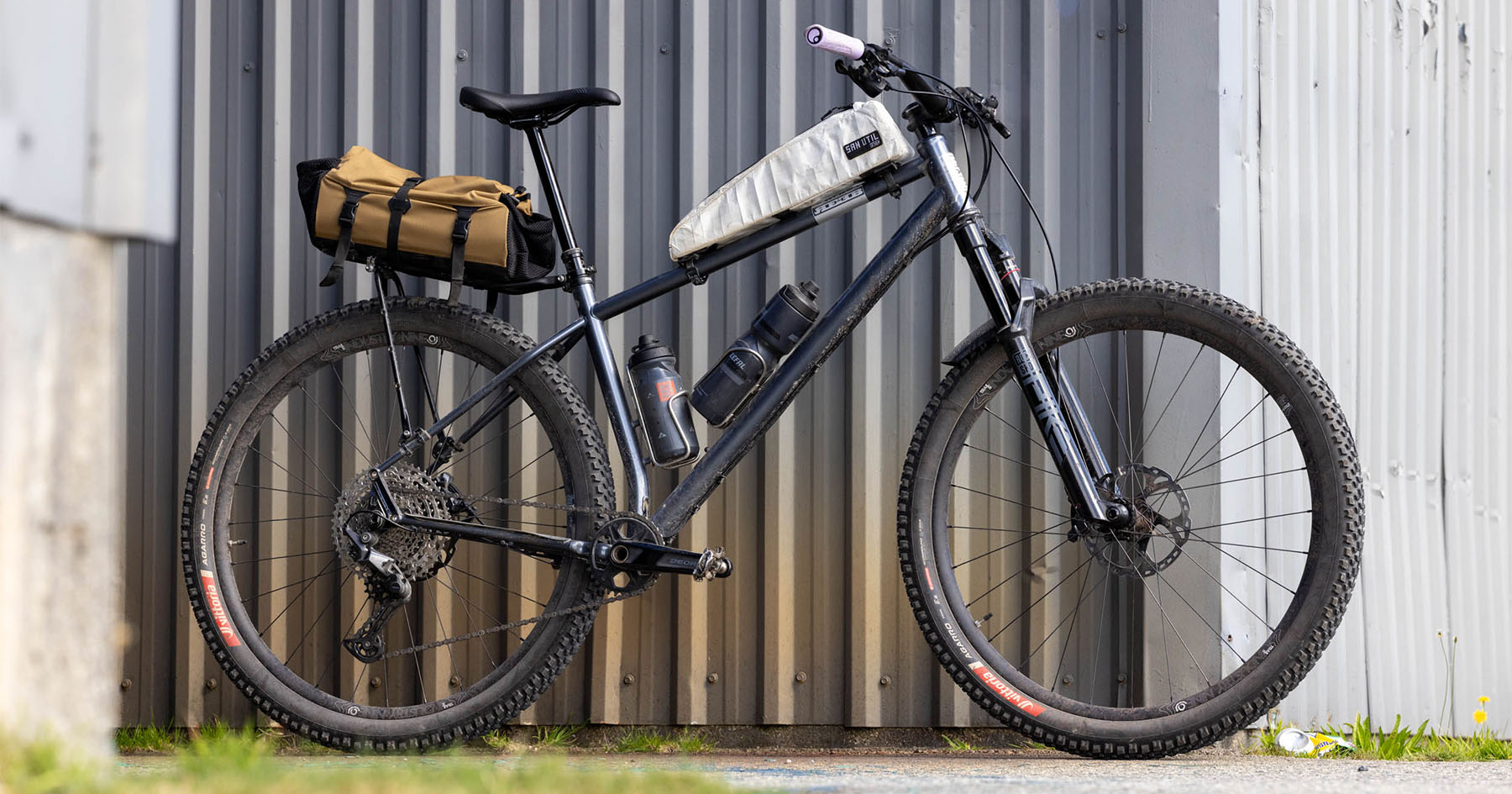
 My Idworx touring bike decked out with carbon wheels.
Hunt is unusually transparent about its rim impact testing, publishing the complete results for its competitors as well as its own wheels. And sometimes, the data doesn’t show Hunt’s wheels at the top of the graph, which I find quite refreshing.
But what was most interesting to me in the Hunt data was that carbon rims were very often capable of withstanding significantly more impact energy than their aluminium counterparts.
Let’s take a closer look.
Carbon vs Aluminium Rims
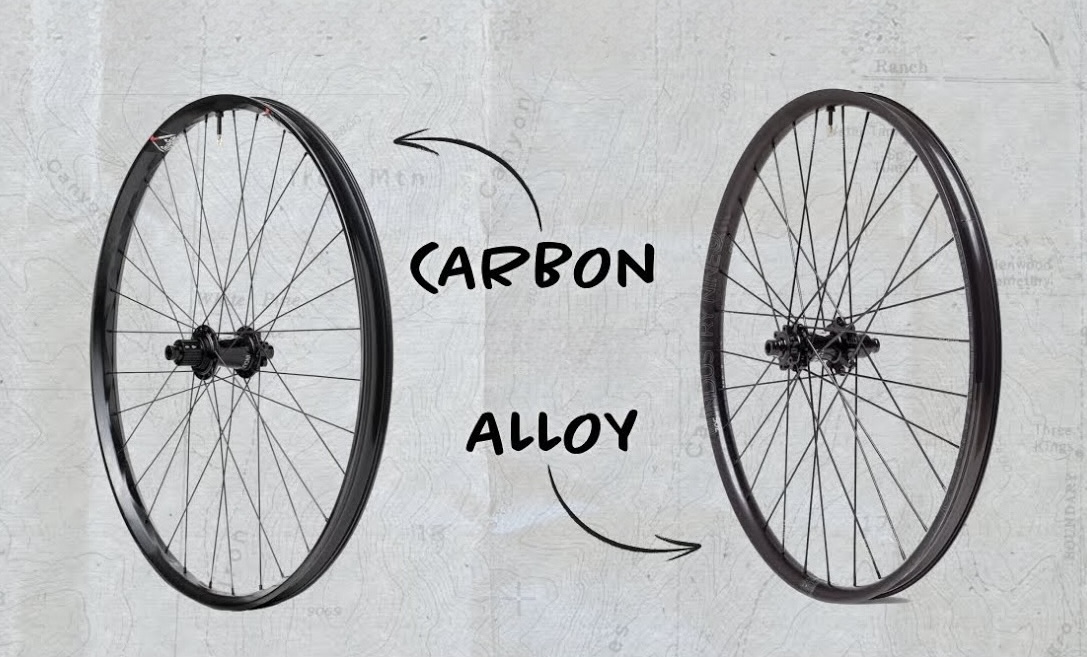
Before we get into the test results, it’s worth understanding a little about the materials themselves.
When it comes to high-energy impacts, aluminium rims have an advantage in the way they tend to fail. Rather than suddenly breaking, aluminium will typically bend and deform, leaving a visible dent in the rim. The benefit is that this damage is usually easy to identify, and the wheel can often remain structurally intact and rideable even after a significant impact.
However, even relatively small dents can compromise an aluminium rim’s ability to maintain a tubeless seal, while enough dents can eventually make the wheel unsafe to ride.
Carbon fibre behaves differently. Once the limits of the composite are exceeded, cracks can develop and spread quickly, rather than the rim simply denting like aluminium. This can result in a much more sudden loss of strength. But manufacturers account for this by building plenty of strength and safety margin into the rim.
Where carbon really starts to have an advantage is in terms of weight. Aluminium alloys generally have poorer fatigue resistance than carbon-fibre composites, so engineers often need to use more material to achieve the required lifespan. This is one reason why aluminium rims tend to be heavier than carbon rims.
The primary downside to carbon-fibre rims is cost. They can cost four to five times as much as comparable aluminium rims, largely because they are more complex and time-consuming to manufacture. The manufacturing process also requires stringent quality control to ensure the carbon layup is consistent and free from imperfections.
Ok, let’s get into the test data.
The Impact Test
 The Hunt anvil has destroyed dozens of mountain bike wheels.
Hunt’s impact test involves dropping a 25 kg anvil onto a complete wheel from progressively increasing heights. After each impact, the wheel is inspected for signs of damage. If no damage is found, the impact area is marked, and the wheel is rotated before the next test. The drop height is then increased until the rim reaches its failure point.
For carbon mountain bike wheels, Hunt stops the test at the first sign of damage. Cracks will almost always propagate downward from the rim hook because this is where the peak forces occur, making major damage relatively easy to identify.
For aluminium mountain bike wheels, the test continues until the rim develops a significant dent at the flange and/or two spokes become loose. Loose spokes indicate either spoke pull-through or a significant flat spot in the rim.
Hunt tests the wheels with the anvil positioned 15 degrees from vertical. This concentrates most of the impact force on a single rim bead rather than distributing it across both beads, which Hunt says better replicates the real-world impacts experienced by mountain bike wheels.
Importantly, Hunt tests complete wheels, rather than bare rims. This means spoke tension, spoke angles, and hub geometry are all part of the test. Tyres are also fitted to the wheel and inflated to 28 psi (1.9 bars). Hunt uses an inner tube rather than a tubeless setup because it makes the testing cleaner and quicker.
Impact energy is measured in joules (J) and is calculated from the mass of the anvil, gravitational acceleration and the height from which it is dropped: Energy (J) = mass (kg) × 9.81 m/s² × height (m).
For reference, Hunt estimates that riding head-on into a kerb is around 40 J, so they consider 100 J the minimum acceptable impact energy for a mountain bike rim. A 160 J impact is enormous and unlikely to be encountered by most wheels during normal riding.
I should also put these numbers into perspective. Mountain bikes have suspension, while the frame and fork also flex and deflect under impact. And in the real world, we rarely hit obstacles perfectly square-on; impacts are usually angled, which reduces the peak forces experienced by the wheel.
ASTM Standards For Wheels
Before we jump into the results, we need to understand that the intended use of MTB rims is classified into different categories, based on factors such as speed, terrain and the size of jumps or drops the bike is designed to handle.
ASTM International has developed a classification system for bicycle use, which provides standardised definitions of the types of riding that bicycles and components are designed for. The aim is to give manufacturers, retailers and consumers a consistent way of identifying the intended use of a bicycle or component.
There are two categories relevant to the rims in this test:
For cross-country (XC) and light trail riding, the rating is ASTM Category 3. These rims are designed for riding on rough surfaces, including XC trails, with maximum jump or drop heights of up to 61 cm (24 inches).
For enduro and all-mountain riding, the rating is ASTM Category 4. These rims are designed for very rough and challenging terrain, aggressive singletrack and technical descents. The category allows speeds of up to 40 km/h (25 mph) and jumps or drops of up to 122 cm (48 inches).
Impact Test Results
Aluminium vs Carbon Rim Strength
| Aluminium Rims (ASTM 4) | 559 grams | 146 J | Baseline |
| Carbon Rims (ASTM 4) | 530 grams | 180 J | 23% More Energy |
| Aluminium Rims (ASTM 3) | 460 grams | 116 J | Baseline |
| Carbon Rims (ASTM 3) | 349 grams | 116 J | Same Energy |
The data shows that, on average, ASTM 4 carbon wheels withstood significantly more impact energy than their aluminium counterparts in an impact test.
The carbon rims failed at around 23% higher energy, despite having an average rim weight approximately 5% lower. This demonstrates that carbon wheels designed for all-mountain and enduro riding are clearly capable of handling some seriously heavy impacts.
Interestingly, the ASTM 3 carbon wheels (cross-country use) required roughly the same amount of impact energy to cause damage as the aluminium wheels. This suggests that, at least in this sample, manufacturers may be prioritising weight savings over outright impact strength. It seems wheel brands are essentially matching the strength of their aluminium wheels while removing more than 100 grams per rim.
The Strongest Carbon vs Aluminium Rims
| Roval Traverse Aluminium (ASTM 4) | 180 J | Baseline |
| Hunt Proven H Core Carbon (ASTM 4) | 220 J | 22% More Energy |
When we pick out the two strongest wheels from the dataset of 61, the difference is also interesting.
The carbon rim outperforms the aluminium rim, continuing the test all the way to 220 J before finally failing. That represents more than 22% higher impact energy than the strongest aluminium rim.
Matching the Rim Weights
| Reserve 30 HD Alloy (ASTM 4) | 580 grams | 160 J | Baseline |
| Hunt Proven H Core Carbon (ASTM 4) | 574 grams | 220 J | 38% More Energy |
| Industry Nine EN300 (ASTM 4) | 520 grams | 140 J | Baseline |
| Reserve 30 HD Carbon (ASTM 4) | 517 grams | 200 J | 43% More Energy |
| Hunt Race XC Wide Aluminium (ASTM 3) | 475 grams | 130 J | Baseline |
| Enve M6 Carbon (ASTM 4) | 449 grams | 180 J | 39% More Energy |
When we match carbon and aluminium rims by weight, the difference in impact resistance becomes even more apparent.
Within similar rim-weight ranges, the carbon rims were able to withstand around 40% more impact energy in the test. That’s a pretty substantial difference.
This highlights an important point: you shouldn’t expect an aluminium rim to be as strong as a carbon rim at the same weight. If impact strength is the priority, you’ll need to use a significantly heavier aluminium rim to get results in the same ballpark.
Are Carbon Rims Stronger Than Aluminium?
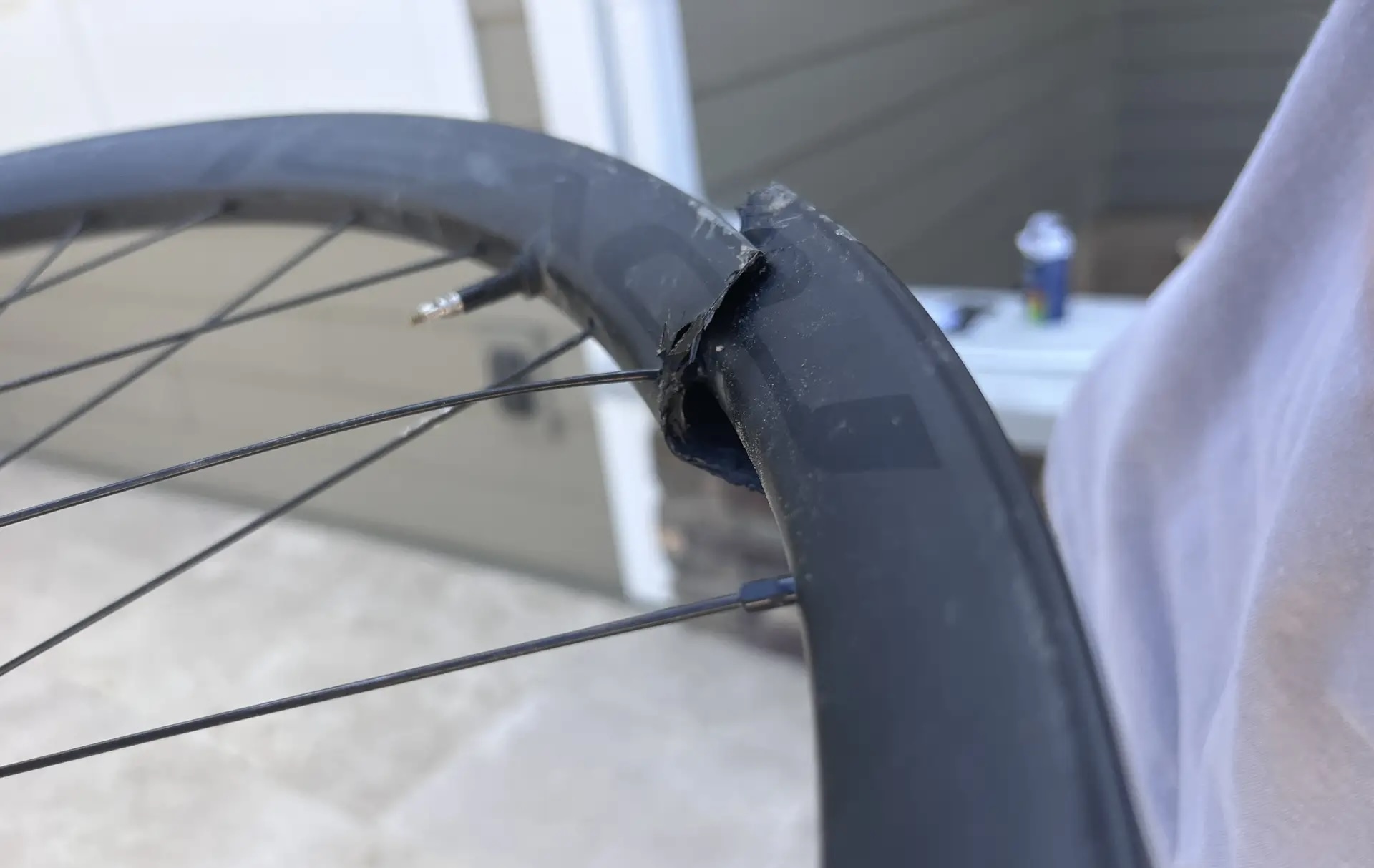 This poor Roval carbon rim saw a bigger impact than it was designed to withstand.
When we look at the data, aluminium rims typically fail between 120 and 160 J. Only one aluminium rim in the dataset has reached 180 J. In comparison, carbon rims have a considerably higher average failure energy, with ASTM 4 carbon rims averaging around 180 J.
And if we compare the very strongest aluminium rim at 180 J with the strongest carbon rim at 220 J, the carbon rim withstands 22% more impact energy before failure.
But there’s a little more to the story than a simple maximum-energy impact test.
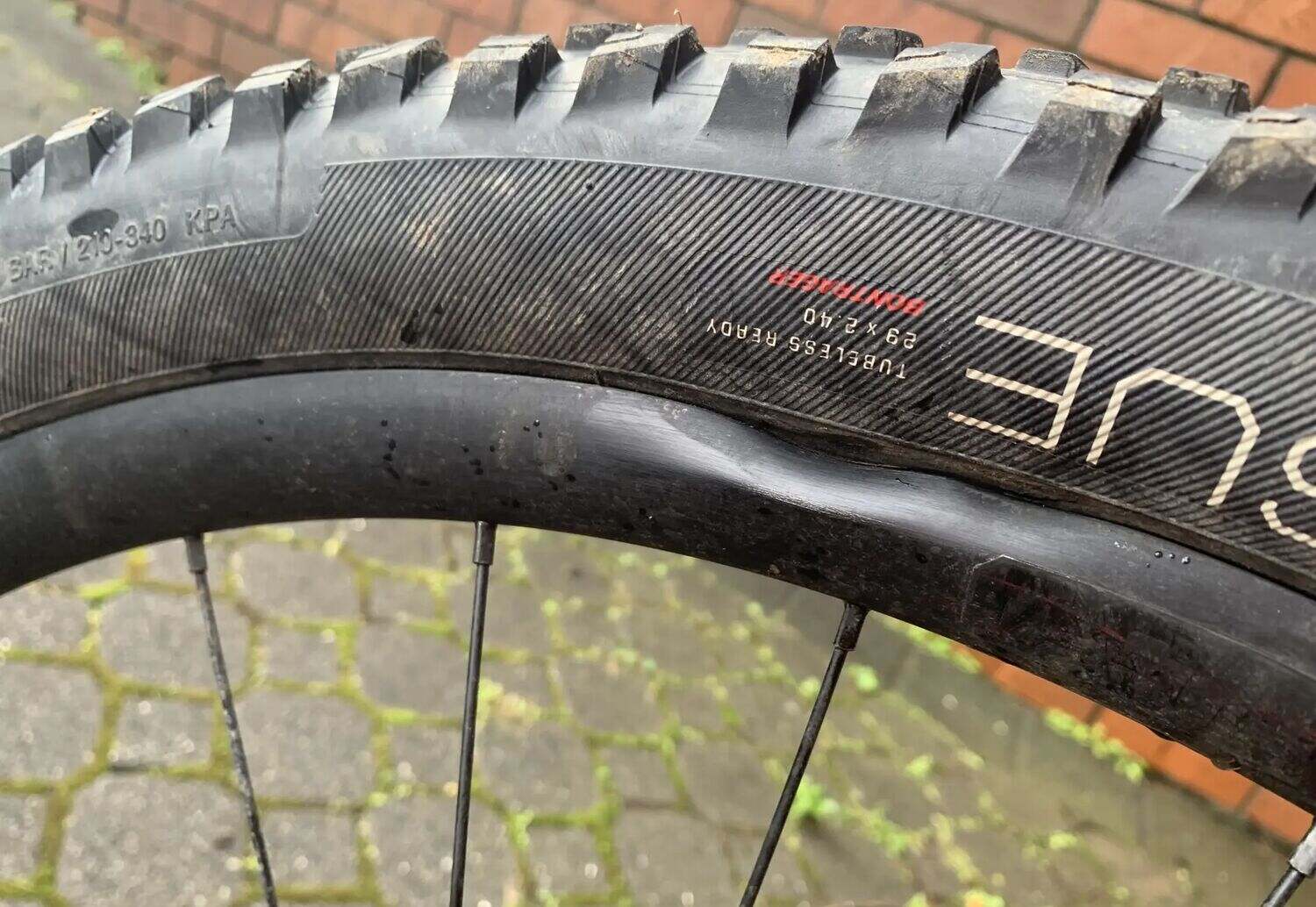 Aluminium rims will show their damage quite clearly.
Aluminium rims typically start showing damage at around 80 to 120 J. This usually appears as dents in the rim flange, and these dents are permanent, so each impact can accumulate damage. Five or six impacts at 120 J in different locations around the rim can eventually leave the wheel unrideable.
A carbon rim, by comparison, will typically tolerate dozens of 120 J impacts without visible damage. In addition, your tubeless tyres will continue to seal under really big impacts.
That doesn’t mean a carbon rim is completely unaffected by big impacts. There could be damage within the carbon composite that isn’t visible from the outside and could potentially weaken the rim over time. Determining whether this has occurred would require cutting the rim apart and inspecting the structure.
This is one reason carbon rim manufacturers aim to push their wheels to the highest possible failure energy on the test rig. The more impact energy a rim can withstand before sustaining structural damage, the greater the confidence that it has a useful safety margin for repeated impacts in the real world.
Rolling Drum Fatigue Test

Another test that’s conducted to understand carbon and aluminium rim strength is to put the wheel through a rolling road fatigue test.
As the wheel rotates on the steel drum, it is subjected to continuous, repeated impacts that simulate the loads experienced during real-world riding. The wheel is loaded according to its maximum permissible system weight and run against a large rotating drum fitted with a series of bumps.
For mountain bike wheels, these bumps are 22 mm high, while the tyre and pressure are selected according to the intended use of the wheel. The test is run over an extended distance to simulate the accumulated fatigue a wheel experiences over its service life.
Hunt’s carbon and aluminium wheels pass this test. Unfortunately, we don’t have any data showing whether wheels from other manufacturers would also pass when tested according to Hunt’s protocols.
Summary
Ultimately, the carbon rims in this test of 61 different wheels proved to be stronger than their aluminium counterparts. Carbon rims can still crack when pushed beyond their limits, but the strongest examples withstood impact energies far beyond what most wheels are likely to experience in real-world riding.
In the ASTM 4 category, which covers enduro and all-mountain riding, carbon rims failed at an average impact energy 23% higher than aluminium rims, while also being around 5% lighter.
The picture was quite different in the ASTM 3 category, which covers cross-country riding. Here, carbon and aluminium rims failed at roughly the same impact energy, but the carbon rims achieved this at around 25% less weight.
Aluminium rims generally aren’t as strong as carbon in either fatigue or impact resistance. Their advantage is in how they fail: when subjected to a major impact, they tend to dent and deform rather than crack, making the damage easier to identify and often leaving the wheel rideable. And, of course, aluminium rims are considerably easier on the wallet.












 English (US) ·
  French (CA) ·