

PROTECT YOUR DNA WITH QUANTUM TECHNOLOGY
Orgo-Life the new way to the future Advertising by AdpathwayKawasaki's KX450SR, or Special Racer, has been one of the more interesting premium production models since its introduction. While some manufacturers focus heavily on appearance and factory-inspired graphics with their special editions, Kawasaki has consistently emphasized actual performance upgrades. With changes to the engine, suspension, and chassis components, the KX450SR is intended to deliver a more race-ready package straight off the showroom floor. After spending several months and over 30 hours aboard the 2026 KX450SR, I've had plenty of time to get familiar with what this bike does well, where it could use some improvement, and whether the additional money is worth it. More importantly, I've learned what it's like to live with this bike beyond the excitement of the first few rides. Is the Special Racer really that special? Let's dive into it.
First Impressions
I've always been a fan of Kawasakis. Anyone who's spent some time on Vital probably knows this, and the KX450SR takes a bike I already love and makes it even better. The bronze X-Trig triple clamps, Kashima-coated suspension, Pro Circuit titanium exhaust, Hinson clutch cover, gold DID chain, and Special Racer graphics all come together to make this thing look pretty badass. It has that factory-inspired appearance without being too flashy, and it's easily one of the better-looking premium production bikes in the pits. It's actually one of the main reasons I struggled to do much to this bike while I had it. I just kept showing up to the track, rolling it out of my truck, and getting excited to ride before I'd even spun a lap.

Beyond the appearance, what continued to impress me throughout testing was how complete the overall package felt. Sometimes you jump on a special-edition bike and notice one or two improvements, but the rest of the machine still feels relatively unchanged. The SR has a more aggressive and performance-oriented character throughout the entire bike, from the engine to the suspension. That was obvious early on, but what I appreciated more was how that feeling continued after the initial excitement wore off.
The Kawasaki ergonomics continue to be some of my favorites. The bike feels slim, but not too slim, between your legs, the seat-to-tank transition is smooth, and the overall rider triangle makes it easy to move around. I also appreciate the adjustability Kawasaki offers with its handlebar and footpeg positions. It's a comfortable cockpit that doesn't take much time to get used to, and even after spending hours on the bike, I never found myself wanting to make any major ergonomic changes.
After several months aboard the SR, the biggest thing that stood out was how well the different components worked together. The stronger engine, improved suspension hold-up, and predictable chassis made this bike more exciting without sacrificing the comfort and stability that I've always appreciated about the KX450 platform. It's one of those bikes that doesn't necessarily need much attention between rides to keep you happy, and that's a pretty big compliment coming from someone who spends so much time testing and changing settings.
Engine
This is where the KX450SR really shines, and honestly, it's probably my favorite part of the entire bike. Kawasaki has always had a relatively smooth and controllable engine character with this generation of KX450, but the SR adds a level of excitement that makes the bike much more enjoyable to ride. Even after months aboard this machine, the engine continued to be one of the biggest reasons I looked forward to riding it. The engine receives polished intake ports, specialized ECU settings, and a full Pro Circuit Ti-6 titanium exhaust system. While those changes might not sound massive on paper, the difference in overall power delivery is impressive.
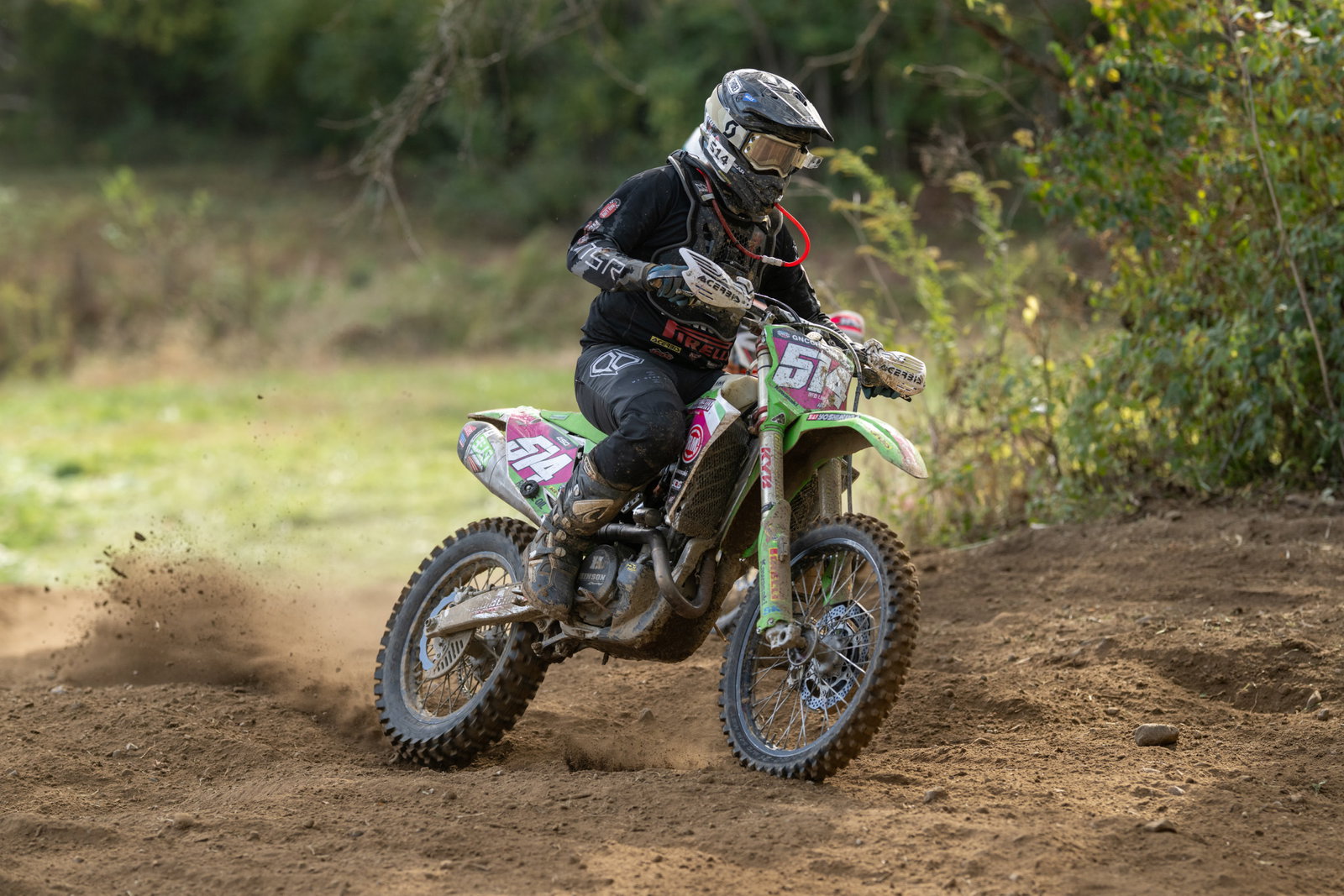
 Steven Tokarski on the KX450SR at Glen Helen.
Low-end power and throttle response are significantly improved, giving the bike a much stronger connection between your right hand and the rear wheel. When you crack the throttle, the engine responds immediately, and there's a noticeable increase in torque that makes it easier to pull a taller gear through corners. I really like having that strong connection feeling because it allows me to control the bike with the throttle rather than constantly relying on the clutch. The midrange is also much stronger, and the engine continues pulling well into the top end. The over-rev is longer and smoother, allowing you to hold gears longer without feeling like the power is falling off. This makes the SR easier to ride aggressively because you're not constantly searching for another gear. There's also slightly less vibration, which adds to the overall comfort when you're pushing the engine hard.
One thing that surprised me throughout my few months with the bike is just how aggressive the initial throttle response could be. As much as I've complained about the overall weakness in low-end performance in this generation of KX, I actually found myself wanting a little less power right at the first crack of the throttle. I know, I've spent way too much time complaining the standard one needs more, but it's interesting the difference between low-end grunt/torque feel and actual throttle response. The issue wasn't necessarily the amount of power but how quickly it came on. There were a few situations where the front end wanted to lift more than I preferred, forcing me to back out of the throttle slightly. With Kawasaki's mapping tool, Rideology, I was able to smooth out the hit just enough to really enjoy the overall power gains of the SR.

Another characteristic I really appreciate is the reduced engine-braking feeling. The SR has a freer-running character when entering corners, which makes the bike feel lighter and easier to manage. Combined with the stronger throttle response, it creates a machine that feels more responsive to rider inputs. This was something I continued to appreciate the longer I rode the bike, especially when transitioning from braking into the middle of a corner. Overall, I was pretty happy with this engine throughout my time with the SR. If I were going to nitpick, I would've liked to try an aftermarket ECU from Twisted Development or XPR Motorsports to continue searching for quicker-building power while maintaining the usability of the initial throttle response. There's still room to fine-tune, but even without going down that rabbit hole, it's a damn good engine package that kept me entertained for months.
Suspension
The suspension is another area where the SR package stands out. Yes, it's got the bling, the coatings, and it looks the part, but on the track, it also performs like a more race-oriented setup. I've always liked the comfort of the Kawasaki suspension package but haven't been the biggest fan of its high-load performance, especially with the fork. The SR's settings, however, provide more hold-up, better balance, and a stronger overall damping character. The fork still has excellent initial comfort and does a good job absorbing smaller bumps, but it doesn't move through the stroke quite as quickly as a softer setup. There's a more controlled feeling as you get into the mid-to-end stroke, which makes the front end calmer and more predictable when riding aggressively.
One of the biggest improvements I continued to appreciate was under hard braking and in higher-load situations. Big downhills, deeper conditions, and anywhere you can really load the front end are areas where this suspension package shines. The fork stays higher in the stroke and gives you the confidence to keep pushing instead of having to manage excessive movement from the front end. Over time, this became one of my favorite characteristics of the bike because it allowed me to be more aggressive without sacrificing the comfort I wanted.

After spending some time getting familiar with the suspension, I made a few adjustments to better suit my weight and speed. I ended up going slightly stiffer on both the fork and shock to gain a little more hold-up. Initially, I felt like the fork was sitting in the mid-stroke a bit too much and wasn't accepting certain bumps as smoothly as I wanted. Adding a little compression stiffness helped bring the fork higher in the stroke, and surprisingly, I actually gained comfort from that adjustment. The fork was working in a better part of its travel and felt more progressive through the bumps. It's one of those situations where going stiffer doesn't necessarily mean making the bike harsher, and the additional support actually improved the overall feeling.
The shock has a similarly controlled character, with good initial comfort and plenty of support as the loads increase. It doesn't squat excessively when accelerating out of corners, and the rear wheel maintains good traction through acceleration bumps. I also appreciate how predictable the shock feels when transitioning between smaller bumps and larger impacts. It doesn't have that loose or overly active character that can make a bike feel unsettled when you're pushing hard.

What impressed me most was how balanced the front and rear suspension felt once I made those small adjustments. The bike maintained a level ride attitude, and I could push hard through rough sections without feeling like one end was moving significantly more than the other. More importantly, I didn't find myself constantly chasing settings from one ride to the next. Once I found a comfortable baseline, I was happy to leave it alone and just ride. Overall, the Showa suspension package is one of the biggest reasons I enjoyed spending so much time on this bike. It has the comfort Kawasaki is known for but adds the hold-up and control needed to ride at a more aggressive pace. For my weight and speed, it's a damn good suspension package that required only a few clicker adjustments to get it where I wanted.
Chassis
I've praised the Kawasaki chassis for years because of its comfort, stability, and predictable handling characteristics. However, it can also feel a bit lazy and heavy in some ways. One of the most interesting things about the SR is how much lighter it feels in action when compared to the standard model. The stronger engine response makes the bike feel more lively when transitioning from corner to corner, while the reduced engine-braking feeling allows it to roll into turns more freely. It's funny how much engine character can influence your perception of a motorcycle's weight. When a bike has a smoother, slower-revving character, it can feel heavier than it actually is. Give that same chassis more immediate response and a freer-running engine, and suddenly it feels easier to move around. The SR is a great example of that.

Now the biggest standout chassis change with this model is the X-Trig triple clamps, which is something I'm actually on the fence with. Yes, I love the PHDS bar mounts, the look overall, etc. Performance-wise, though, I personally prefer a stock clamp on this bike, most notably the KX250 clamp from two years ago when they were still KYB. The bottom clamp is just a bit different on this version and my comfort/feeling for the ground is better with any version of Kawasaki's stock clamp. The X-Trig can feel more precise at times, but it also has an overall stiffer feel to the hands that I just never am quite happy with.
Another thing I really appreciate is how calm the bike remains when the track gets rough. Kawasaki has always done a good job building a chassis that absorbs impacts without transferring every little bump directly to the rider. The SR continues that trend, and the improved suspension control makes it even better when you're pushing harder. The additional suspension support also helps the chassis remain more level under braking and acceleration. Instead of constantly managing excessive pitching from front to rear, I can focus more on my lines and carrying momentum.
Overall, I like the SR's package in most situations, but a bit more hand-feel comfort would be appreciated. Lastly, brakes. I'm probably beating a dead horse here, but I don't care for the Brembo front brake on the KX450SR. Love it on the Austrian machines, Triumph, Ducati, etc...but on the KX450 models something just isn't right. Maybe it's the rotor blade itself, the pads, the brake line? I need to get to the bottom of this one day, because it just doesn't feel as strong as it should.
Pricing
Now, let's talk about the money because this is where the KX450SR gets interesting. The Special Racer carries a $3,100 premium over the standard KX450, which is a pretty significant amount of money. However, when you start adding up the individual components included on the SR, the value becomes much more apparent.

Between the Kashima and titanium suspension coatings, revised suspension settings, Pro Circuit titanium exhaust, X-Trig triple clamps, Hinson clutch cover, Renthal sprocket, DID chain, and engine modifications, you're looking at a bill that's significantly higher than the price difference if you were to purchase and install everything yourself. Some of these components are slightly different from their aftermarket counterparts to help Kawasaki keep production costs down, but the overall package still represents a substantial amount of equipment for the additional money.
For me, the biggest selling point isn't necessarily how much the individual parts cost. It's how well everything works together. You get a bike that already has a stronger engine, improved suspension, and a more complete race-oriented feel without having to spend additional time and money putting everything together. Sure, I still have a few things I'd change, but considering how many hours I put on this machine without feeling the need to start modifying everything, I'd say Kawasaki did a pretty damn good job putting this package together.
The Final Word
After spending over 30 hours with the Kawasaki KX450SR, I can confidently say it's been one of my favorite bikes straight off the showroom floor. The positives are obvious for me: it looks great, the fun factor is high, and it already has most of what I want on a bike without having to source a bunch of aftermarket parts later on. While I found myself continuing to ride the bike mostly as-is, does that mean it was perfect? No. There's still plenty I'd want to do if I owned this machine. The top three changes are pretty quick and easy for me: stock Kawasaki triple clamps, an aftermarket ECU, and some improvements to the front brake. Those are the areas where I feel there's still room to make an already great bike even better.

But here's the thing. Even with those changes in mind, I kept loading this bike into my truck, heading to the track, and riding it without worrying about what I needed to modify next. That's something I don't always do with test bikes, especially after spending so much time aboard them. The KX450SR just kept putting a smile on my face, and after several months, that might be the biggest compliment I can give it.










 English (US) ·
 French (CA) ·