

PROTECT YOUR DNA WITH QUANTUM TECHNOLOGY
Orgo-Life the new way to the future Advertising by AdpathwayBeta entered the big-bore motocross two-stroke world in 2021 with the 300 RX, which has seen a few updates since then. Now, for 2026, they’ve replaced that bike with the all-new 350 RX two-stroke. I mean, who doesn’t want a little more power, right? I was curious to find out whether this new machine is truly an improvement over the outgoing 300. We spent a few days testing the all-new 350 RX to see what the Italian company came up with.

First Impressions
Initial impressions are largely positive. The ergonomics feel neutral and familiar, with a cockpit that allows easy movement around the bike. The seat-to-peg relationship feels balanced, and the bike is slim through the midsection, making it easy to grip with your knees. Starting the bike still trips me out every single time. A button-start two-stroke just feels weird. Part of me loves it, and part of me still doesn’t. Rolling onto the track, there’s nothing intimidating about the engine response, and the bike immediately feels predictable, something that becomes even more noticeable as track conditions deteriorate.
After just a few laps, I was really impressed with how easy this bike was to ride and how manageable the RPMs felt. One small complaint I have, which is an easy fix, is the stock handlebar bend. The bars are wide and very straight. Once I adapted to them, it wasn’t a huge deal, but they definitely feel different compared to most bends on the market. Another issue is the side number plates. They’re very narrow and smooth, which makes it harder to squeeze the bike with your legs and easier to slide backward in certain situations. A few times, I got kicked slightly off-center on jump faces, and when I went to grip the side panels, I nearly slid right off the back of the bike.
Engine
The 350 RX’s engine character is best described as smooth, torquey, and extremely manageable. Off the bottom, the bike pulls cleanly with very little effort, allowing you to exit corners without excessive clutch use. That low-end torque makes it easy to lug the bike through corners and ride it similarly to a four-stroke. The midrange is where the engine does most of its work. Power builds in a very linear fashion, making it easy to stay in control while still carrying momentum. You can short-shift and lug it, or let it rev out without any sudden hit or surprise.

Compared to a traditional 300 two-stroke, one thing I immediately noticed was the improvement in high-RPM power and over-rev. The engine pulls longer and stronger up top, giving the 350 RX a broader, more linear feel overall. On top, the engine signs off earlier than a true race-focused 250 or 450, but it never really feels lacking. Instead, it encourages a smoother and more efficient riding style. The power is there when you need it, but it doesn’t constantly demand your attention.

One of the standout traits of the 350 RX is its throttle control. The bike hooks up extremely well coming out of corners, even when the track gets rough and blown out. It’s forgiving if you’re slightly off with your throttle input, making it easier to stay consistent lap after lap. In rutted corners and slick hard-pack sections, the throttle-to-rear-wheel connection allows you to focus more on line choice rather than constantly managing wheelspin. That characteristic becomes especially noticeable late in a moto when fatigue starts setting in.

I did experience a slight bit of carburetor hesitation on the first day of testing. Temperatures were around 80 degrees Fahrenheit that day, but during the cooler test sessions afterward, jetting felt spot on with no issues.
Chassis
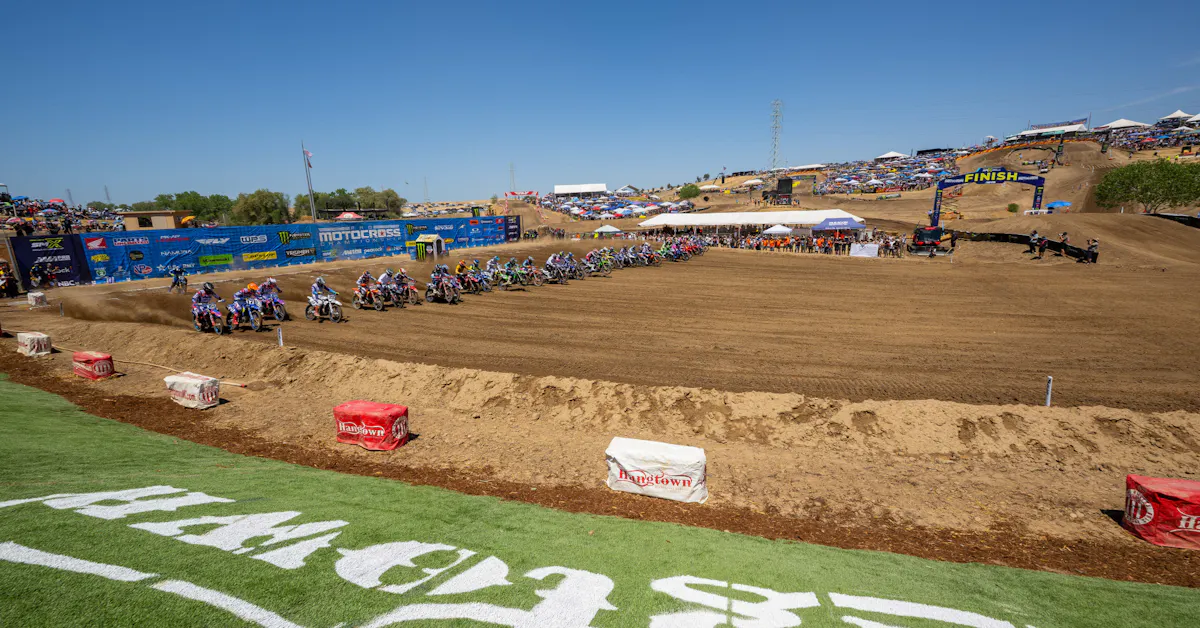
The chassis leans more toward stability than razor-sharp agility, which I personally enjoy. At speed, the 350 RX feels planted and predictable, especially through braking bumps and rough straightaways. The bike tracks straight and doesn’t deflect easily, which builds confidence when charging into rough sections like the Glen Helen hills. Cornering performance is solid, though not overly aggressive. The bike prefers a neutral riding stance and rewards smooth rider input. Once leaned into a rut, it holds its line very well, especially in deeper corners.

That said, it doesn’t knife into corners quite like some of the lighter-feeling bikes in the class, and riders who prefer a more front-end-biased setup may want to make some small adjustments. Side-to-side transitions feel controlled rather than ultra-quick, reinforcing the idea that this bike is built more for consistency than sudden bursts of aggression.
Suspension
Out of the box, the suspension setup leans toward comfort. At lower speeds and over smaller chop, the bike absorbs bumps well and stays composed. As the pace increases, the suspension starts to feel slightly soft, especially under hard braking and on heavier jump landings. Even so, it never feels unpredictable or sketchy. In fact, the softer character complements the engine’s smooth power delivery nicely, making the bike feel less demanding over the course of a full moto.

Faster or heavier riders will likely want more hold-up, but the stock settings provide a forgiving baseline setup. I ended up going three clicks stiffer on fork compression and slowed the rebound three clicks to gain more hold-up and calm the chassis slightly in high-load situations.

I made similar changes to the shock, going a quarter-turn stiffer on high-speed compression and slowing the rebound three clicks. That did cost me a little small-bump comfort, so I softened low-speed compression two clicks and raised the forks 3mm to help reduce some of the front-high feeling. That’s where I settled on settings at both Fox Raceway and Glen Helen Raceway. Overall, the setup felt slightly better at Glen Helen, where there were fewer massive jump faces and deep ruts.
Final Thoughts
On the track, the 350 RX really shines during longer motos and in technical sections. The bike encourages a smooth, flowing riding style that allows you to maintain steady lap times without feeling rushed. It’s easy to stay relaxed on the bike, and that translates into better consistency as track conditions worsen. The manageable power and stable chassis make it easier to ride deeper into a moto without losing focus or burning unnecessary energy. Compared to more aggressive machines, the 350 RX feels less tiring and easier to control once the track gets rough and choppy.

Riders transitioning from four-strokes will appreciate the torque and predictable engine behavior, while dedicated two-stroke riders will enjoy the added traction and reduced need for constant clutch work. The 2026 Beta 350 RX isn’t a bike built to dominate spec sheets or chase shootout victories. Instead, it delivers a well-rounded and confidence-inspiring package that prioritizes rideability, traction, and consistency. It’s a bike that allows riders to focus more on riding well and less on fighting power delivery or fatigue.

For riders looking for an alternative to the traditional 250 or 450 motocross options, especially those who value smooth power and a planted feel, the 350 RX delivers a unique and genuinely enjoyable riding experience.








 English (US) ·
  French (CA) ·